
Checked first. Then faded.
Sun Spot & Age Spot Removal in Mount Gravatt, Brisbane
Laser and peel treatment for sun spots, age spots and freckles on the face, hands and chest, led by our laser-licensed nurses and specialist dermatologist Dr Mitch Robinson.
Complimentary nurse-led assessment. Nurse-led PicoSure Pro $650 per full-face session. Specialist consultation $395 (Medicare rebate applies with a valid GP referral). · See fees
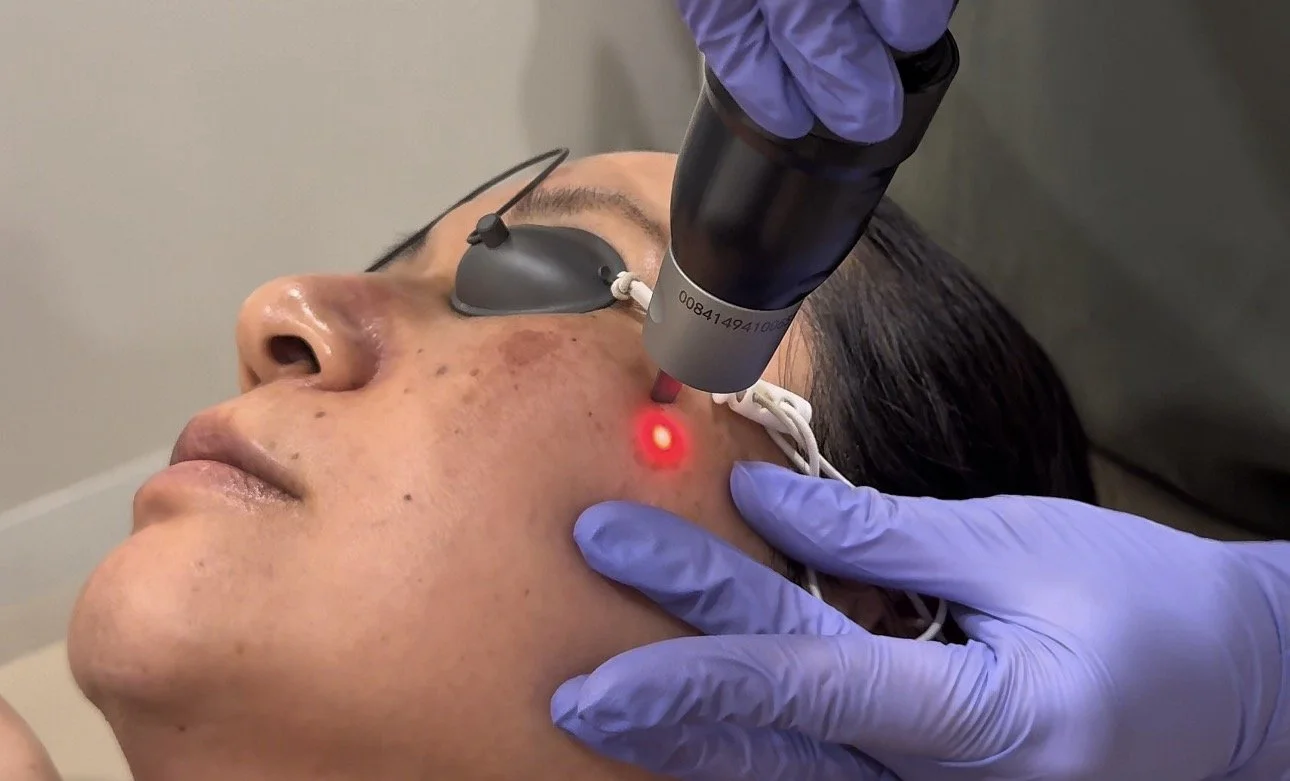
A dermatologist-led clinic and laser suite, founded by Dr Mitch Robinson, FACD, specialist dermatologist and Key Opinion Leader for Cynosure Lutronic.
Meet Dr MitchSun Spot Removal at a Glance
Why Queensland skin spots so early.
What Are Sun Spots, and Why Do Queenslanders Get So Many?
The short answer: sun spots are flat, brown marks caused by years of UV exposure. Doctors call them solar lentigines. They are harmless in themselves, but they are a sign of sun damage, and they need to be told apart from skin cancer before anything is done.
You may know them as age spots, liver spots or "pigment". They usually show up on the parts of you that get the most sun:
- Cheeks, forehead, nose and temples
- Backs of the hands
- Chest and décolletage
- Forearms and shoulders
Sun spots form when UV light pushes pigment cells to make more melanin in one patch. Unlike freckles, they don't fade in winter. They tend to get bigger, darker and more numerous over time.
In Brisbane we see them in people in their 30s, not just in older patients. A childhood of school sport, beach weekends and driving with an arm out the window adds up. That is why they are one of the most common reasons people visit our clinic in Mount Gravatt.
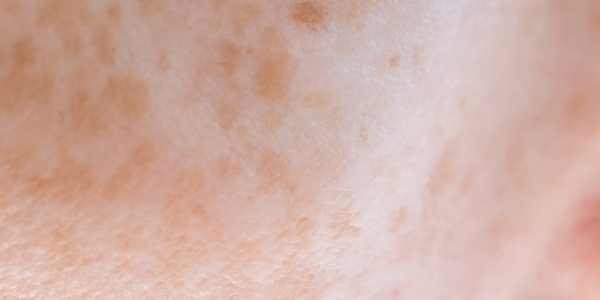
Not every brown spot is the same.
Sun Spot, Freckle, Melasma or Seborrhoeic Keratosis: How Do You Tell?
Lots of things get called a "sun spot". They look similar to the eye, but they behave differently and are treated differently.
- Sun spot (solar lentigo): flat, evenly brown, sharp edge, usually 2 mm to 2 cm. Stays the same colour all year.
- Freckle (ephelis): small, light brown, appears in childhood, darkens in summer and lightens in winter. Common in fair, red-haired skin.
- Melasma: blotchy brown or grey-brown patches, often on both cheeks, the forehead or upper lip. Hormones and heat play a big part, not just sun. Many people simply call it "pigment". Melasma needs a gentler, longer-term plan. See our melasma treatment page.
- Seborrhoeic keratosis: raised, waxy or rough, "stuck-on" brown spot. Very common after 40. Usually treated differently from flat sun spots.
- Lentigo maligna: an early form of melanoma that can look just like a sun spot on the face. See below.
Many people have a mix. A face can have sun spots, freckles and melasma at the same time. Getting the diagnosis right first is what makes treatment work.
Look first, laser second.
Could a Sun Spot Be Skin Cancer? Why We Check Every Brown Spot First
Sometimes, yes. Lentigo maligna is a type of melanoma that grows slowly on sun-damaged skin, usually the face. Early on, it can look almost the same as an ordinary sun spot. If it is lasered, the brown colour can fade from the surface while the abnormal cells remain underneath. This can delay the diagnosis.
Dr Mitch Robinson is the first author of the Australian evidence-based clinical practice guidelines for lentigo maligna, developed through Cancer Council Australia. That is why our clinic has a simple rule: every brown spot is looked at before it is treated.
At your first visit we:
- Look at each spot with a dermoscope (a skin microscope)
- Ask whether it is new, growing, or changing in colour or shape
- Refer any spot that is irregular, multi-coloured, or changing to a dermatologist before any laser
If a spot looks suspicious, the next step is a skin check or biopsy, not laser. Read more on our lentigo maligna page and skin cancer checks page.
Signs that a "sun spot" needs a dermatologist:
- It is new and you are over 40
- It is growing, or one part is darker
- It has an uneven edge or more than one colour (brown, black, grey, pink)
- It looks different from your other spots
- It itches, bleeds or won't heal
Rough, Scaly Sunspots? That's Usually Actinic Keratosis
In Queensland, many people call rough, scaly pink or skin-coloured spots "sunspots". Those are usually actinic (solar) keratoses: sun damage that can occasionally turn into a squamous cell carcinoma. This page is about flat, smooth brown spots.
A quick way to tell:
- Brown sun spot (solar lentigo): flat, smooth and evenly brown. You see it more than you feel it.
- Actinic keratosis: rough like sandpaper, often easier to feel than to see. Pink, red or skin-coloured, and it may come and go.
Actinic keratoses are treated differently, often by treating the whole area of sun damage with PDT or LaseMD. See our actinic keratosis and sun damage page. Any spot that is tender, growing quickly or bleeding should have a skin check.
Which Sun Spot Treatment Is Right for You?
It depends on how many spots you have, where they are, your skin type and how much downtime you can manage. Here is how we usually match the treatment to the person.
- A handful of clear sun spots: PicoSure Pro. This is our main option and is usually nurse-led.
- Sun spots with redness or broken capillaries: DermaV, which treats brown and red together.
- Lots of spots and overall sun damage: LaseMD ULTRA, which treats the whole area, not just each spot.
- Sun spots with uneven tone and fine lines: RedTouch PRO, a 675 nm laser that also treats pigment.
- Mild, even sun damage and dullness: chemical peels, often as a course.
- A single isolated spot: freezing may sometimes suit (please ask us whether this suits your spot).
- Heavy sun damage with wrinkles and rough texture: fractional CO2 or erbium resurfacing with Dr Mitch.
Who it isn't for: if your brown patches are melasma, aggressive laser on sun spots can stir it up. In that case we use a dedicated melasma plan instead, often with PicoSure Pro and RedTouch PRO. See our melasma treatment page.
Small spots, short pulses.
PicoSure Pro for Sun Spots: How Does It Work?
PicoSure Pro is a picosecond laser made by Cynosure. It fires extremely short pulses (trillionths of a second) that shatter pigment into tiny fragments. Your body then clears those fragments over the following weeks.
Because the pulse is so short, the energy acts mainly on the pigment rather than heating the surrounding skin. This is one reason picosecond lasers are used for sun spots in a range of skin types.
Sun Spots on the Hands, Chest and Arms: Can They Be Treated Too?
Yes. The backs of the hands, the chest and the forearms are some of the most common places we treat.
- Hands: sun spots on the hands often make them look older than the face. PicoSure Pro or LaseMD works well here. Skin on the hands heals a little more slowly, so expect crusting to last a few days longer than on the face.
- Chest and décolletage: often a mix of brown spots, redness and fine crepey lines. DermaV or LaseMD often suits this pattern better than spot treatment.
- Arms and shoulders: usually many spots over a large area, so LaseMD or a combination is common.
Body skin heals more slowly than facial skin. We use gentler settings and may space sessions further apart.
Treat the whole area, not just the spots.
Lots of Sun Spots and Sun Damage: When LaseMD, Peels or Resurfacing Fit Better
If you have dozens of spots, freckling and an overall uneven tone, treating spot by spot only goes so far. Field treatment works on the whole area.
- LaseMD ULTRA (1927 nm thulium): a gentle fractional laser that targets pigment in the upper skin. The skin goes bronzed and sandpapery for a few days, then flakes. We also use LaseMD for sun damage and actinic keratoses as part of PDT.
- Chemical peels: lift dull, mildly pigmented skin. Peels are gentle and usually done as a course of several sessions.
- Fractional CO2 or erbium resurfacing (Sciton Contour): for heavy sun damage with wrinkles, rough texture and lots of pigment. This is done by Dr Mitch and has more downtime. See skin resurfacing.
We often combine treatments. For example, LaseMD for the overall background, then PicoSure Pro for the stubborn spots that remain.
How Many Sun Spot Laser Sessions Will You Need?
Most sun spots need 3 to 4 PicoSure Pro sessions, spaced about 4 to 6 weeks apart. Darker, well-defined spots often fade fastest. Lighter or older spots may need more.
As a guide:
- PicoSure Pro: usually 3 to 4 sessions
- LaseMD ULTRA: usually 1 to 2 sessions
- RedTouch PRO: usually 3 to 4 sessions
- Chemical peels: usually a course of several sessions
- CO2 or erbium resurfacing: often a single treatment
Freckles and spots on the hands or body can need an extra session. We'll give you a realistic estimate at your assessment.
Know the full cost up front.
How Much Does Sun Spot Removal Cost in Brisbane?
Here are our current fees:
- Complimentary nurse-led assessment: no charge
- PicoSure Pro, nurse-led: $650 per full-face session, $400 for a small area
- LaseMD Ultra, nurse-led: $695 face, $990 face and neck, $1,495 face, neck and chest
- RedTouch PRO: $495 for the face, with a peel and LED
- Chemical peels: from $150 per session
- Specialist consultation with Dr Mitch: $395 (Medicare rebate applies with a valid GP referral)
- DermaV, smaller areas, hands and resurfacing: quoted at your assessment
What a full course usually costs:
- PicoSure Pro full face, 3 to 4 sessions: $1,950 to $2,600
- LaseMD Ultra face, 1 to 2 sessions: $695 to $1,390
- RedTouch PRO face, 3 to 4 sessions: $1,485 to $1,980
- A course of peels: depends on the number of sessions
Cosmetic sun spot treatment generally doesn't attract a Medicare rebate. A spot that needs checking for skin cancer is a medical matter and handled separately. Full pricing is on our treatment fees page.
Who Treats Sun Spots at DERM Skin Specialists?
- Our Registered Nurses do most PicoSure Pro, LaseMD and peel treatments. Brooke and Hatsu hold laser licences. TingTing speaks Mandarin.
- Dr Mitch Robinson, specialist dermatologist, leads the laser suite. He sets treatment protocols, sees patients with complex pigment or suspicious spots, and performs CO2 and erbium resurfacing. He also teaches laser to dermatology registrars.
- Our dermatologists, Dr Emily Shao and Dr Benny Yau, see patients for skin checks and any spot that needs a closer look.
Nurses work to Dr Mitch's protocols. If anything looks unusual at your assessment, you'll be booked to see a dermatologist before any treatment.
Does Sun Spot Laser Hurt?
Most people describe PicoSure Pro as a quick, sharp flick, like a rubber band snap. Each spot takes seconds. A cooling air device is used to keep you comfortable, and numbing cream can be applied for larger areas.
- PicoSure Pro: mild to moderate stinging; numbing cream optional
- LaseMD: numbing cream applied beforehand; feels warm and prickly
- Chemical peels: tingling or stinging for a few minutes
- CO2 or erbium resurfacing: done with numbing cream and local anaesthetic
Hands and bony areas tend to feel a bit sharper than the cheeks.
What to expect each day.
Sun Spot Laser Recovery, Day by Day
This is the usual pattern after PicoSure Pro:
- Straight after: each spot turns greyish-white for a few minutes, then pink and slightly puffy.
- Day 1 to 2: spots look darker than before. This is expected and means the pigment has been hit.
- Day 3 to 5: spots form a thin, dark crust, a bit like coffee grounds on the skin.
- Day 7 to 10: the crusts flake off on their own (14 days on hands and body).
- Weeks 2 to 6: the skin underneath may be pink, then settles. Lighter skin is revealed.
Most people go back to work the next day. Makeup can usually go on after 24 hours, as long as the skin isn't broken.
After LaseMD: skin feels sandpapery and looks bronzed for 3 to 5 days, then flakes.
After resurfacing: expect about 1 to 2 weeks of downtime and redness that fades over several weeks.
Look after your skin by:
- Not picking or scrubbing the crusts
- Using a gentle cleanser and moisturiser
- Wearing SPF 50+ every day and a broad-brimmed hat
When Will You See Sun Spot Results?
You'll usually see the first change once the crusts come off at around one to two weeks. Results keep improving for 4 to 6 weeks as the body clears the pigment. That is why sessions are spaced apart.
Before and after: sun spots and sun damage at DERMSS
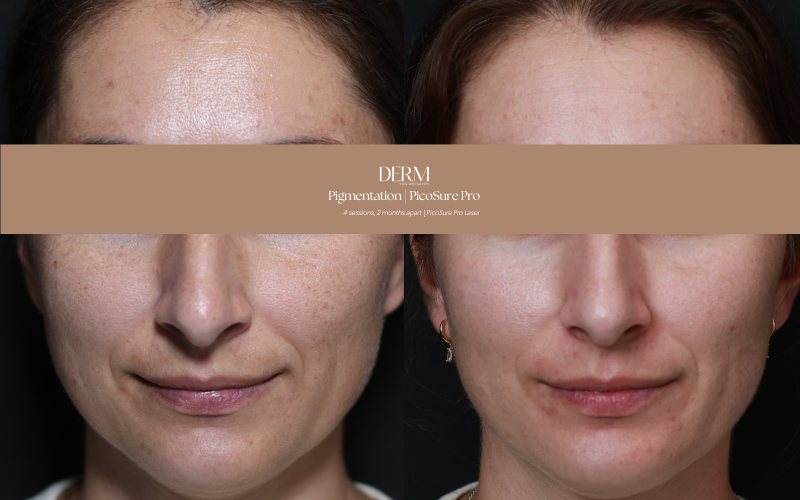 BeforeAfter
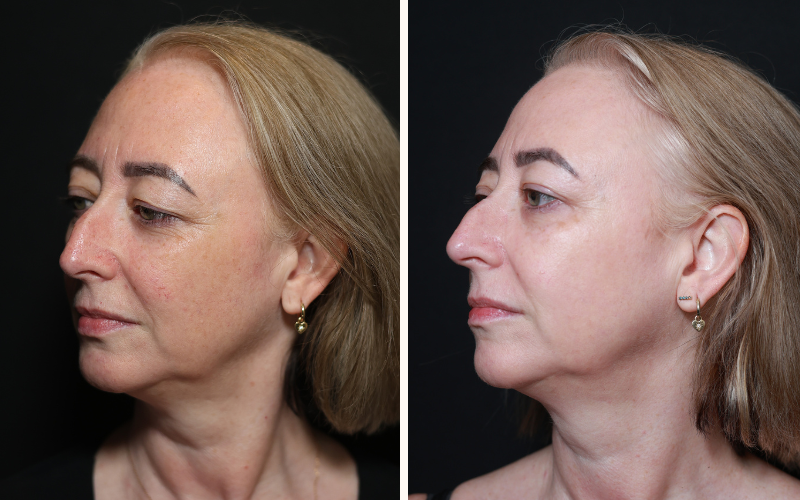 BeforeAfter
Before photo on the left in each pair. Photos are of DERM Skin Specialists patients, published with their consent, taken in the same conditions and not retouched. Individual results vary.
Sun Spot Treatment Timing Before a Wedding or Event
Give yourself time. As a guide:
- PicoSure Pro: start at least 4 to 6 months before the event, with your last session no later than 4 to 6 weeks before.
- LaseMD: last session at least 2 weeks before.
- Resurfacing: at least 3 months before.
Avoid starting a new treatment in the fortnight before a big day.
Sun Spot Treatment in Asian, Olive and Darker Skin
Sun spots are very common in Asian and olive skin, often with melasma mixed in. These skin types can be treated, but they are more prone to post-inflammatory pigmentation (PIH): temporary darkening after any skin injury, including laser.
How we adjust:
- A careful check for melasma first, because it changes the plan
- Lower energy settings and smaller test areas where needed
- Longer gaps between sessions
- Picosecond laser in preference to heat-heavy options for many patients
- Strict sun protection before and after
- Prescription fading creams before or after laser when suitable
TingTing speaks Mandarin, which many patients find helpful.
Sun spots can return.
How to Stop Sun Spots Coming Back After Treatment
Laser fades the spots you have. It doesn't stop the sun making new ones. With ongoing sun, new spots can appear and treated areas can darken again.
To keep your results:
- SPF 50+ broad-spectrum sunscreen every morning, reapplied outdoors
- A broad-brimmed hat and sunglasses
- Shade in the middle of the day, especially in Queensland summer
- Driving gloves or sleeves if your hands get daily sun through the car window
- A gentle top-up session every year or two if new spots appear
- Regular skin checks, because sun spots are a sign of sun damage
Sun Spot Treatment Risks, and How We Reduce Them
All procedures carry risks. Here are the main ones, and what we do about each.
- Missing a skin cancer. We check every brown spot with dermoscopy first and send anything unusual to a dermatologist.
- Post-inflammatory pigmentation (darkening). We adjust settings for your skin type, test where needed and insist on sun protection.
- Lighter patches (hypopigmentation). We use conservative settings, particularly on body skin.
- Blistering, scabbing or scarring. We avoid treating tanned skin and give clear aftercare.
- Melasma flaring. We diagnose melasma first and use a melasma plan instead.
- Cold sores (for facial resurfacing). We may give preventive medicine if you're prone.
- Incomplete fading. Some spots need more sessions. We set realistic expectations at the start.
When to Call Us After Sun Spot Treatment
Call us on 07 3487 1414 if you notice:
- Blisters, oozing or yellow crusting
- Increasing pain, swelling or redness after day 2
- Fever or feeling unwell
- A cold sore in the treated area
- Darkening that is still getting worse after 2 weeks
- A spot that comes back quickly, grows, or looks different from before
Any treated spot that returns or changes should be checked by a dermatologist.
Mount Gravatt, Brisbane
Sun Spot Removal in Mount Gravatt
DERM Skin Specialists is a dermatologist-led clinic at 2/1437 Logan Road, Mount Gravatt, with free onsite parking and wheelchair access. We're about 15 minutes from the Brisbane CBD and close to Holland Park, Carindale, Upper Mount Gravatt, Mansfield and Sunnybank. Patients are typically seen within 2 weeks.
Your questions, answered
Sun Spot Removal FAQs
Is a sun spot the same as an age spot or liver spot?
Yes. Sun spot, age spot and liver spot are everyday names for solar lentigines. They have nothing to do with the liver. They come from years of UV exposure.
Can freckles be lightened with laser?
Often, yes. PicoSure Pro can lighten freckles, usually in 1 to 2 sessions. Freckles tend to return with sun exposure, so daily sunscreen matters even more.
Do I need a GP referral?
Not for a complimentary nurse-led assessment. If you'd like a Medicare rebate on a specialist consultation with Dr Mitch, you'll need a valid GP referral.
Is laser for sun spots covered by Medicare or private health?
Cosmetic sun spot treatment is generally not covered. Checking or removing a suspicious spot is medical care and may attract a rebate.
Can I wear makeup after PicoSure Pro?
Usually after 24 hours, as long as the skin isn't broken. Use clean brushes and remove makeup gently so the crusts aren't disturbed.
Can I have sun spot treatment in summer?
Yes, with care. You'll need strict sun protection, and we avoid treating skin that is tanned. Many people find autumn and winter easier.
Will fading creams get rid of sun spots?
Creams can soften sun spots a little over months. Most clear, defined sun spots respond better to laser. Prescription fading creams are sometimes used alongside laser.
Can sun spots just be frozen off?
Freezing can work for some isolated spots. It can leave a pale mark, especially in darker skin. We'll tell you if it suits your spot.
What if a spot doesn't fade after treatment?
A spot that doesn't respond as expected is checked again by a dermatologist. Occasionally it needs a biopsy rather than more laser.
Can I have laser if I have a tan or fake tan?
Not on the day. A tan raises the risk of burns and pigment changes. Stop fake tan about 2 weeks before and avoid sun tanning for 4 weeks.
Can you treat raised brown spots?
Raised, rough "stuck-on" spots are usually seborrhoeic keratoses. They're treated differently from flat sun spots. We'll explain your options once we've looked at them.
Should I stop my skincare before laser?
Stop vitamin A creams, exfoliating acids and scrubs for about a week beforehand. Tell us about any prescription vitamin A creams or recent sunburn.
Can I have sun spot laser while pregnant?
No. We wait until after pregnancy and breastfeeding for cosmetic laser. Melasma is also common in pregnancy, so it's worth reassessing afterwards.
How long does a PicoSure Pro appointment take?
About 30 minutes, including cleansing and photos. Treating the spots themselves often takes only a few minutes.
How long do sun spot results last?
Treated spots often stay faded for years with good sun protection. New spots can still form from future sun, so occasional top-ups are common.
Can I combine sun spot laser with other treatments?
Yes. Many patients combine LaseMD for overall tone with PicoSure Pro for stubborn spots, or add DermaV for redness. We'll plan the order and spacing.
Ready to Fade Your Sun Spots?
Start with a check. We'll look at every spot, tell you what it is, and give you a clear plan and cost. Free onsite parking at our Mount Gravatt clinic, easy from Holland Park, Carindale, Upper Mount Gravatt and Sunnybank.
Clinical content overseen by Dr Mitch Robinson, FACD (AHPRA MED0001946771). Updated October 2026. General information only, not medical advice. All procedures carry risks; suitability, recovery and results vary between individuals.
Sources: Robinson et al. Dermatology 2020 (lentigo maligna guidelines)