
Psoriasis · Mount Gravatt, Brisbane
Psoriasis Treatment in Mount Gravatt, Brisbane
Specialist care for red, scaly, itchy psoriasis of the skin, scalp and nails, including narrowband UVB phototherapy here in our Mount Gravatt clinic, prescription creams and treatment for severe psoriasis, with dermatologists Dr Benny Yau, Dr Emily Shao and Dr Mitch Robinson, FACD.
Specialist consultations from $395 · No referral needed to book · Medicare rebate with a valid referral · See fees
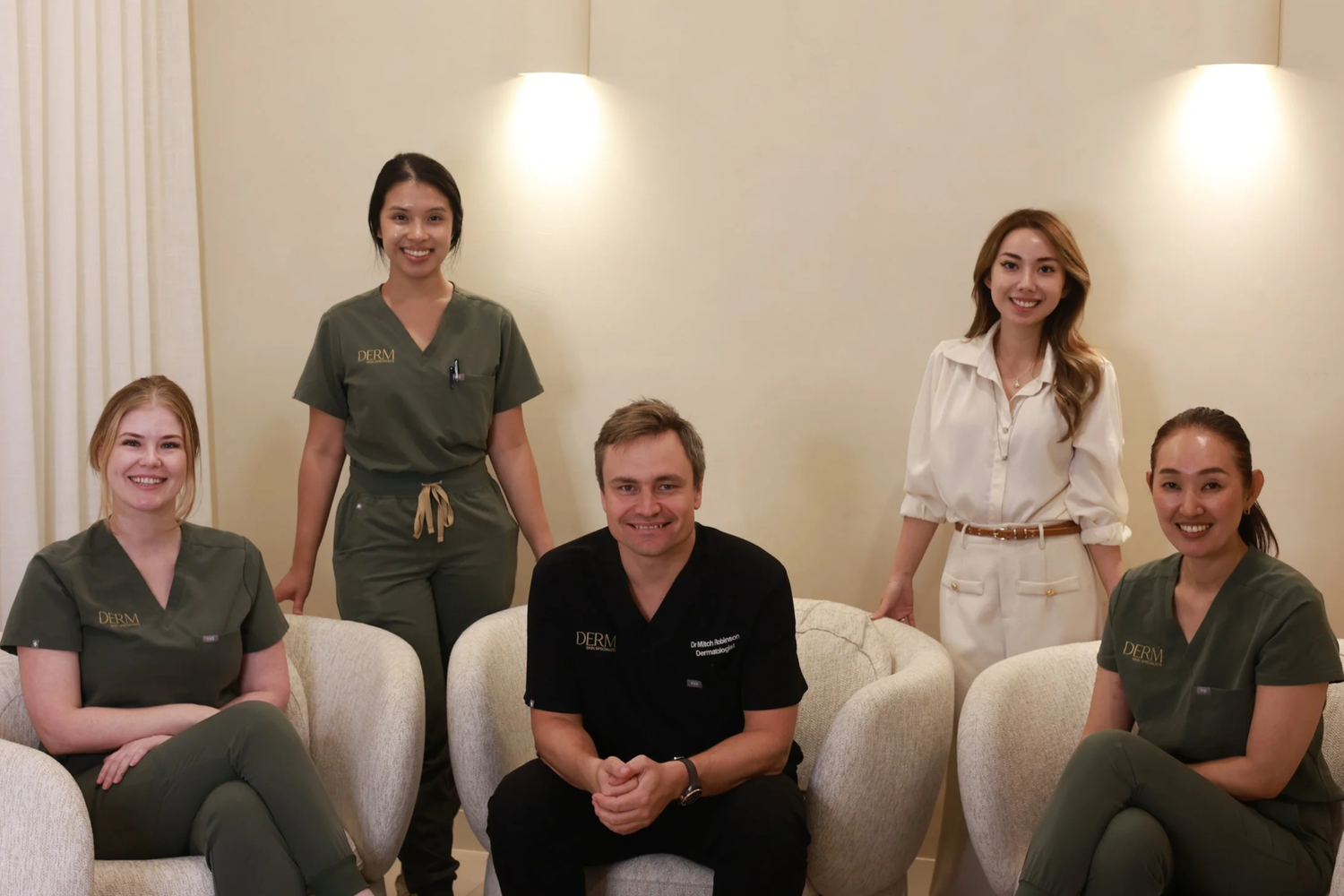
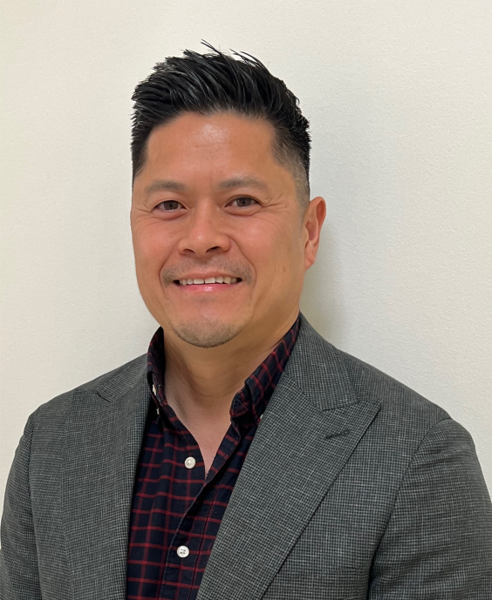
A dermatologist-led clinic. Dr Benny Yau, FACD, has a particular interest in psoriasis and inflammatory skin disease, and was awarded the Kossard Prize in Dermatopathology.
Meet Dr YauPsoriasis Care at a Glance
Should You See a Dermatologist for Psoriasis?
The short answer: see a dermatologist if your psoriasis isn't settling with the creams you have, if it's on your scalp, face, hands, feet, nails or genitals, if it covers a large area, or if you have joint pain. Mild psoriasis can often be managed with your GP. A psoriasis dermatologist can confirm the diagnosis, work out how severe it really is, and step treatment up or down to the lowest level that keeps it controlled. For widespread or stubborn psoriasis, that often means narrowband UVB phototherapy, which we offer here in our clinic.
Psoriasis is a long-term immune condition. Skin cells are made far faster than normal and pile up as thick, red or pink patches with silvery-white scale, most often on the elbows, knees, lower back and scalp. It can start at any age, but about three in four people develop it before 45.
You're far from alone. Psoriasis Australia estimates that between 2.3% and 6.6% of Australians have psoriasis.
We see patients from Mount Gravatt and across Brisbane's southside, including Holland Park, Carindale, Sunnybank and Mansfield. Most new patients are seen within two weeks, and you don't need a referral to book.
Control, not cure
Can Psoriasis Be Cured? What Results Can You Expect?
There is no cure for psoriasis yet, so be wary of anyone who offers one. The good news is that most people can get it well controlled, and many have long stretches with little or no psoriasis.
Good control means fewer and thinner patches, less itch and scale, skin you're comfortable showing, and nails and joints that are looked after. Creams often show a change within a few weeks. A course of UVB light therapy usually takes about 2 to 3 months.
What the guidelines say. Australian consensus guidance for moderate to severe psoriasis, adapted by the Australasian College of Dermatologists in 2024, measures severity in three ways: how much skin is affected, whether high-impact areas such as the scalp, face, hands, feet, nails, genitals and skin folds are involved, and how much psoriasis affects your quality of life. Treatment is judged against clear targets, and changed if they aren't met (Australasian Journal of Dermatology, 2023).
Will it come back? Psoriasis often flares again with infections, stress or winter, so your plan covers what to do in a flare and how to stay steady between flares.
Step up, step down
How Do Dermatologists Treat Psoriasis?
Treatment is stepped up until your psoriasis is controlled, then stepped down to the lowest level that keeps it there.
Creams and Scalp Care
- Prescription creams, matched to each area
- Scalp treatments that suit your hair
- Scale-softening and moisturising routine
- A written plan for flares and in between
UVB Phototherapy
- For widespread or stubborn psoriasis
- Narrowband UVB in our clinic
- 2–3 short sessions a week
- A course of about 2–3 months
Severe Psoriasis
- Specialist treatments where appropriate
- These have eligibility rules
- Started and monitored by a dermatologist
- Regular reviews and blood tests
Many people combine them, such as a scalp treatment with UVB for the body.
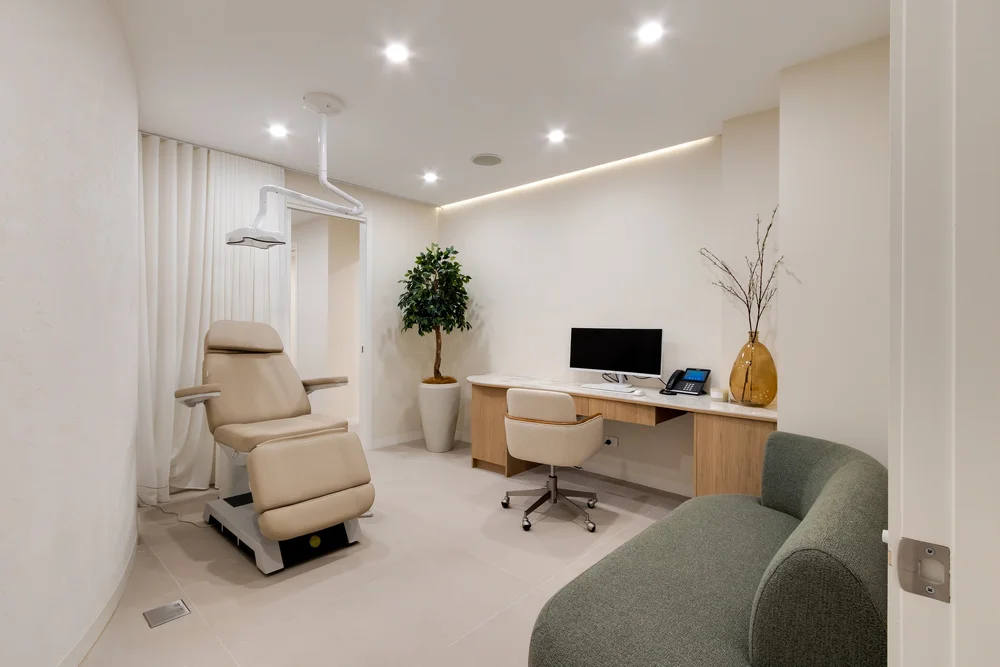
Light therapy in our clinic
Psoriasis Light Therapy in Brisbane: Is UVB Right for You?
For many people with widespread or stubborn psoriasis, yes. Narrowband UVB phototherapy is a standard, guideline-supported treatment for psoriasis, and we run it here in our Mount Gravatt clinic. It uses a specific band of ultraviolet light to calm the inflammation in psoriasis patches and slow the build-up of skin cells.
Why many people choose UVB
- It treats all of your skin at once, including patches that are hard to reach with creams
- No tablets, and no routine blood tests for the UVB itself
- It has been used for psoriasis for decades, with a long safety record
- It's often suitable for older children and during pregnancy, after assessment
- Improvement can last for months after a course ends
- A Medicare rebate may apply to your sessions
You stand in a UVB cabinet in our clinic for a session that lasts from seconds to a few minutes. Most people come two or three times a week. The dose starts low and is built up slowly to suit your skin type, and improvement usually shows over several weeks, with a course often taking about 2 to 3 months. It needs commitment, because missed sessions slow progress.
What the research says. A 2025 review of studies in people with olive, Asian and darker skin found that about 7 in 10 achieved at least a 75% improvement in their psoriasis score with narrowband UVB (Photodermatology, Photoimmunology & Photomedicine, 2025). Results vary between people.
Side effects. Sunburn-like redness, dryness, itch, tanning and cold sore flares can happen. Long courses add to your lifetime UV exposure, so we count your treatments and check your skin. UVB may not suit you if you've had melanoma, have many unusual moles, have a light-sensitive condition, or take a medicine that makes you sun-sensitive.
A UVB course involves
- A dermatologist assessment first
- 2 to 3 short sessions a week in clinic
- A dose built up slowly for your skin
- Eye protection in the cabinet
- Regular reviews of your progress
A Medicare rebate may apply to phototherapy; we confirm the cost and any rebate before you start. More on UVB phototherapy.
What Type of Psoriasis Do You Have?
The type of psoriasis and where it shows up guide which treatments will work.
Most common
Plaque psoriasis
Raised, well-defined red or pink patches with silvery scale. About nine in ten people with psoriasis have this type.
Often missed
Scalp psoriasis
Thick, crusted scale on the scalp that often reaches past the hairline and behind the ears. It's often mistaken for dandruff and can be very itchy.
About half of people
Nail psoriasis
Small pits in the nails, thickening, yellow-brown patches or the nail lifting off its bed. Nail changes are linked with a higher chance of joint problems.
Skin folds
Inverse psoriasis
Smooth, shiny red patches with little scale in the armpits, groin, genitals, under the breasts or between the buttocks. Often confused with thrush or a rash.
After an infection
Guttate psoriasis
Many small, drop-shaped spots across the body, often two to three weeks after a sore throat. More common in children and young adults.
Hands and feet
Palmoplantar psoriasis
Thick, cracked skin or small pus spots on the palms and soles. It can make walking, typing and work with your hands painful.
Two rare types, pustular psoriasis and erythrodermic psoriasis, can make you unwell and need urgent care. See When Is Psoriasis Urgent? below.
Is Psoriasis Contagious?
No. You can't catch psoriasis or pass it on by touching, hugging, sharing towels, swimming in the same pool or being intimate. It comes from the immune system, not from a germ.
Psoriasis often runs in families. Your genes make you more likely to get it, and then something such as an infection, stress or a skin injury sets it off.
Psoriasis can affect mood, sleep and confidence, so tell us how it affects your life, not just your skin. That counts when we plan your treatment.
Psoriasis is not
- Contagious or infectious
- Caused by poor hygiene
- An allergy
- Something you caused
- Just a cosmetic problem
What Triggers a Psoriasis Flare?
Triggers differ from person to person. Common ones include:
- Infections, especially strep throat, which can set off guttate psoriasis
- Stress, from work, study, illness or life changes
- Skin injury, such as scratches, cuts, sunburn or tattoos, where new patches can form
- Cold, dry weather, which is why many people flare in winter
- Some medicines. Tell us everything you take, but don't stop a medicine without talking to your doctor
- Smoking and alcohol, which are both linked with more severe psoriasis
Does weight make a difference? In a small 16-week trial of 60 overweight adults, a low-energy diet gave a trend towards milder psoriasis and a clear improvement in quality of life (JAMA Dermatology, 2013). Weight loss is a helpful add-on, not a replacement for treatment.
Habits that often help
- Moisturise every day, more in winter
- Short, lukewarm showers
- Don't pick or scratch off scale
- Avoid sunburn
- Get sore throats checked
- Stop smoking and cut back alcohol
What Helps Scalp Psoriasis?
Thick scale, itch and flakes on your shoulders make scalp psoriasis frustrating, and many creams are messy to use in hair.
Treatment usually works in two steps. First, the scale is softened and lifted, because thick scale stops treatments from reaching the skin. Then a prescription scalp treatment is used, in a form that suits your hair, such as a lotion, gel, foam or shampoo, so you'll actually use it. Medicated shampoos can help keep it down between flares.
Does scalp psoriasis cause hair loss? Some hair can shed with heavy scale, scratching or picking, but it usually grows back once the scalp settles. Comb scale out gently rather than scraping it off.
The scalp is a high-impact area in Australian guidance. If scalp psoriasis stays uncontrolled despite proper treatment, that counts when we look at your options, including UVB or treatment for severe psoriasis.
Scalp psoriasis or dandruff?
Scalp psoriasis is more likely if you have:
- Thick, well-defined patches, not fine flakes
- Silvery scale that sticks to the scalp
- Patches past the hairline, behind the ears or on the neck
- Psoriasis elsewhere, or nail pits
If you're not sure, a dermatologist can tell, and the two can overlap.
More than creams
What Can a Specialist Do for Severe Psoriasis?
A severe psoriasis specialist is a specialist dermatologist. Here's how we decide whether your psoriasis counts as severe, and what that opens up.
When psoriasis counts as severe
- Large areas. More than about 10% of your skin. Your palm and fingers cover about 1%.
- High-impact areas. Face, scalp, hands, feet, nails, genitals or skin folds, even if the patches are small.
- Big impact on your life. Sleep, work, relationships or mood.
- Creams haven't worked after being used properly.
- Joint symptoms alongside your skin.
What the severe pathway involves
- UVB phototherapy is a standard step and is often tried first, where it suits you. For some people, it's all they need.
- Specialist treatments for severe psoriasis where appropriate. These have eligibility rules, such as showing how severe your psoriasis is and which treatments you've already tried, which can include UVB phototherapy.
- Blood tests and checks before starting and while on treatment.
- Regular reviews to check the treatment is working and stop or change it if not.
- Shared care with your GP between visits.
These treatments have side effects and need monitoring, so we explain the benefits and risks of each option and you decide with us. Photos of your skin at its worst and a list of what you've tried help with eligibility.
Could Your Joint Pain Be Psoriatic Arthritis?
Psoriatic arthritis is inflammation of the joints and the places where tendons attach to bone. A large review of 266 studies found that about 1 in 5 people with psoriasis have it (Journal of the American Academy of Dermatology, 2019).
It often starts years after the skin, and it can damage joints if it's missed. So we ask about your joints at every review, and look closely at your nails, because nail psoriasis is linked with a higher chance of arthritis.
If psoriatic arthritis is possible, we refer you to a rheumatologist, a specialist in joint conditions, so the skin and joints can be treated together.
Your general health matters too. Psoriasis is linked with heart and metabolic health and with low mood. Ask your GP about regular checks of blood pressure, cholesterol, blood sugar and weight.
Tell us if you have
- Joint pain or swelling
- Morning stiffness lasting more than 30 minutes
- A whole finger or toe that swells up
- Heel, ankle or lower back pain
- Pitted, thick or lifting nails
What Happens at Your First Psoriasis Appointment?
From your first visit to long-term control, here's how psoriasis care works at DERM Skin Specialists.
Assessment
We confirm the diagnosis and type, check your scalp, nails and skin folds, ask about your joints and general health, and measure how severe your psoriasis is and how it affects your life. We may take photos to track progress.
A plan that fits
You get a written plan matched to the areas affected, your work and your routine: what to use, where, how much and for how long, plus what to do if it flares.
Review and adjust
We review your response, step treatment up if targets aren't met, and step it down once you're stable. If you need UVB or treatment for severe psoriasis, we arrange it.
Is It Psoriasis, Eczema or Something Else?
Psoriasis and eczema can look alike, and some people have features of both. The difference matters, because they're treated differently.
Psoriasis usually forms sharp-edged, thick patches with silvery scale on the outer elbows, knees, lower back and scalp, often with nail pits. Eczema tends to be itchier, drier and less clearly edged, often in the creases of the elbows and knees. More on eczema and dermatitis.
Other conditions can mimic psoriasis too, including fungal infections, seborrhoeic dermatitis and, rarely, a single scaly patch that turns out to be an early skin cancer. If the diagnosis isn't clear, a small skin biopsy under local anaesthetic can confirm it.
Psoriasis usually
- Has sharp, well-defined edges
- Has thick, silvery scale
- Sits on the outer elbows and knees
- Affects the scalp and nails
- Itches, but often less than eczema
What Does Psoriasis Look Like on Darker and Olive Skin?
On brown and black skin, psoriasis patches often look purple, grey or dark brown rather than red, and the scale can be thicker. That can make psoriasis harder to recognise and its severity easy to underestimate.
After patches settle, they often leave darker or lighter marks. These usually fade over months. Treating early helps reduce them.
UVB phototherapy works in olive and darker skin, but it causes more tanning, and redness is harder to see. We adjust the dose to your skin type and check your skin closely during the course.
Tell us if you
- Have marks left after old patches
- Tan easily or rarely burn
- Have had darkening after other treatments
- Are worried about patches on your face
When Is Psoriasis Urgent?
Most psoriasis flares can wait for an appointment. Two rare types can't.
Erythrodermic psoriasis turns most of the skin red, hot and peeling, often with shivering, swelling and feeling unwell. Pustular psoriasis causes widespread pus-filled spots on red skin, often with fever. Both need same-day medical care at an emergency department or with your GP.
Call us sooner than your next review if your psoriasis suddenly gets much worse, spreads quickly after an infection or a new medicine, or you develop painful, swollen joints.
Get help the same day if
- Red, peeling skin covers most of your body
- You have widespread pus spots on red skin
- You have a fever, chills or feel very unwell with a flare
- Cracked skin looks infected, with spreading redness or pus
Call 07 3487 1414. Outside hours, see your GP or go to an emergency department.
How Much Does a Psoriasis Dermatologist Cost in Brisbane?
A specialist consultation starts from $395. We're a private billing practice. With a valid referral, usually from your GP, you can claim a Medicare rebate on your consultation. You don't need a referral to book, but without one there's no rebate.
UVB phototherapy. A Medicare rebate may apply to phototherapy sessions. Because a course runs to many sessions, ask for the total cost of the course, not just one visit. We confirm the cost and any rebate in writing before you start.
Prescriptions. Creams, scalp treatments and any treatment for severe psoriasis are paid for at the pharmacy, separately from our fees.
Reviews. Most people have a few reviews in the first months and fewer once stable. We tell you review fees before you book them. See our fees.
Who Will Look After Your Psoriasis?
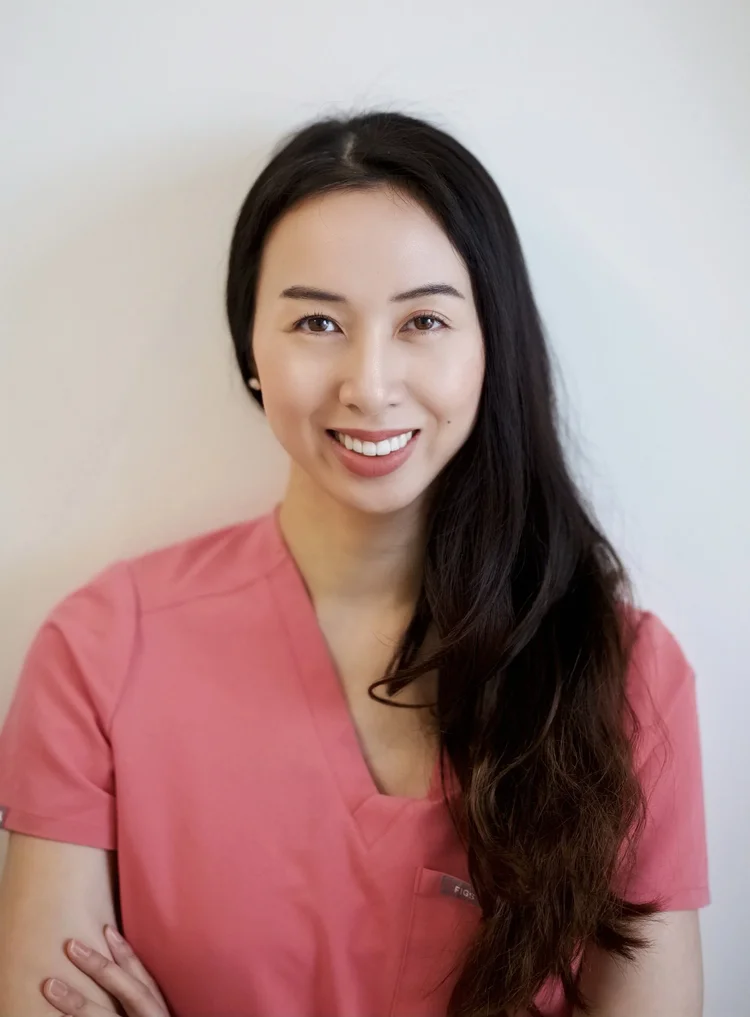
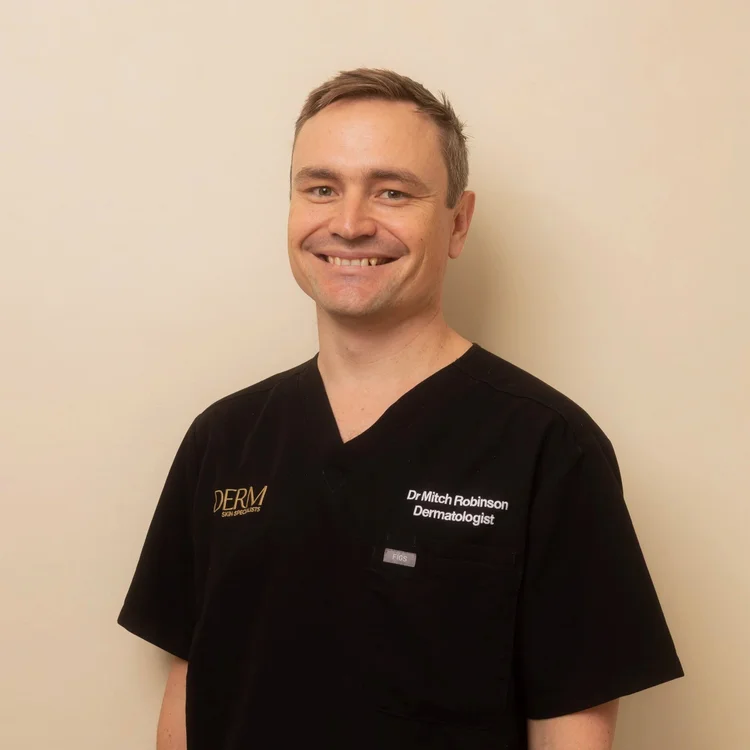
All three of our dermatologists are Fellows of the Australasian College of Dermatologists (FACD) and treat psoriasis. Ask for any of them when you book.
Mount Gravatt, Brisbane
Psoriasis Dermatologist in Mount Gravatt
DERM Skin Specialists is at 2/1437 Logan Road, Mount Gravatt, about 15 minutes' drive from the Brisbane CBD, with free onsite parking. Patients come from across Brisbane's southside, including Upper Mount Gravatt, Wishart, Eight Mile Plains and Greenslopes, which helps when UVB means two or three visits a week.
Common Questions
Psoriasis: Common Questions
Can I catch psoriasis from someone?
No. Psoriasis is an immune condition, not an infection. It can't be caught or spread by touch, sharing towels or swimming pools.
Will psoriasis ever go away for good?
There's no cure yet, but most people can get it well controlled. It can flare again, so a maintenance plan matters.
Do I need a referral to see a dermatologist for psoriasis?
No referral is needed to book. A valid referral, usually from your GP, is needed if you want a Medicare rebate on your consultation.
How soon can I get an appointment?
Most new patients at DERM Skin Specialists are seen within two weeks. Book online or call 07 3487 1414.
Does Medicare cover psoriasis treatment?
Medicare gives a rebate on specialist consultations with a valid referral, and a rebate may apply to UVB phototherapy. We confirm your costs and any rebate before you start. See fees.
How many UVB sessions will I need?
Most people come two or three times a week, and a course often takes about 2 to 3 months. Improvement usually shows over several weeks, and we review you along the way.
Is UVB phototherapy safe?
Narrowband UVB has been used for psoriasis for decades and has a long safety record. Short-term effects include sunburn-like redness, dryness and itch. Long courses add to your lifetime UV exposure, so we count your treatments and check your skin regularly.
Can I use a solarium or the sun instead of UVB?
No. Commercial solariums are banned in Australia, and they mostly give a different type of UV. Some people find a little everyday sun helps, but sunburn can trigger new patches, so avoid it.
Can children or pregnant women have UVB?
Narrowband UVB is often an option for older children and during pregnancy, because it avoids tablets. We assess each person first.
Is scalp psoriasis just bad dandruff?
No. Scalp psoriasis forms thicker, well-defined patches with silvery scale that often extend past the hairline. Dandruff is finer and more even. They can overlap.
Can psoriasis spread to other parts of my body?
It doesn't spread like an infection, but new patches can appear in new places, especially where skin has been scratched, cut or sunburnt.
Does diet affect psoriasis?
No single diet controls psoriasis. Losing weight if you're overweight, cutting back alcohol and stopping smoking can help, alongside treatment.
Can children get psoriasis?
Yes. Guttate psoriasis after a sore throat is common in children and teens. Dr Emily Shao sees children and teenagers.
What counts as severe psoriasis?
Psoriasis covering more than about 10% of your skin, involving high-impact areas such as the scalp, face, hands, feet, nails or genitals, or having a big effect on your life, even if the area is small.
Can I go straight to treatment for severe psoriasis?
Usually not. Treatments for severe psoriasis have eligibility rules, which often include trying other treatments, such as UVB phototherapy, first. We explain the steps at your consultation.
Should I see a rheumatologist for psoriatic arthritis?
If you have joint pain, swelling or morning stiffness, yes. We check your joints and refer you to a rheumatologist when psoriatic arthritis is possible.
What should I bring to my first appointment?
A list of the creams and medicines you've used, and for how long, photos of your skin at its worst, and your GP referral if you have one.
Get Your Psoriasis Under Control
Book a consultation with one of our dermatologists. We'll confirm the type, check your nails and joints, tell you whether UVB phototherapy in our clinic suits you, and give you a clear written plan for your skin, scalp and flares.
Clinical content overseen by Dr Mitchell Robinson, FACD (AHPRA MED0001946771). Updated October 2026. General information only, not medical advice. All procedures carry risks; suitability, recovery and results vary between individuals.