
Vascular Laser · Mount Gravatt, Brisbane
Derma V Vascular Laser in Mount Gravatt, Brisbane
A dual-wavelength laser for rosacea redness, broken capillaries, thread veins and port wine stains. Treatment is nurse-led, within a specialist dermatology practice where Dr Mitch Robinson, FACD, leads the laser suite.
Nurse-led from $350 a session · Specialist consultations from $395 · No referral needed to book · Total cost confirmed in writing before you start · See fees
A dermatologist-led clinic, founded by Dr Mitchell Robinson, FACD, who leads our laser suite and teaches laser to dermatologists and registrars.
Meet Dr MitchDerma V Laser at a Glance
What Is the Derma V Laser?
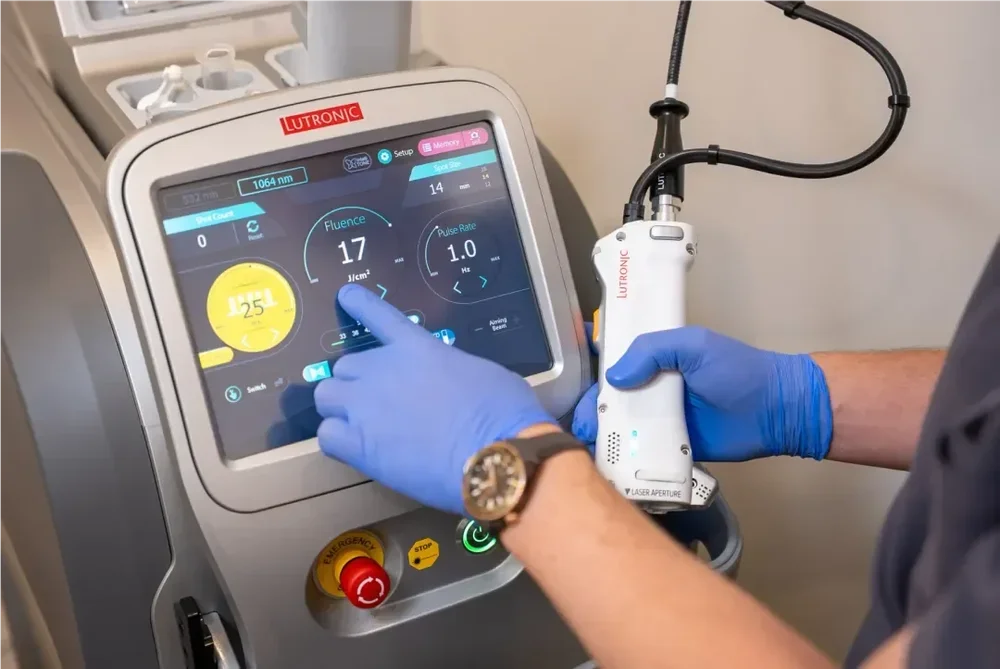
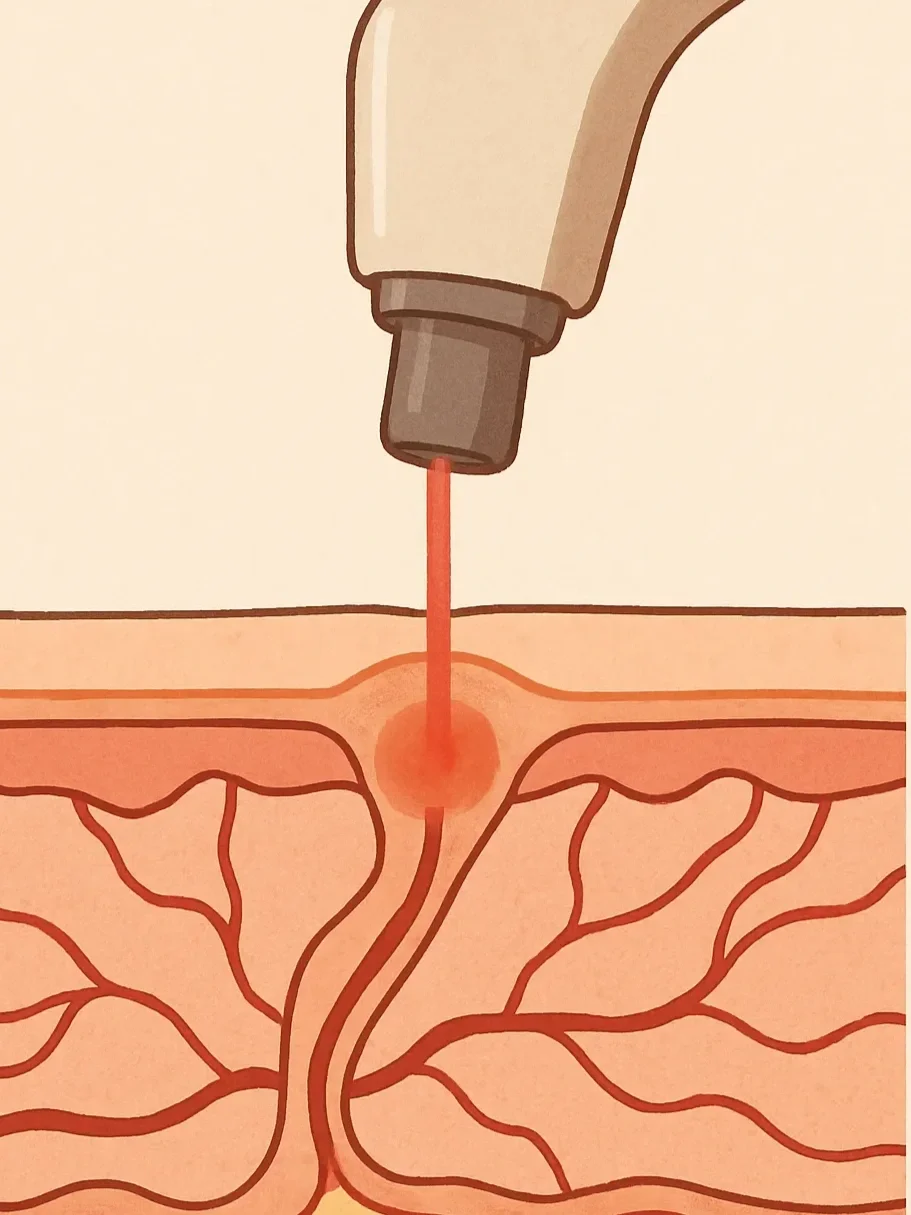
The short answer: DermaV, often written Derma V, is a vascular laser made by Lutronic. It uses two wavelengths, 532 nm and 1064 nm, to heat and seal small visible blood vessels. That reduces the appearance of facial redness, rosacea, broken capillaries and some birthmarks. At DERM Skin Specialists, treatment is nurse-led, and most people need 2 to 6 sessions.
Each wavelength has a job:
- 532 nm is absorbed by blood in fine surface vessels, and by pigment. It's used for redness, broken capillaries and some sun spots.
- 1064 nm reaches deeper, for larger or bluish vessels. It also powers Laser Genesis, a gentle mode for tone and texture.
A cooling spray protects the skin with each pulse.
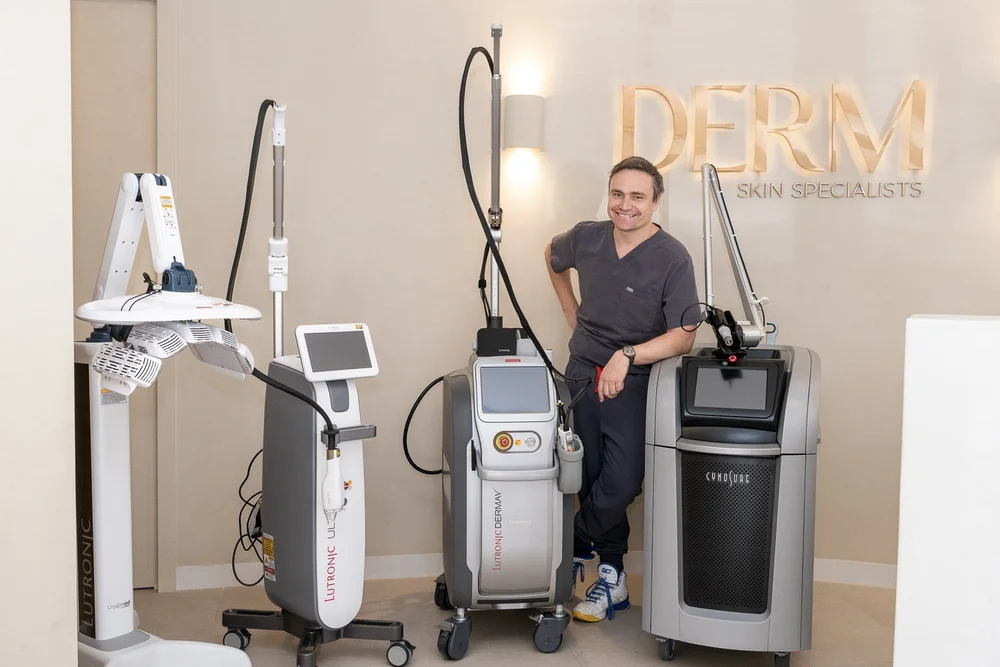
DermaV is one of several lasers in our Mount Gravatt laser suite. We see patients from across Brisbane's southside, including Holland Park, Carindale, Upper Mount Gravatt and Mansfield.
Disclosure: Dr Mitch Robinson has a commercial relationship with Cynosure Lutronic, which makes DermaV and other devices used at DERM Skin Specialists.
Redness fades in steps
What Results Can You Expect From Derma V?
Most people see redness and visible vessels fade gradually over a course of treatment, rather than clear skin after one session. Distinct vessels, such as broken capillaries on the nose and cheeks, tend to respond better than constant background redness. The aim is a meaningful improvement, not complete clearance.
Changes usually become more noticeable after several sessions, and progress photos help you see a difference that's easy to miss day to day.
What the research says. In a small 2025 study of 25 people with rosacea redness treated with DermaV, most of those assessed improved by more than half, often after 2 sessions. Swelling was common and lasted a few days, and no bruising was recorded (Actas Dermo-Sifiliográficas, 2025). It was small and retrospective, with 8 to 12 weeks of follow-up. A 2025 review of 25 randomised trials compared lasers and other energy-based devices for rosacea and found several options that reduce redness and visible vessels (JDDG, 2025). The authors noted that most of the trials had an unclear or high risk of bias.
Does the redness come back? Treated vessels often don't come back, but rosacea and sun damage are ongoing, so new vessels and some redness can return. The American Academy of Dermatology notes that results for visible vessels tend to last 3 to 5 years (AAD). An occasional maintenance session, daily SPF 50+ and avoiding your triggers help results last.
Derma V Laser Before and After Photos
Patients of DERM Skin Specialists treated with DermaV. Captions show the number of sessions and how far apart they were.
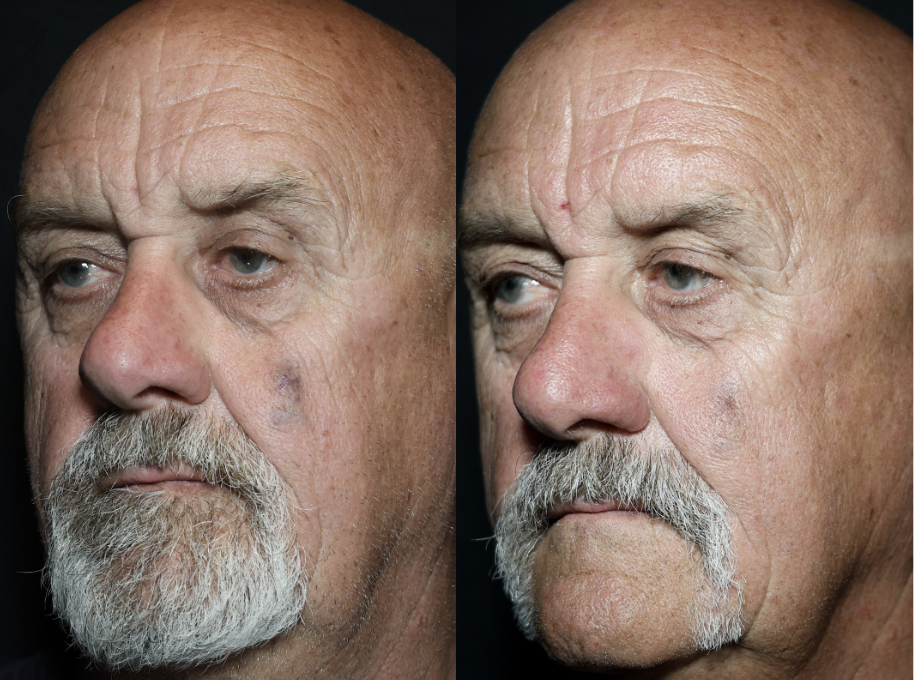 BeforeAfter 3 sessions
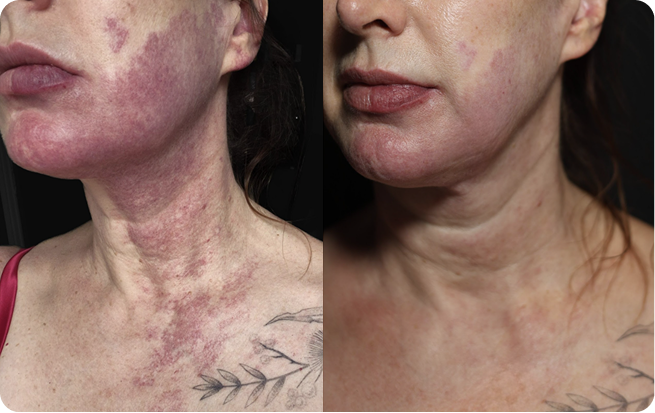 BeforeAfter 4 sessions
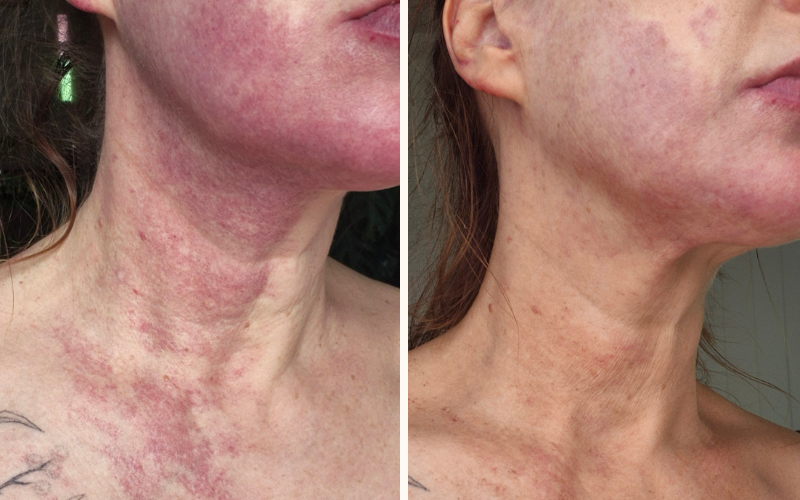 BeforeAfter 4 sessions
Before photo on the left in each pair. Tap a photo to see it larger. Individual results vary. Results depend on the type and depth of the vessels, your skin type and how your skin responds. Port wine stains usually lighten rather than clear. All procedures carry risks; see the risks section below.
Vessels first
What Can Derma V Laser Treat?
DermaV is mainly used for concerns caused by blood vessels. If a dermatologist should see you first, we'll tell you.
Rosacea and facial redness
Background redness and visible vessels on the cheeks, nose and chin. Laser is one part of a rosacea plan.
More on rosaceaBroken capillaries and thread veins
Fine red or purple lines on the face, also called spider veins or telangiectasia, most often around the nose and on the cheeks.
How we treat themPort wine stains and birthmarks
Red or purple birthmarks present from birth. They usually lighten over several sessions rather than clear.
See before and aftersRed marks after acne
Flat pink or red marks where spots used to be. They come from small blood vessels, and laser can help them fade faster.
Acne scars and marksActive acne
Part of our acne program, usually 3 to 4 sessions every 3 to 4 weeks, alongside your medical acne care.
Acne treatmentSun spots, tone and texture
532 nm can lighten some sun spots. Laser Genesis gently warms the skin to help tone, texture, fine lines and pores over a course.
PigmentationFor most brown spots and pigmentation, PicoSure Pro or LaseMD may suit you better. We'll tell you which.
Can Laser Help Rosacea and Facial Redness?
Yes, for the redness and visible vessels. Rosacea is a long-term condition, and laser treats its blood vessel part. It doesn't cure rosacea or stop flushing triggers such as heat, sun, alcohol, stress and spicy food.
Laser isn't the first step for every type of rosacea. Pimple-like bumps usually need medical treatment first. Thickening of the nose is treated differently, often with CO2 laser (more on rhinophyma). Sore, gritty or red eyes should be checked by a doctor.
Redness isn't always rosacea. It can come from sun damage, dermatitis or, occasionally, another medical condition. As Dr Mitch says on our rosacea page, "facial redness can sometimes be a marker of an underlying medical condition." That's why diagnosis comes first.
Looking for a rosacea dermatologist in Brisbane? Dr Emily Shao and Dr Benny Yau also see rosacea in our practice. More on rosacea treatment.
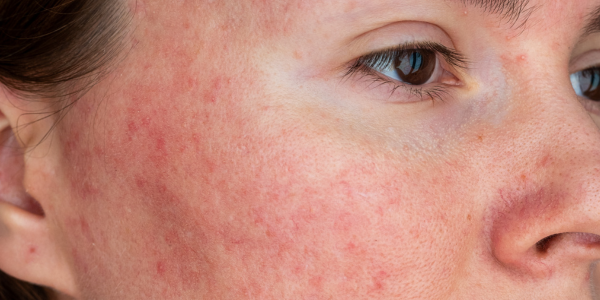
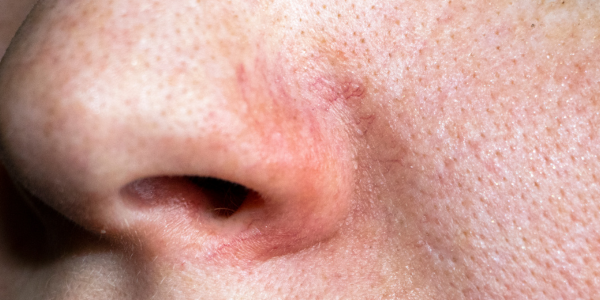
Laser for Broken Capillaries and Thread Veins on the Face
Broken capillaries, thread veins and facial spider veins are all names for the same thing: small, widened blood vessels near the surface of the skin, called telangiectasia. They're most common around the nose and on the cheeks, and they build up with sun damage, age, rosacea and family history.
They aren't actually broken, and creams can't close them, but a vascular laser can often seal them. The light heats the blood inside the vessel, the vessel seals, and your body clears it over the following weeks. Fine red vessels often respond well to 532 nm. Larger or bluish vessels, such as those on the side of the nose, may need 1064 nm and more sessions.
Straight after treatment, a vessel can look darker or slightly bruised before it fades. New vessels can form over time, so daily sun protection matters.
IPL vs Laser for Rosacea: How Does DermaV Compare?
IPL (intense pulsed light)
IPL isn't a laser. It's a flash lamp that gives off a broad band of filtered light. It can reduce rosacea redness: in a split-face trial of 29 people, IPL and a pulsed dye laser gave similar improvement after three monthly treatments (Dermatologic Surgery, 2009).
We don't use IPL at DERMSS. We use a dedicated vascular laser, because its set wavelengths and adjustable pulse let us match settings to the size and depth of your vessels.
Is DermaV an alternative to Vbeam?
Vbeam is a brand of pulsed dye laser (595 nm), long used for rosacea and port wine stains. It's effective, but stronger settings can leave purple bruising for 1 to 2 weeks. In a randomised split-side study of 35 people with port-wine birthmarks, a modern 532 nm laser cleared about as well as a pulsed dye laser, with less swelling, bruising and crusting (JEADV study). For widespread redness, a small trial found a pulsed dye laser worked better than 1064 nm alone (JAAD, 2013). On DermaV, redness is mainly treated with 532 nm, with 1064 nm kept for deeper vessels.
We don't have a pulsed dye laser. If you've had Vbeam or IPL before, tell us how your skin responded.
Dr Mitch's view
"In my practice, we've moved away from traditional pulsed dye lasers and instead use the DermaV laser."
"While pulsed dye lasers can be effective, they often cause more bruising and downtime. With DermaV, we can take a more controlled approach, starting conservatively and adjusting settings over time rather than trying to resolve everything in a single session."
From Dr Mitch's notes on our rosacea page.
Who Does Your Derma V Treatment?
Most DermaV treatments at DERMSS are done by our cosmetic nurses, who are Registered Nurses trained in laser, working within our dermatology practice. Dr Mitch leads the laser suite.
Some treatments are done by our dermatologists and priced after assessment. If your nurse thinks a dermatologist should see you first, for example for a birthmark or redness with an unclear cause, we'll tell you.
After each session, you're invited to send photos at day 1 and day 7. A dermatologist reviews them to check your response and guide your next settings. A patient coordinator helps with booking, spacing and follow-up.
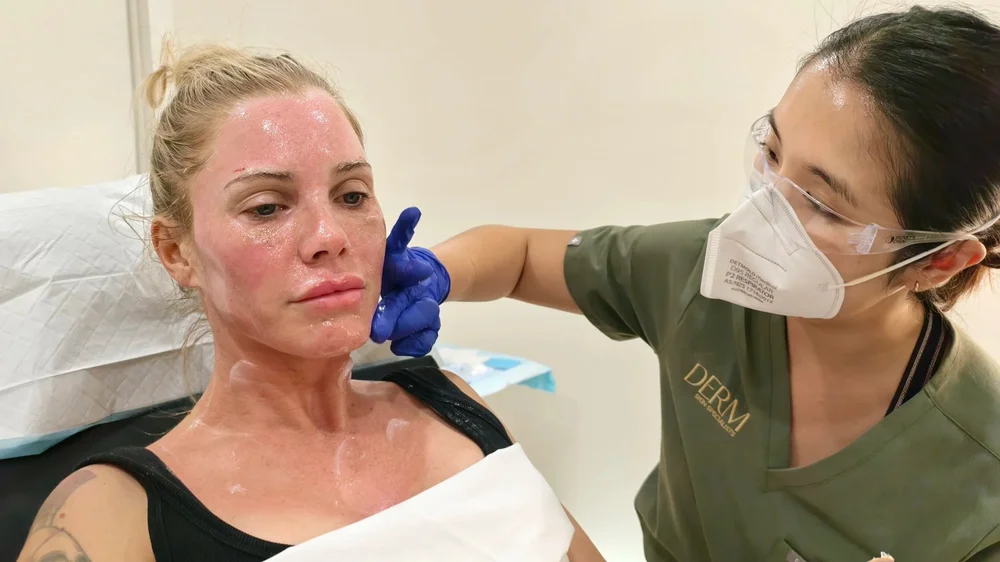
What Happens at a Derma V Appointment?
From your first visit to your review, here's what to expect.
Assessment
A nurse or dermatologist checks your skin, works out what's causing the redness, checks your skin type and takes photos. You get a plan with the total cost in writing.
Treatment
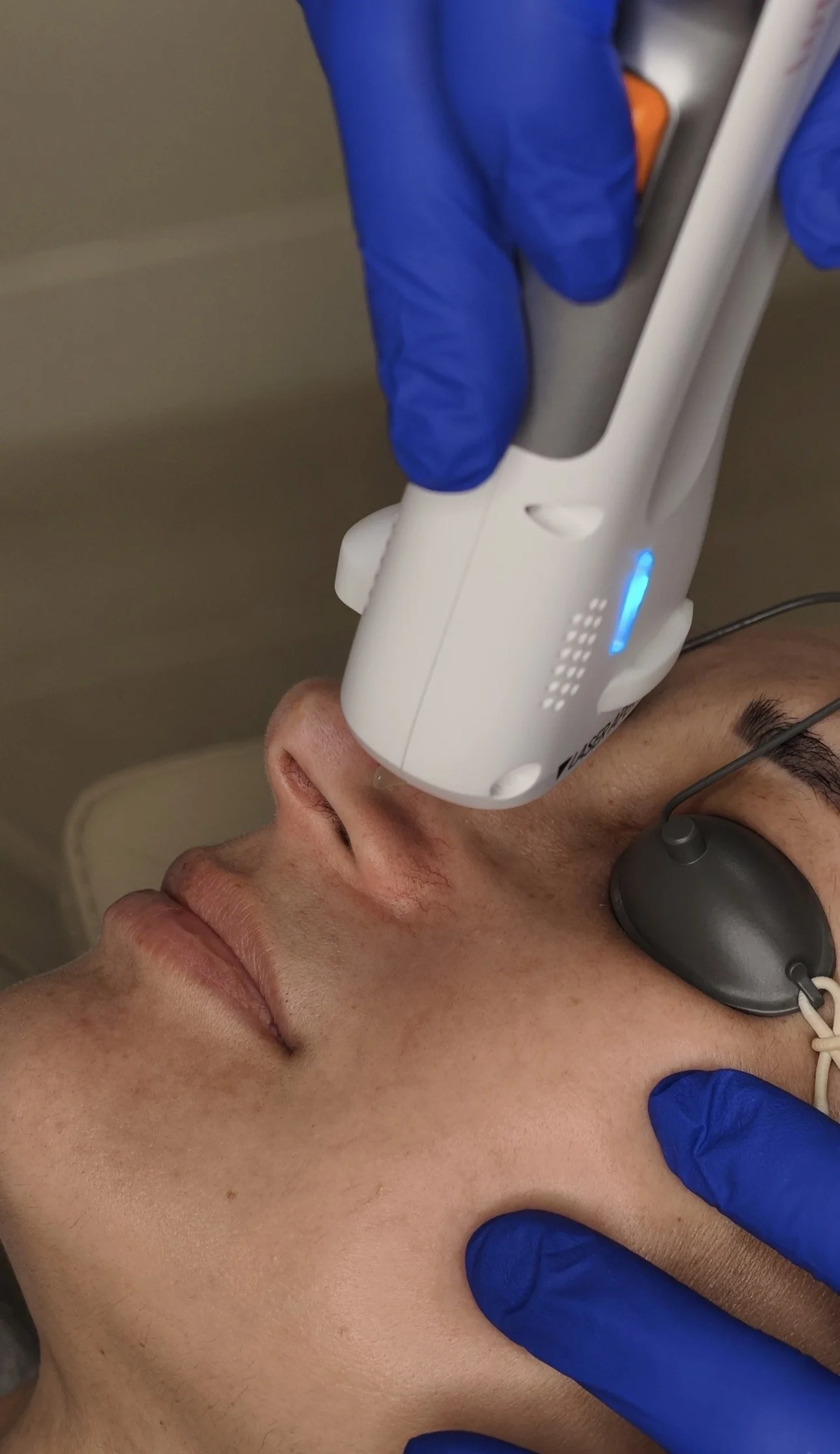
You wear eye protection while the handpiece passes over the area, with a cooling spray at each pulse. Most facial treatments take around 15 minutes, and you go home straight after.
Review
You send photos at day 1 and day 7. Sessions are usually 3 to 6 weeks apart, and settings are adjusted as your skin responds.
Does Derma V Laser Hurt?
Most people describe a warm snap with each pulse, like a light flick from a rubber band. A cooling spray fires with every pulse, which helps. Numbing is generally not needed.
The nose and upper lip feel sharper than the cheeks, and treating larger, deeper vessels can feel stronger. Afterwards your skin may feel warm, like mild sunburn, for a few hours.
If you're worried about discomfort, tell us. We can pause, adjust the settings, or spread treatment over more sessions.
Before your session
- Avoid tanning and fake tan in the weeks before
- Come with clean skin, without make-up on the area
- Tell us about any medicines or supplements you take
- Tell us if you've reacted to laser or IPL before
Derma V Recovery and Downtime, Day by Day
Downtime is short, but plan for it. Here's what's typical:
- Straight after: redness and warmth over the treated area. Treated vessels can look darker or bluish.
- Days 1 to 2: redness settles. Swelling is often worse the next morning, especially around the eyes.
- Days 3 to 4: most redness and swelling has gone.
- Up to 2 weeks: any bruising fades. Treated sun spots darken, then flake off.
Most people go back to work the same day or the next. Use a cool pack, gentle skincare and SPF 50+, and for 24 to 48 hours avoid heat, saunas, hot showers, hard exercise and alcohol, which can make redness and swelling worse.
Before an event. Allow at least 1 to 2 weeks after a session. For a wedding or other big event, start your course 3 to 6 months ahead, so there's time for several sessions.
When to call us
- Blisters, crusting or broken skin
- Pain, heat or swelling that gets worse after the first 2 days
- Pus, yellow crusting or a fever
- A patch that turns darker, lighter or white
Call 07 3487 1414. Outside hours, see your GP or go to an emergency department.
How Many Derma V Sessions Will You Need?
Most people need 2 to 6 sessions, about 3 to 6 weeks apart. A guide by concern:
- Rosacea and background redness: usually 2 to 4 sessions, 3 to 4 weeks apart
- Broken capillaries: depends on the number and depth of vessels; fine vessels may need fewer
- Port wine stains: often 4 or more, 1 to 2 months apart, lightening a little more each time
- Red marks after acne: usually 3 to 6 sessions, about 4 weeks apart
- Acne program: 3 to 4 sessions, every 3 to 4 weeks
- Laser Genesis: a course, for gradual change
Maintenance. Many people have an occasional touch-up session to keep their results.
If it isn't working. Your response is reviewed after each session. If redness isn't changing, we look again at the settings, the diagnosis, and whether another treatment would suit you better.
Derma V Laser for Olive and Darker Skin
DermaV can be used in many skin types, but olive, Asian, Middle Eastern, Indian and darker skin has a higher risk of temporary darkening or lightening after laser. The 532 nm wavelength is also absorbed by skin pigment, so tanned or darker skin needs extra care.
We reduce the risk by starting conservatively, using 1064 nm where it suits (it's less absorbed by skin pigment), spacing sessions further apart and not treating tanned skin. Most rosacea laser research involves lighter skin, so we adjust as your skin responds. Any brown marks usually fade over a few months with sun protection.
Tell us if you
- Tan easily or rarely burn
- Have had brown marks after spots, burns or laser
- Have a tan or used fake tan recently
- Have melasma
Derma V Side Effects and Risks, and How We Reduce Them
All procedures carry risks. Here are the main ones and what we do about each.
Common and short term
- Redness and swelling. Expected, and usually settled within 1 to 4 days. We plan sessions around your work and events.
- Bruising. Possible, especially over larger vessels, and fades within 1 to 2 weeks. Settings are chosen to keep it low.
- A short rosacea flare. The heat can set off flushing for a day or two. Cooling, gentle aftercare and avoiding your triggers help.
- Little change from one session. Redness usually fades in steps. Your plan sets out how many sessions to expect.
Less common
- Blisters or crusting. Uncommon. Cooling and settings matched to your skin reduce the risk. Call us if it happens.
- Darker or lighter patches. More likely with a tan or darker skin. We adjust settings and insist on sun protection. Most fade over months.
- Eye injury. Everyone in the room wears laser eye protection, and you wear eye covers throughout.
- Scarring. Rare. Careful settings and following your aftercare keep the risk low.
If something doesn't settle as expected, you come back to us. Call the clinic and we'll see you here, with a dermatologist involved.
How Much Does Derma V Laser Cost in Brisbane?
The cost depends on what's being treated, the size of the area and who treats you. Nurse-led DermaV sessions are:
- Thread veins: $350 per session
- Red acne marks: $495 per session
- Facial redness and rosacea: $595 per session
Treatment by a dermatologist is priced after assessment. A specialist consultation starts from $395. See our fees.
Before you start, you get the total cost of your course in writing, not just the price of one session. That's the number worth comparing between clinics, because a cheaper session that needs repeating more often can cost more overall.
Medicare and private health. Cosmetic and nurse-led treatment isn't covered by Medicare. Some vascular conditions and birthmarks may attract a rebate when a dermatologist treats them and strict criteria are met; some birthmark items, for example, require the mark to be visible from 3 metres. We'll tell you at your consultation if any part of your plan qualifies. No referral is needed to book, but a valid referral is needed for a Medicare rebate on a specialist consultation.
Your laser suite
Dr Mitchell Robinson, FACD
Specialist Dermatologist · Mount Gravatt, Brisbane
Dr Mitch leads our laser suite and teaches laser to dermatologists and registrars. Our nurses deliver most DermaV treatments within his practice; our dermatologists treat some cases, and Dr Mitch takes the complex ones.
- Leads our laser suiteDermaV, CO2, PicoSure Pro and LaseMD
- Teaches laser to dermatologistsLectures on laser protocols and safety in Australia and Asia
- Medical and cosmetic dermatologyLooks for what's driving the redness, not just the redness itself
Dr Mitch is a clinical presenter and Signature Partner for Cynosure Lutronic, a laser manufacturer.
Mount Gravatt, Brisbane
Derma V Laser in Mount Gravatt
DERM Skin Specialists is at 2/1437 Logan Road, Mount Gravatt, about 15 minutes' drive from the Brisbane CBD, with free parking onsite. Patients come from Sunnybank, Wishart, Eight Mile Plains, Greenslopes and across Brisbane's southside.
Common Questions
Derma V Laser: Common Questions
What does a Derma V laser do?
It heats the blood inside small visible vessels so they seal and fade, reducing redness and broken capillaries. It can also lighten some sun spots, and its Laser Genesis mode helps tone and texture.
Does Derma V work for rosacea?
It can reduce the redness and visible vessels of rosacea, usually over 2 to 4 sessions. It doesn't cure rosacea, so skincare, sun protection and managing your triggers still matter.
How long does redness last after Derma V?
Usually 1 to 2 days, sometimes up to 4. Swelling can be worse the morning after, especially around the eyes.
Will I bruise after vascular laser?
Sometimes, especially over larger vessels, and it usually fades within 1 to 2 weeks. In a study of 25 people treated with DermaV for rosacea, none bruised.
Can laser make my rosacea flare?
The heat can trigger a short flare of flushing for a day or two. Keeping cool and avoiding your triggers afterwards helps. Tell us if you've flared after laser or IPL before.
Does the redness come back after laser?
Treated vessels often don't come back, but rosacea and sun damage continue, so some redness and new vessels can return over time. Maintenance sessions and daily SPF 50+ help.
Can you treat redness and veins around the nose?
Yes. The nose is a common area for rosacea redness and broken capillaries. Vessels on the side of the nose can be stubborn and may need the deeper 1064 nm wavelength and more sessions.
Can Derma V treat red marks after acne?
Yes. Flat pink or red marks left by spots come from small blood vessels, and DermaV can help them fade faster, usually over 3 to 6 sessions. Dented scars need other treatments.
Can you remove cherry angiomas with laser?
Cherry angiomas are common, harmless red spots, and vascular lasers are one way to treat them. We check each spot first, because a new or changing spot should be looked at by a doctor. Ask at your assessment.
Do creams work for thread veins on the face?
No cream can close a visible vessel. Gentle skincare and sun protection help with redness, but existing vessels need in-clinic treatment such as vascular laser.
Is DermaV the same as Vbeam?
No. Vbeam is a pulsed dye laser (595 nm), while DermaV uses 532 nm and 1064 nm. Both treat redness and vessels. In a comparison study, a 532 nm laser caused less bruising. We don't have a Vbeam.
Should I have DermaV or PicoSure Pro?
DermaV mainly targets blood vessels, so it suits redness and veins. PicoSure Pro targets pigment and tattoo ink, so it suits brown spots. Some plans use both. More on PicoSure Pro.
What is Laser Genesis?
A gentle mode of DermaV that uses rapid 1064 nm pulses to warm the upper skin. Over a course it can help tone, texture, fine lines, pores and mild redness, usually with little visible recovery.
What should I avoid after vascular laser?
For 24 to 48 hours, avoid heat, saunas, hot showers, hard exercise and alcohol. Don't pick at any crusts, and use SPF 50+ every day.
Does Medicare cover laser for rosacea?
Cosmetic and nurse-led treatment isn't covered. Some vascular conditions and birthmarks may qualify when a dermatologist treats them and Medicare criteria are met. We'll check at your consultation.
Do I need a referral?
No referral is needed to book. A valid referral, usually from your GP, is needed for a Medicare rebate on a specialist consultation.
Will a nurse or a doctor treat me?
Most DermaV treatments are done by our Registered Nurses, within our dermatology practice. Some are done by our dermatologists, and a dermatologist reviews your progress photos.
How much is Derma V laser per session?
It depends on the area and who treats you. Nurse-led prices are on our fees page, and dermatologist-led treatments are priced after assessment. You get the total in writing first. See fees.
Find Out What's Behind Your Redness
Book a DermaV consultation with our nursing team. We'll look at what's causing your redness, explain what laser can and can't do, and give you a written plan with the total cost before you decide.
Clinical content overseen by Dr Mitchell Robinson, FACD (AHPRA MED0001946771). Updated October 2026. General information only, not medical advice. All procedures carry risks; suitability, recovery and results vary between individuals.