
Vitiligo · Mount Gravatt, Brisbane
Vitiligo Treatment in Mount Gravatt, Brisbane
Vitiligo treatment for adults and children, centred on narrowband UVB light therapy here in our clinic, the first-line treatment in guidelines for widespread vitiligo, alongside prescription creams. Led by specialist dermatologists Dr Emily Shao, Dr Benny Yau and Dr Mitch Robinson, FACD.
Specialist consultations from $395 · No referral needed to book · Medicare rebate with a valid referral · See fees

A dermatologist-led clinic. Vitiligo is diagnosed and managed by our specialist dermatologists, Dr Emily Shao, Dr Benny Yau and Dr Mitch Robinson, FACD, with narrowband UVB phototherapy here in the clinic.
Meet our teamVitiligo Care at a Glance
What Is Vitiligo, and Should You See a Dermatologist?
The short answer: vitiligo is a common autoimmune condition that causes white patches where the skin has lost its colour. It isn't contagious and it doesn't harm your general health, but it can spread, and it can affect how you feel about your skin. A dermatologist can confirm it's vitiligo, check how active it is, and help you decide whether to treat it. For spreading or widespread vitiligo, that usually means narrowband UVB light therapy, which we offer here in our clinic.
In vitiligo, the immune system attacks melanocytes, the cells that make skin pigment. The patches are flat, milky white and sharply edged, and hair in a patch can turn white too. It affects about 1 to 2 in 100 people, of every skin colour, usually starting before 30. It often runs in families and is linked with thyroid disease.
See a dermatologist early: other conditions look similar, and new or spreading vitiligo usually responds better than old patches.
We see patients from Mount Gravatt and across Brisbane's southside, including Holland Park, Carindale, Sunnybank and Mansfield. Most new patients are seen within two weeks.
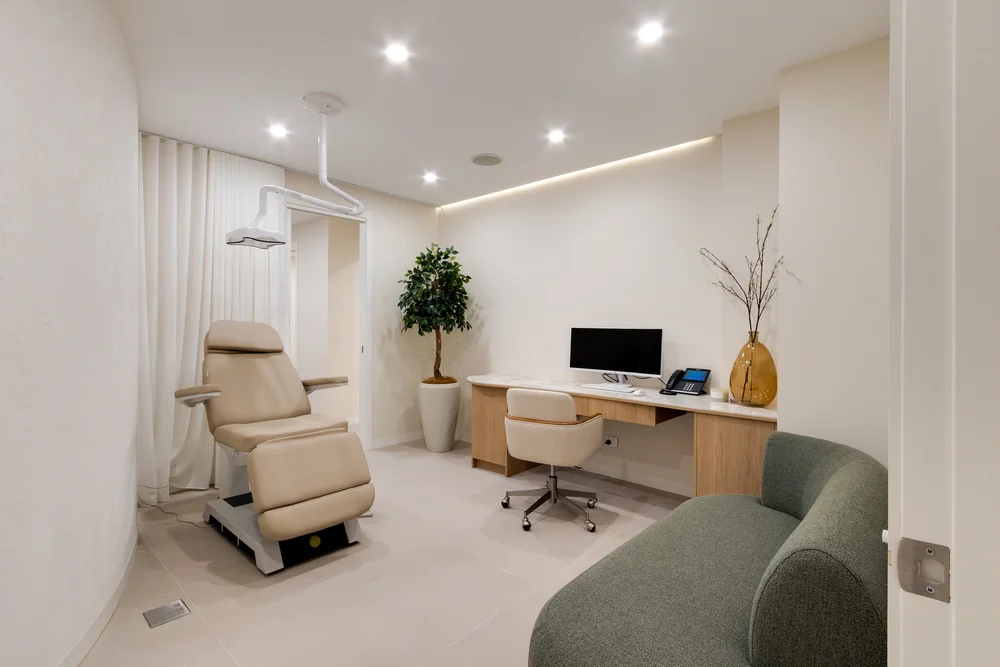
Colour returns slowly
Is Vitiligo Curable? What Results Can You Expect?
There is no cure for vitiligo yet. But treatment can often stop patches spreading and bring some colour back, especially on the face and neck. For most people the goal is less noticeable patches and a stable condition, not perfectly even skin.
Colour usually returns as small brown dots around hair follicles, or creeps in from the edges, and slowly joins up over months. Repigmentation is often partial.
What the research says. A review pooling 35 studies and about 1,400 people found that with narrowband UVB, about 3 in 4 people regained at least a quarter of their colour after 6 to 12 months, and about 1 in 3 regained most of it (75% or more) by 12 months. On the face and neck, 44% regained most of their colour, while hands and feet rarely did (JAMA Dermatology, 2017).
Does the colour stay? Often, but not always. In a 2025 study of 176 people treated with narrowband UVB, most good responders still had their colour at least 6 months after stopping, and longer courses were linked with longer-lasting results (Acta Dermato-Venereologica, 2025). It was a single-clinic study of past records. Vitiligo can return or appear somewhere new, so we keep reviewing you.
Dr Mitch on Vitiligo Treatment
"Vitiligo is often misunderstood as a cosmetic issue, but it's an autoimmune condition, and that distinction matters for how we approach treatment."
"Not every patient wants or needs active treatment. Some are managing well with camouflage or have made peace with their skin as it is, and that's a completely valid choice."
"Results take time and consistency; this isn't a quick fix."
From Dr Mitch's own notes on vitiligo.
Matched to your skin and your goals
How Do Dermatologists Treat Vitiligo in Brisbane?
Your plan depends on your type of vitiligo, how active it is, where your patches are, and what you want from treatment. Many people use two or more of these together.
UVB light therapy
- First-line in guidelines for widespread vitiligo
- For widespread, spreading or stubborn patches
- 2 to 3 short sessions a week in our clinic
- Progress reviewed every 3 months
- Medicare rebates may apply when eligible
Prescription Creams for Vitiligo
- Usually first for small or new patches, and on the face
- Calm the immune reaction in the skin
- Often combined with light therapy
- Clear instructions on where, how often and for how long
Protection and camouflage
- Sun protection for pale patches
- Self-tan and cover make-up options
- Support for how vitiligo affects you
- A valid choice if you'd rather not treat
If vitiligo is spreading fast. A dermatologist may suggest other prescription treatment for a short time to settle it, and will explain the benefits and side effects first.
Other options. For small patches that have been stable for at least a year, skin grafting is done in a few specialised centres, and we can discuss referral.
Choosing not to treat. That's a reasonable choice, especially for fair skin where the patches barely show. Sun protection and a thyroid check still matter.
Light therapy in our clinic
How Does Vitiligo Light Therapy Work?
Narrowband UVB phototherapy uses ultraviolet light of around 311 nm to calm the immune attack in the skin and wake up pigment cells in the hair follicles, which then move out into the white patch. It's the most widely used light therapy for vitiligo, and our main treatment for it.
Why many people choose UVB for vitiligo
- It treats large areas at once, including patches that are hard to reach with creams
- It's the first-line treatment in international guidelines for widespread vitiligo
- It's often combined with creams on the face and neck
- It can suit many children and adults, after assessment
- No tablets, and no routine blood tests
- A Medicare rebate may apply to your sessions
You stand in a light cabinet, or put your hands or feet in a smaller unit, for seconds to minutes, wearing protective goggles. The dose starts low and goes up gradually. Sessions are 2 to 3 times a week, usually not on back-to-back days.
Light therapy only works if you can keep coming, so think about how months of sessions fit around work, school and travel. More on UVB phototherapy.
A course of UVB at a glance
- 2 to 3 sessions a week, in clinic
- Seconds to a few minutes in the cabinet
- Dose adjusted at every visit
- Photos and review every 3 months
- Usually 6 to 12 months, longer if it's working
- Mild pinkness at most afterwards, if the dose is right
What Type of Vitiligo Do You Have?
The pattern of your patches helps predict how vitiligo may behave and which treatment is likely to help.
Is It Vitiligo or Something Else?
Not every pale patch is vitiligo, and look-alikes are treated very differently. Vitiligo is usually chalk white and sharply edged, while most look-alikes are pale rather than fully white, or slightly scaly.
We look at the colour, edges and pattern of your patches, and sometimes examine them under a special UV lamp, which makes true loss of pigment easier to see. A skin biopsy is rarely needed.
Because vitiligo is linked with thyroid disease, we may also suggest a blood test to check your thyroid, even if you feel well.
If it isn't vitiligo, we'll explain what it is and what will help. More on pigmentation problems.
Conditions that can look similar
- Pityriasis versicolor, a yeast on the skin that causes pale, fine-scaled patches on the chest and back
- Pityriasis alba, pale dry patches on children's faces, often with eczema
- Pale marks after eczema, psoriasis or a burn
- Small white spots on sun-damaged shins and forearms
- A pale birthmark that has been there since early childhood
How Long Does Vitiligo Treatment Take to Work?
Here's what a typical course of light therapy looks like:
- First 3 months. Often little to see. Some people notice the first brown dots in their patches.
- 3 to 6 months. We compare your photos. If colour is returning, we keep going. If there's no change at all, we talk about whether to continue or change the plan.
- 6 to 12 months and beyond. Colour keeps filling in on areas that are responding. Treatment can carry on for a year or more if it's still helping.
In one large clinic study of 579 people having UVB three times a week, patches had regained about 22% of their colour on average after 24 sessions, 33% after 48 sessions and 56% after 96 sessions, which is about 8 months of treatment (Acta Dermato-Venereologica, 2018). It was a single-centre study, and the face responded much more than the hands and feet. Prescription creams are usually judged after about 3 months.
Which Areas Respond, and Which Are Harder to Treat?
- Face and neck: usually respond most, often with good colour return.
- Trunk, arms and legs: often a moderate response over a longer course.
- Hands, feet, fingertips and skin over joints: slow, and often little change, because there are fewer hair follicles to supply new pigment cells.
- Lips and genitals: harder to treat, for the same reason.
- Patches where the hair has turned white: less likely to regain colour, because the pigment cells in those follicles have gone too.
Newer patches tend to respond more than long-standing ones, and segmental vitiligo responds less to light therapy.
Vitiligo in Children: What Should Parents Know?
Vitiligo often starts in childhood, where it's more often segmental, and can show up as a white patch of hair or eyelashes.
For most children we start with prescription creams, which are simple to use at home. Light therapy is generally not used in young children. Older children and teens may manage it if they can stand in the cabinet with goggles on and come in 2 to 3 times a week.
We'll usually suggest a thyroid blood test, and sun protection at school and sport: a broad-brimmed hat, a rash vest and SPF 50+.
Vitiligo can affect how a child or teenager feels. Let us know how your child is going, and we'll suggest support where it helps. Dr Emily Shao sees children, and paediatric dermatology is one of her special interests.
Book sooner if
- Patches are spreading quickly
- New patches are on the face, eyelids or genitals
- Your child is tired, gaining or losing weight, or has other signs of a thyroid problem
- Your child is upset or being teased about their skin
Can You Stop Vitiligo Spreading?
No one can predict exactly how vitiligo will behave. Some people keep the same few patches for decades; others have phases of spread, then quiet spells.
Treating active vitiligo early gives you a better chance of slowing it down, so if your patches are changing, don't wait for them to settle on their own.
Vitiligo tends to appear where skin is injured, rubbed or burnt, so avoid sunburn, straps and waistbands that rub, and scratching or picking at your skin.
Signs your vitiligo may be active
- New patches in the last 3 to 6 months
- Patches getting bigger
- Blurred edges, or a speckled, confetti-like look
- White patches appearing on cuts, scratches or rubbed skin
If you notice any of these, book a review.
How Do You Protect and Cover Vitiligo Patches?
Skin without pigment burns quickly, so in Brisbane that means SPF 50+ on exposed patches every day, plus a hat and covering clothes. Protecting the skin around your patches helps too: when it tans, the patches look more obvious.
Camouflage can make patches much less noticeable, with or without treatment. Self-tanning lotions add colour for a few days, and waterproof cover make-up can be colour-matched for the face and hands. We can suggest products.
Vitiligo can affect confidence, work and relationships. If it's getting you down, tell us, and we can help arrange support.
Vitiligo Care at Home
- SPF 50+ on exposed patches every day
- A hat and covering clothes outdoors
- Gentle skin care, no scrubbing
- Loose clothing where straps rub
- Self-tan or cover make-up if you'd like
- Using prescription creams exactly as directed
Does Vitiligo Look Different on Darker and Olive Skin?
Vitiligo affects every skin type, but patches stand out more on olive, brown and Black skin, so people are often keener to treat.
The good news is that light therapy works in all skin types, and darker skin can usually take a higher UVB dose without burning. The skin around your patches will tan during treatment, which can make the contrast stronger for a while. That evens out as the patches fill in and the tan fades.
Tell Us Before Vitiligo Treatment If You
- Burn easily or have had a bad sunburn
- Have had melasma or dark marks after skin treatments
- Have had skin cancer, or have many moles
- Take any medicines or supplements, as some make skin sensitive to light
- Get cold sores
Vitiligo Treatment Risks, and How We Reduce Them
All treatments carry risks. Here are the main ones and what we do about each.
Common, Short-Term Side Effects of Vitiligo Treatment
- Pinkness after UVB. Fades within a day or two. We adjust your dose every visit.
- Dry or itchy skin. Common during light therapy. A plain moisturiser helps.
- Tanning around patches. Expected with UVB. It fades after treatment ends.
- Stinging from creams. Usually settles. We tell you where to use them and for how long.
Less Common Vitiligo Treatment Risks
- A blistering burn. We start low, step up slowly and check your skin each session.
- Thinning or other changes from long use of creams. We plan breaks and review the skin you're treating.
- Cold sore flare-ups. Tell us if you get them, and we'll plan for it.
- Skin ageing and possible skin cancer risk over many sessions. Narrowband UVB hasn't been clearly linked to skin cancer in studies so far, but we keep count of your sessions and check your skin.
If it isn't working, we'll tell you. We review your progress every 3 months and stop or change treatment that isn't helping, rather than keeping you coming in.
What Happens at Your First Vitiligo Appointment?
From your first visit to your regular reviews, here's what to expect.
Your Vitiligo Assessment
A specialist dermatologist confirms the diagnosis, works out your type and how active it is, checks for related conditions and takes photos. We'll ask what you want from treatment.
Your Vitiligo Plan
You get a clear plan: which treatments, how often, when we judge them, and the cost. A patient coordinator helps book your sessions.
Your Vitiligo Review
We review you regularly, compare photos taken in the same lighting, and adjust treatment as your skin responds.
How Much Does Vitiligo Treatment Cost in Brisbane?
A specialist consultation starts from $395. With a valid referral from your GP or another doctor, you can claim a Medicare rebate on your consultation. A referral isn't needed to book.
Light therapy. Vitiligo is a medical condition, and Medicare rebates may apply to narrowband UVB when there's a medical reason for it and a dermatologist supervises it. Because a course runs for months, you get the per-session and typical course cost in writing before you start.
Other costs. Prescription creams come from your pharmacy; sunscreen and camouflage products are extra.
Honest advice. If treatment is unlikely to help, for example old patches on the hands with white hairs, we'll tell you first. See our fees.
Who Will Look After Your Vitiligo?
All three of our dermatologists are Fellows of the Australasian College of Dermatologists (FACD). Ask for any of them when you book.
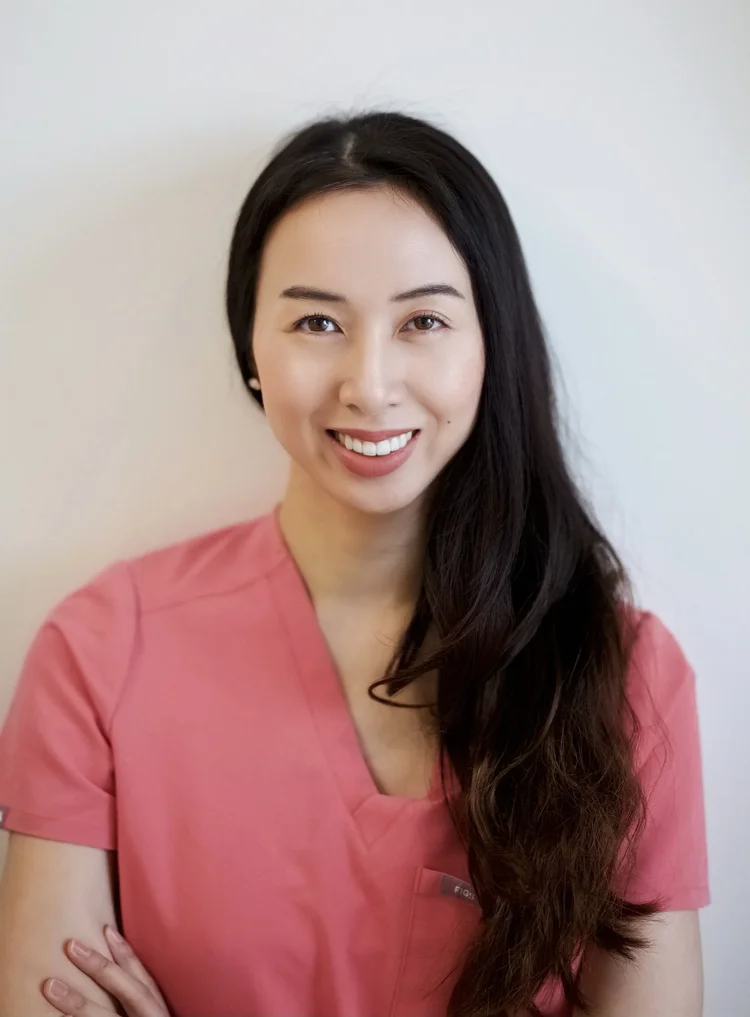
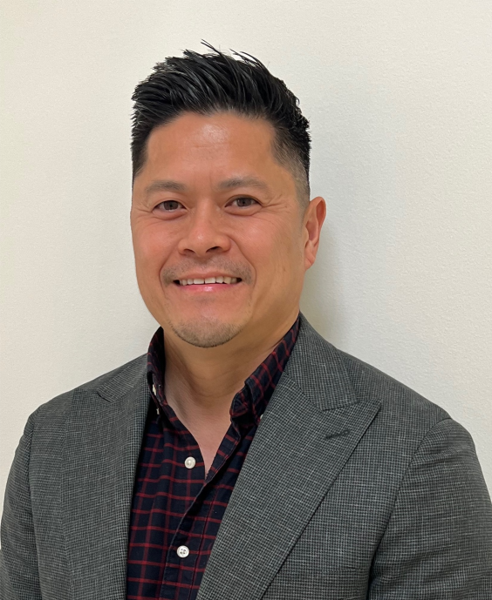
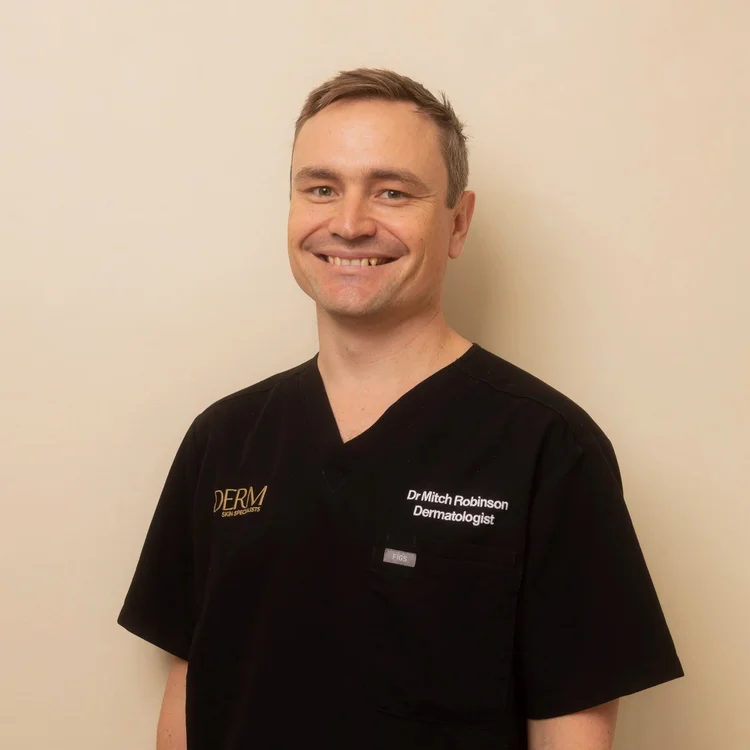
Mount Gravatt, Brisbane
Vitiligo Dermatologist in Mount Gravatt
DERM Skin Specialists is at 2/1437 Logan Road, Mount Gravatt, about 15 minutes' drive from the Brisbane CBD, with free parking onsite, which helps when you're coming in 2 to 3 times a week. Patients come from across Brisbane's southside, including Upper Mount Gravatt, Wishart, Eight Mile Plains and Greenslopes.
Common Questions
Vitiligo: Common Questions
Is vitiligo contagious?
No. You can't catch vitiligo or pass it on by touch, sharing towels or swimming together.
Is vitiligo genetic or hereditary?
It often runs in families, and genes play a part, but most children of a parent with vitiligo never develop it.
Is vitiligo an autoimmune disease?
Yes. The immune system attacks pigment cells, which is why it's linked with thyroid disease.
Is vitiligo dangerous?
Not to your general health, and the patches don't turn into cancer. The main risks are sunburn on pale patches and related thyroid disease.
Is vitiligo painful or itchy?
Usually neither. Some people notice mild itch before or as a new patch appears. Painful patches are usually sunburn.
Can vitiligo go away on its own?
Sometimes a little colour returns, more often in children. It's unpredictable, so spreading vitiligo is worth treating.
Once colour comes back, will it stay?
Often, especially after a longer course. But vitiligo can return in treated patches or appear in new places, so sun protection and reviews continue.
Can I use a solarium or the sun instead of UVB?
No. Commercial solariums are banned in Australia, and natural sun can't be dosed accurately, so it's more likely to burn your patches.
Does UVB light therapy cause skin cancer?
Studies of narrowband UVB haven't shown a clear increase in skin cancer. We keep count of your sessions and check your skin over time. More on skin checks.
Can I have UVB phototherapy at home?
Home units exist, but they're costly and need careful dosing and follow-up. Most people start in the clinic.
Can laser treat vitiligo?
Cosmetic lasers don't bring pigment back. The excimer laser, a focused UVB light used in some clinics for small patches, works in a similar way to the narrowband UVB we use.
Do diet or supplements help vitiligo?
No diet causes or cures vitiligo, and evidence for supplements is weak. Ask us first, as some increase light sensitivity.
Can children have light therapy for vitiligo?
Not usually young children. Older children and teenagers sometimes can, if they can manage the cabinet and come in 2 to 3 times a week. Creams are usually tried first.
Does Medicare cover vitiligo treatment?
With a valid referral, Medicare covers part of your specialist consultation. Medicare rebates may also apply to UVB light therapy when a dermatologist supervises it. We'll explain your costs before you start.
Do I need a referral to see a dermatologist for vitiligo?
No referral is needed to book. You need a valid referral, usually from your GP, to claim a Medicare rebate on your consultation.
Talk to a Dermatologist About Your Vitiligo
Book a consultation to confirm the diagnosis and get honest advice on which areas are likely to respond, how long it takes and what it costs.
Clinical content overseen by Dr Mitch Robinson, FACD (AHPRA MED0001946771). Updated October 2026. General information only, not medical advice. All procedures carry risks; suitability, recovery and results vary between individuals.