
Ear Keloids
Understanding Ear Keloids
Ear keloids are scars that result from an overgrowth of tissue after an injury, often appearing after piercings or surgery. They extend beyond the original wound and can become raised and firm. The goal of treatment is to reduce their size and prevent them from coming back.
Dr Mitch’s Take
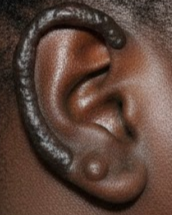
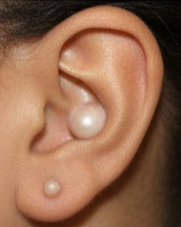
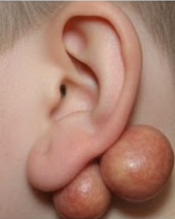
Ear keloids—especially “dumbbell” keloid scars that form after piercings—are relatively common and can be tricky to treat. My approach is to categorise them by size: keloids under 1 cm and those over 1 cm. For smaller keloids, we often use steroid injections. For larger ones, we consider a surgical approach. The key is a tailored treatment plan and good compliance with compression therapy to minimise recurrence.
Before & Afters
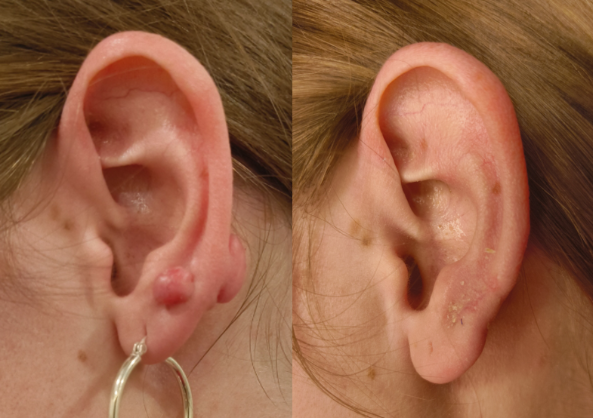
Ear Keloid - Surgical Revision - 4 weeks post
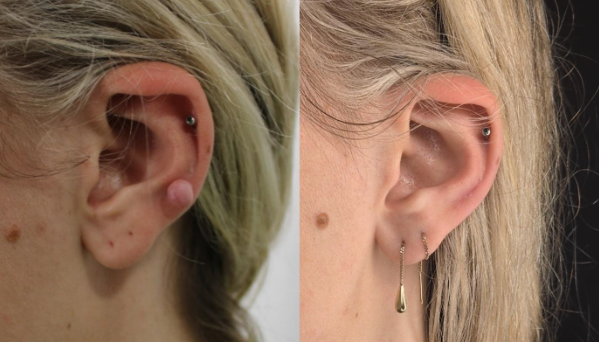
Ear Keloid - Surgical Revision - 3 months post
Medical Disclaimer
Before-and-after images are for general information only. Results vary between individuals and are not guaranteed. Images show outcomes for one patient only and may not reflect typical results. Any procedure or treatment should be considered only after a clinical assessment by a qualified health practitioner.
At a glance
Treatment
Steroid injections or surgical excision with compression earrings

Downtime
Injections: no downtime.
Surgery: typically 5–7 days

Costs
Steroid injections from $249 per session. Surgery from $2,495

Approach
Choose injections or surgery based on size, symptoms and behaviour

Concern
Ear keloids, including
piercing ‘dumbbell’ keloids

Course
Steroid injections are monthly for 3–6 months. Surgery is one-off

What the journey looks like at
Derm Skin Specialists
01
Initial assessment
We’ll start with a thorough assessment and history to measure the keloid and determine the best treatment approach.

02
Treatment planning
Depending on the size, we’ll choose between steroid injections or surgery. You’ll have a patient coordinator to guide you through either a series of injection sessions or a one-time surgery.
03
Treatment & follow-up
After treatment, we’ll have follow-up visits to ensure you’re healing well and discuss compression therapy to help prevent recurrence.
How Ear Keloids are managed at
Derm Skin Specialists
01
For Keloids less than 1cm
We use intralesional steroid injections, starting with a lower dose and adjusting as needed. The procedure is quick, and you can return to normal activities right away. There might be some mild side effects like temporary redness or skin thinning, but we manage these carefully.
02
For Keloids over 1cm
We recommend a surgical approach. The keloid is surgically removed, and after healing for a couple of weeks, we’ll provide a compression earring to reduce recurrence. Even with the best technique, there’s about an 80% clearance rate, meaning some keloids may come back, but we do everything we can to minimize that risk.
Not sure where to start?
We recommend a dermatology consultation to figure out the best treatment plan for your keloid. A nurse-led assessment may be an option for initial guidance, depending on your needs. We’ll help you find the right starting point for your care.