
Rosacea · Facial Redness · Vascular Lesions · Mount Gravatt
Rosacea & Vascular Lesion Treatment in Mount Gravatt, Brisbane
Specialist care for rosacea, flushing, facial redness, broken capillaries and thread veins, port wine stains and other vascular lesions, from our specialist dermatologists, with medical care where you need it and DermaV vascular laser for the redness creams can't shift.
Specialist consultations from $395 · Nurse-led DermaV laser from $350 a session · No referral needed to book · Total cost confirmed in writing before you start · See fees
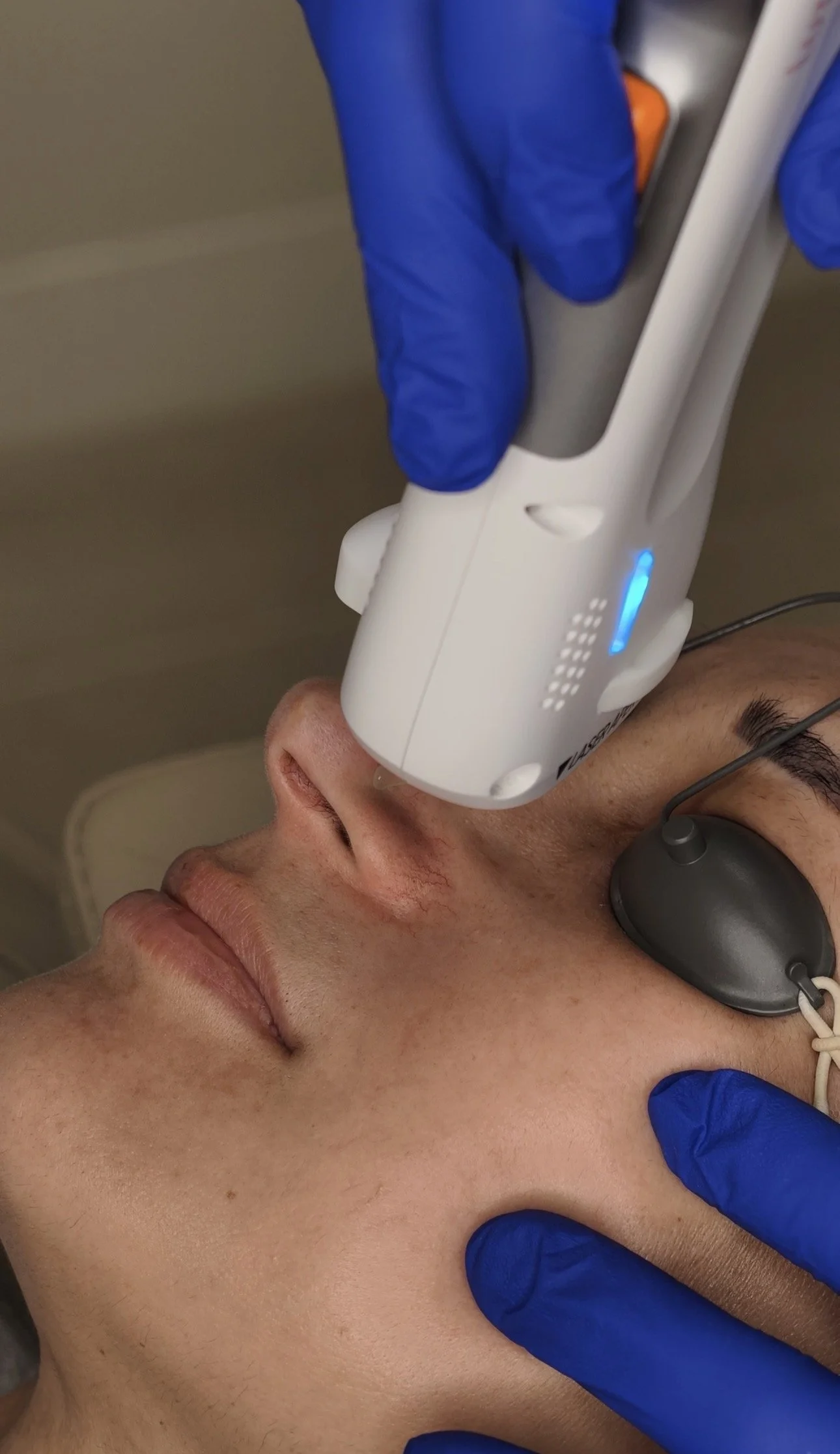
A dermatologist-led clinic. Rosacea is assessed by our specialist dermatologists, Dr Emily Shao, Dr Benny Yau and Dr Mitch Robinson, FACD, who leads our laser suite and teaches laser to dermatologists and registrars.
Meet our teamRosacea Treatment at a Glance
Rosacea, Redness and Vascular Lesion Before and After Photos
Patients of DERM Skin Specialists, published with consent. The same DermaV vascular laser treats rosacea vessels, port wine stains and other vascular lesions. Tap a photo to enlarge it.
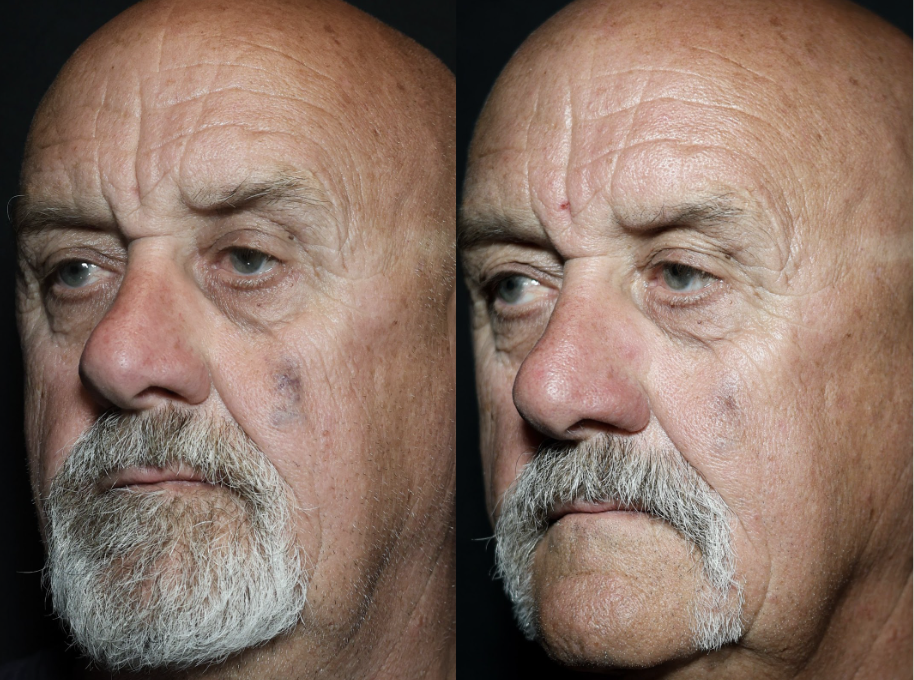 BeforeAfter 3 sessions
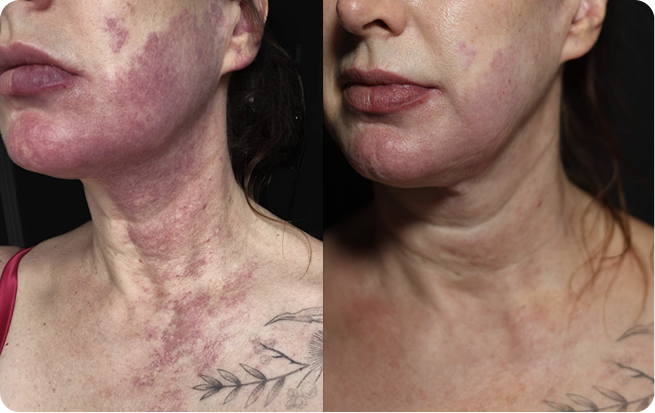 BeforeAfter 4 sessions

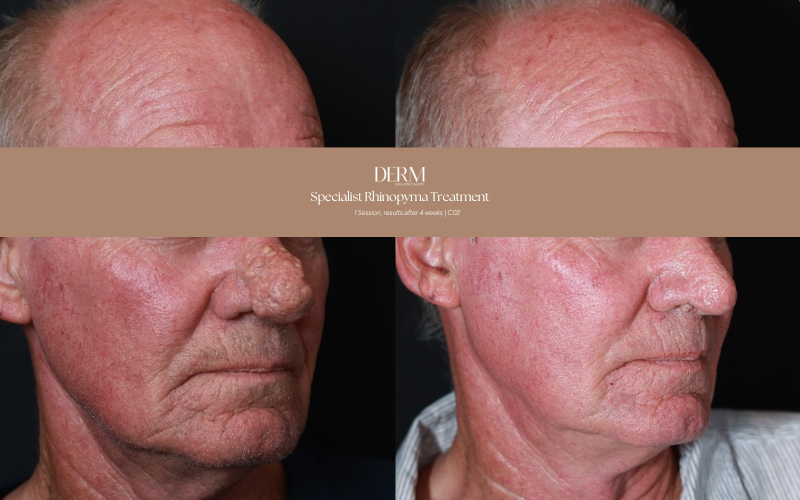 BeforeAfter 4 weeks
Before photo on the left in each pair. Tap a photo to see it larger. Individual results vary. Results depend on the type and depth of the vessels, your skin type and how your skin heals. Port wine stains usually lighten rather than clear. All procedures carry risks; see the risks section below.
Send Us Photos of Your Redness or Veins
Want to know which treatment suits your redness or veins and roughly what it costs? Fill in a short form, then reply to our text with a few photos. We'll be in touch ASAP about the right consult and a price guide.
Photo tips: one close-up and one of your whole face or the area, with no make-up or filters. Normal room light is fine.
Photos help us guide you but don't replace a consultation. Price guides are estimates; your exact costs are confirmed at your consult. For adults 18 and over. Photos are stored securely by our messaging provider, Podium, which may store data outside Australia.
What Is Rosacea, and Can It Be Cured?
The short answer: rosacea is a common, long-term skin condition that causes flushing, persistent redness and visible blood vessels on the cheeks, nose, chin and forehead, sometimes with pimple-like bumps. It can't be cured, but it can usually be well controlled. Most people do well with a mix of gentle skincare, trigger control, medical treatment and, for redness and vessels, vascular laser.
Rosacea tends to come and go. Many people first notice that they flush easily, then that the redness stays longer each time, with small vessels appearing on the cheeks and nose.
It's common. A 2018 review of 32 population studies estimated that about 5 in every 100 adults have rosacea, with wide variation between studies (British Journal of Dermatology, 2018). It's most often noticed between 30 and 50 and in fair skin, but it occurs in all skin types, where the redness can be harder to see.
Our dermatologists see rosacea in patients from Mount Gravatt and across Brisbane's southside, including Holland Park, Carindale and Upper Mount Gravatt. Getting help early pays off.
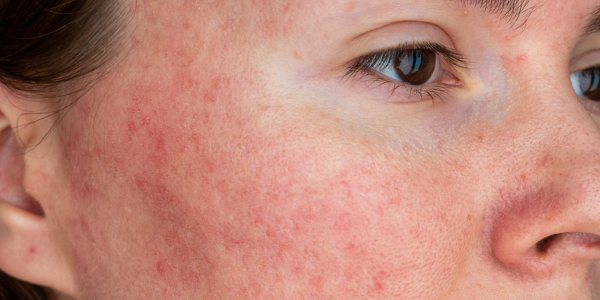
Control, not cure
What Results Can You Expect From Rosacea Treatment?
Most people get their rosacea noticeably calmer: fewer flares, less background redness, fewer bumps and fewer visible vessels. The goal is skin that's easier to live with, not skin that never goes red again.
Bumps usually settle with medical treatment over about 2 to 3 months. Visible vessels respond well to vascular laser, often over 2 to 4 sessions. Background redness improves more slowly, and flushing is the hardest part to switch off.
What the research says. An international panel of dermatologists recommends treating each feature you have, such as redness, vessels, bumps or eye symptoms, rather than treating rosacea as one thing, and combining treatments where needed (ROSCO panel, British Journal of Dermatology, 2020). That's consensus advice rather than new trial data. A large review of 152 trials found low- to moderate-certainty evidence that laser and light treatments reduce redness and, especially, visible vessels (British Journal of Dermatology, 2019); many of the laser trials were small. In a 2025 study of 25 people with rosacea redness treated with DermaV, most of those assessed improved by more than half (Actas Dermo-Sifiliográficas, 2025). It was small and retrospective, with 8 to 12 weeks of follow-up.
Does rosacea come back after treatment? Flares can return, especially in summer. Vessels sealed by laser often stay gone, but new ones can form. Daily skincare and SPF 50+, a plan for flares and an occasional maintenance session keep most people settled.
Name it to treat it
What Are the Types of Rosacea?
Dermatologists now describe rosacea by its features rather than fixed types. Most people have more than one, and each feature is treated differently.
Persistent redness and visible vessels
Background redness on the cheeks, nose and chin, often with fine broken capillaries, called telangiectasia. This is the part of rosacea that laser treats well.
How laser helpsFlushing
Waves of redness and heat set off by things like hot weather, exercise, alcohol or stress. Knowing and managing your triggers matters most here.
Common triggersBumps and pimples
Red bumps and pus spots that look like acne, but without blackheads. These usually settle with medical treatment before any laser.
Rosacea or acne?Thickened skin and nose
Skin that slowly becomes thick and bumpy, most often on the nose. This is rhinophyma, more common in men, and it's treated with CO2 laser by Dr Mitch.
More on rhinophymaEye rosacea
Red, gritty, dry or sore eyes and eyelids. Tell us about any eye symptoms. Eye pain or changes in your vision need a doctor the same day.
When to see a doctorSensitive, stinging skin
Burning or stinging with many products, dryness and swelling. A short, gentle skincare routine makes a real difference.
Skincare that helpsPort wine stains and other birthmarks aren't rosacea, but they're treated with the same vascular laser. More on DermaV laser.
Is It Rosacea, or Something Else?
Several causes of facial redness look like rosacea. The diagnosis matters, because treatment differs and some products that help other rashes make rosacea worse.
- Acne. Both cause red bumps, but acne has blackheads and whiteheads, and rosacea usually comes with flushing and background redness. Some people have both. More on acne.
- Sun damage. Years of sun cause redness and broken capillaries on the cheeks and neck, often with brown spots and rough patches. It's very common in Queensland. More on sun damage.
- Dermatitis. Seborrhoeic dermatitis causes red, flaky patches around the nose and eyebrows. Contact dermatitis is a reaction to something touching the skin. Both can sit alongside rosacea.
- A reaction to creams. Some creams used on the face for a long time can cause a rosacea-like rash. Bring a list, or photos, of everything you use.
- Another medical condition. Occasionally, facial redness is a sign of a condition affecting the rest of the body.
On our rosacea page, Dr Mitch writes that with facial redness, "the first step is always an accurate diagnosis." He adds: "Facial redness can sometimes be a marker of an underlying medical condition. As dermatologists, we're trained to assess for this, so treatment isn't just about appearance."
See a doctor promptly if
- Your eyes are painful, very red or sensitive to light, or your vision changes
- A red spot bleeds, crusts or doesn't heal (book a skin check)
- Redness comes with joint pain, fever or feeling unwell
- Redness spreads quickly, swells, or is hot and painful
For eye pain or changes in vision, see a doctor the same day.
What Triggers Rosacea, and What Helps at Home?
Triggers don't cause rosacea, but they set off flares and, over time, can make redness last longer. They vary from person to person. Keeping a simple diary for a few weeks, noting each flare and what came before it, is the quickest way to find yours.
Common triggers include sun, heat and humidity, hot drinks and hot showers, alcohol (especially red wine), spicy food, hard exercise, stress, wind and some skincare products. In Brisbane, summer heat and sun are a big one, and many people find their skin is worse from October to March.
Skincare for rosacea. Keep it simple: a gentle, unscented cleanser, a plain moisturiser and a broad-spectrum SPF 50+ every morning. Mineral sunscreens with zinc or titanium are often easier on sensitive skin. Skip scrubs, alcohol-based toners, strong acids and anything that stings, and test new products on your jawline first.
A rosacea-friendly routine
- SPF 50+ every day, all year in Brisbane
- Lukewarm water on your face, never hot
- Unscented, gentle products
- A hat and shade for outdoor exercise
- A diary to find your own triggers
- Bring your products to your consultation
Treat each feature
How Do Dermatologists Treat Rosacea?
Your plan is built around the features you have. Most people do well with a combination, adjusted over time.
Skincare and sun protection
The base of every plan. A gentle routine and daily SPF 50+ reduce flares and help laser results last.
A plan for your triggers
We help you work out what sets off your flares and what to do when one starts, so you're not guessing.
Prescription treatment
Prescription creams or tablets where appropriate, mainly for bumps, pimples, eye symptoms and flares. Your dermatologist explains the options, how long to use them and when to review.
DermaV vascular laser
For persistent redness and visible vessels that creams don't shift. Nurse-led at published prices, or dermatologist-led and priced after assessment.
Laser for rednessCO2 laser for a thickened nose
Established rhinophyma is reshaped with CO2 laser, always performed by Dr Mitch. Usually a single session, with 1 to 2 weeks of active healing.
More on rhinophymaEye care
Gritty, dry eyes often improve with simple eyelid care and treatment of the skin. We refer you to an eye specialist when needed.
Medical rosacea care is with our dermatologists, Dr Emily Shao, Dr Benny Yau and Dr Mitch Robinson.
Can Laser Get Rid of Rosacea Redness?
Laser can noticeably reduce rosacea redness and visible vessels for many people, but it doesn't cure rosacea or stop flushing. Bumps usually need medical treatment first, and laser works better on calm skin than mid-flare.
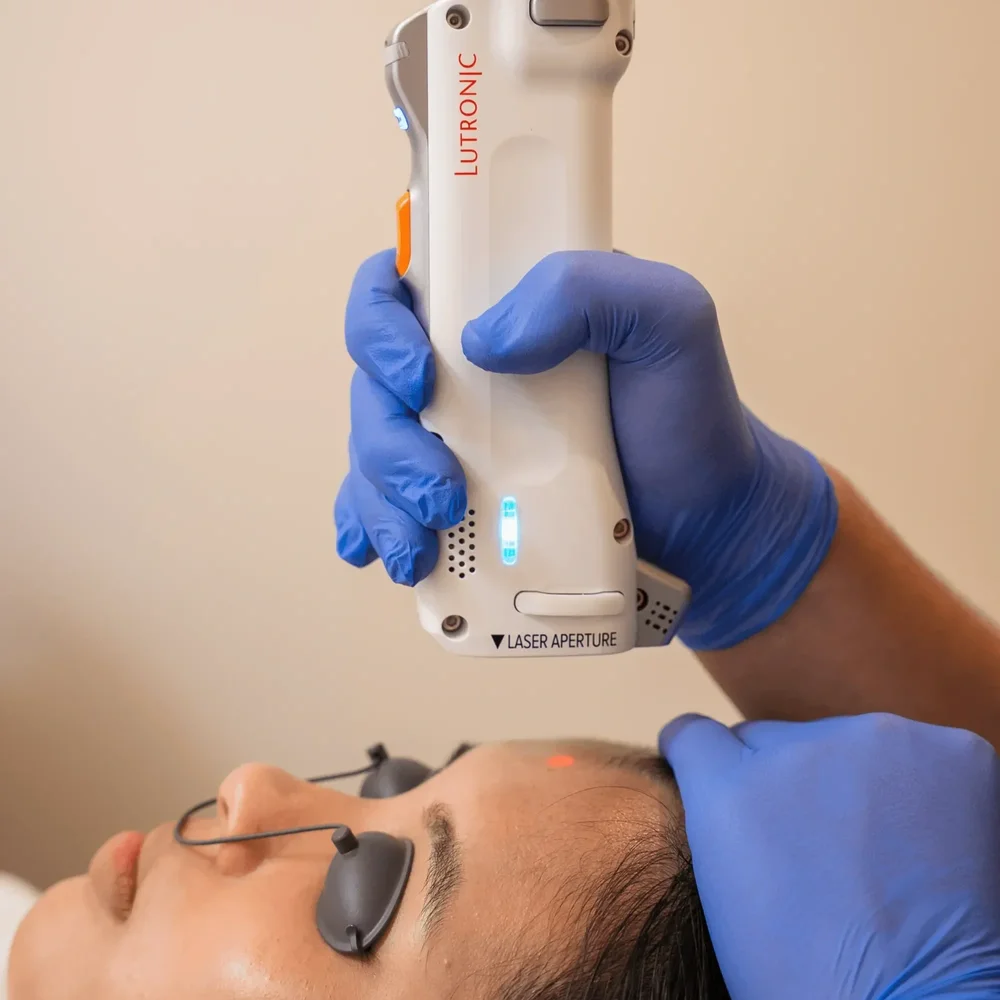
We use DermaV, a dedicated vascular laser made by Lutronic. Its 532 nm wavelength targets the blood in fine surface vessels, and its 1064 nm wavelength reaches larger, deeper or bluish vessels. A cooling spray protects the skin with each pulse, and a facial treatment takes around 15 minutes.
Dr Mitch explains the choice on our rosacea page: "In my practice, we've moved away from traditional pulsed dye lasers and instead use the DermaV laser. While pulsed dye lasers can be effective, they often cause more bruising and downtime." We don't use IPL or broadband light devices, which aren't true lasers.
How many laser sessions for rosacea? Usually 2 to 4, sometimes up to 6, about 3 to 4 weeks apart. After each session you're invited to send photos at day 1 and day 7, and a dermatologist reviews them to guide your next settings. If the redness isn't changing, we look again at the settings, the diagnosis and whether another treatment would suit you better.
Before an event. Allow at least 1 to 2 weeks after a session. For a wedding or other big event, start your course 3 to 6 months ahead.
How Do You Get Rid of Broken Capillaries and Thread Veins on the Face?
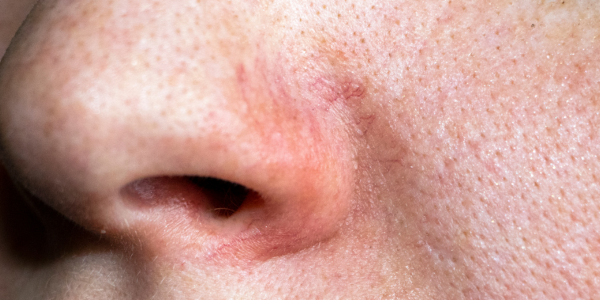
Broken capillaries, thread veins and spider veins on the face are all names for the same thing: small, widened blood vessels near the surface of the skin, called telangiectasia. They're most common around the nose and on the cheeks, and they build up with sun damage, age, rosacea and family history.
They aren't actually broken, and no cream can close them. A vascular laser can often seal them: the light heats the blood inside the vessel, the vessel seals, and your body clears it over the following weeks. Larger or bluish vessels, such as those on the side of the nose, can be stubborn and may need the deeper 1064 nm wavelength and more sessions.
Straight after treatment, a vessel can look darker or slightly bruised before it fades. Nurse-led thread vein treatment is $350 a session. New vessels can form over time, so daily sun protection matters.
Vascular lesions
Port Wine Stains, Red Spots and Other Vascular Lesions
The DermaV vascular laser we use for rosacea also treats birthmarks and red or purple spots made of blood vessels. A dermatologist confirms what the lesion is before any laser.
Port wine stains
- Flat pink, red or purple birthmarks, often on the face or neck
- Usually a series of 4 or more sessions, about 4 weeks apart
- They lighten rather than disappear, and may need top-ups
- Assessed by a dermatologist before treatment
Cherry and spider angiomas
- Small bright red spots, or tiny red “spiders” on the face
- Often need only 1 or 2 sessions
- Nurse-led, once a dermatologist has checked the spot
Venous lakes and other lesions
- Dark blue-purple bumps on the lips or ears
- Red-brown mottling on the sides of the neck
- Treatment planned after an assessment
What Happens at Your Rosacea Appointment?
From your first visit to your review, here's what to expect.
Rosacea Dermatologist Assessment
A dermatologist examines your skin, asks about flushing, triggers, eye symptoms and what you use on your skin, and confirms whether it's rosacea. Photos are taken each visit.
Your Rosacea Plan
You get a plan matched to your features: skincare, a trigger plan, prescription treatment if needed, and laser if it suits. Any laser course is quoted in writing, with the total cost, before you start.
Your Rosacea Review
Medical treatment is usually reviewed after about 2 to 3 months. After each laser session you send photos at day 1 and day 7. Your plan is adjusted as your skin responds.
Does Rosacea Laser Hurt, and How Long Is the Downtime?
Most people describe a warm snap with each pulse, like a light flick from a rubber band. A cooling spray fires with every pulse, and numbing is generally not needed. The nose and upper lip feel sharper than the cheeks. If you're worried, tell us and we can adjust the settings.
Here's what's typical after a facial session:
- Straight after: redness and warmth, like mild sunburn. Treated vessels can look darker.
- Days 1 to 2: redness settles. Swelling is often worse the next morning, especially around the eyes.
- Days 3 to 4: most redness and swelling has gone.
- Up to 2 weeks: any bruising fades.
Most people go back to work the same day or the next. For 24 to 48 hours, avoid heat, saunas, hot showers, hard exercise and alcohol, which can set off a flare. Use a cool pack, gentle skincare and SPF 50+.
When to Call Us After Rosacea Treatment
- Blisters, crusting or broken skin
- Pain, heat or swelling that gets worse after the first 2 days
- Pus, yellow crusting or a fever
- A patch that turns darker, lighter or white
Call 07 3487 1414. Outside hours, see your GP or go to an emergency department.
Rosacea Treatment for Olive and Darker Skin
Rosacea is often missed in olive, Asian, Middle Eastern, Indian and darker skin, because redness is harder to see. It may show up as a dusky or brownish tone, warmth, stinging, dryness or bumps instead. Most rosacea research has involved lighter skin, so a dermatologist's diagnosis matters even more.
Laser can still be used, with extra care. The 532 nm wavelength is also absorbed by skin pigment, so darker or tanned skin has a higher risk of temporary darkening or lightening. We start conservatively, use 1064 nm where it suits, space sessions further apart and don't treat tanned skin. Any brown marks usually fade over a few months with sun protection.
Tell Us Before Rosacea Treatment If You
- Tan easily or rarely burn
- Have had brown marks after spots, burns or laser
- Have a tan or have used fake tan recently
- Have melasma
What Are the Risks of Rosacea Laser? And How We Reduce Them
All procedures carry risks. Here are the main ones with vascular laser, and what we do about each.
Common, Short-Term Side Effects of Rosacea Treatment
- Redness and swelling. Expected, and usually settled within 1 to 4 days. We plan sessions around your work and events.
- Bruising. Possible, especially over larger vessels, and fades within 1 to 2 weeks. Settings are chosen to keep it low.
- A short rosacea flare. The heat can set off flushing for a day or two. Cooling, gentle aftercare and avoiding your triggers help.
- Little change from one session. Redness usually fades in steps. Your plan sets out how many sessions to expect.
Less Common Rosacea Treatment Risks
- Blisters or crusting. Uncommon. Cooling and settings matched to your skin reduce the risk. Call us if it happens.
- Darker or lighter patches. More likely with a tan or darker skin. We adjust settings and insist on sun protection. Most fade over months.
- Eye injury. Everyone in the room wears laser eye protection, and you wear eye covers throughout.
- Scarring. Rare. Careful settings and following your aftercare keep the risk low.
Prescription treatments can have side effects too, and your dermatologist goes through them with you. If something doesn't settle as expected, you come back to us. Call the clinic and we'll see you here, with a dermatologist involved.
How Much Does Rosacea Treatment Cost in Brisbane?
Rosacea care has two parts, and they're priced differently.
Dermatologist care. A specialist consultation starts from $395. Laser and procedures done by a dermatologist, including CO2 laser for rhinophyma, are priced after assessment and quoted in writing.
Nurse-led DermaV laser. Prices per session:
- Thread veins: $350
- Red acne marks: $495
- Facial redness and rosacea: $595
The real cost of a course. Most people need 2 to 4 sessions for rosacea redness, so a nurse-led course for facial redness is usually $1,190 to $2,380, plus an occasional maintenance session. You get the total cost of your course in writing before you start. That's the number worth comparing between clinics.
Medicare and private health. Cosmetic and nurse-led treatment isn't covered by Medicare. Laser for some vascular conditions may attract a rebate when a dermatologist treats you and strict criteria are met: for example, the redness or vessels must be visible from 3 metres, and rebates are limited to 4 sessions in 12 months. We'll tell you at your consultation if any part of your plan qualifies. No referral is needed to book, but a valid referral is needed for a Medicare rebate on a specialist consultation. See our fees.
Your rosacea team
Who Treats Rosacea at DERM Skin Specialists?
Specialist Dermatologists and Registered Nurses · Mount Gravatt, Brisbane
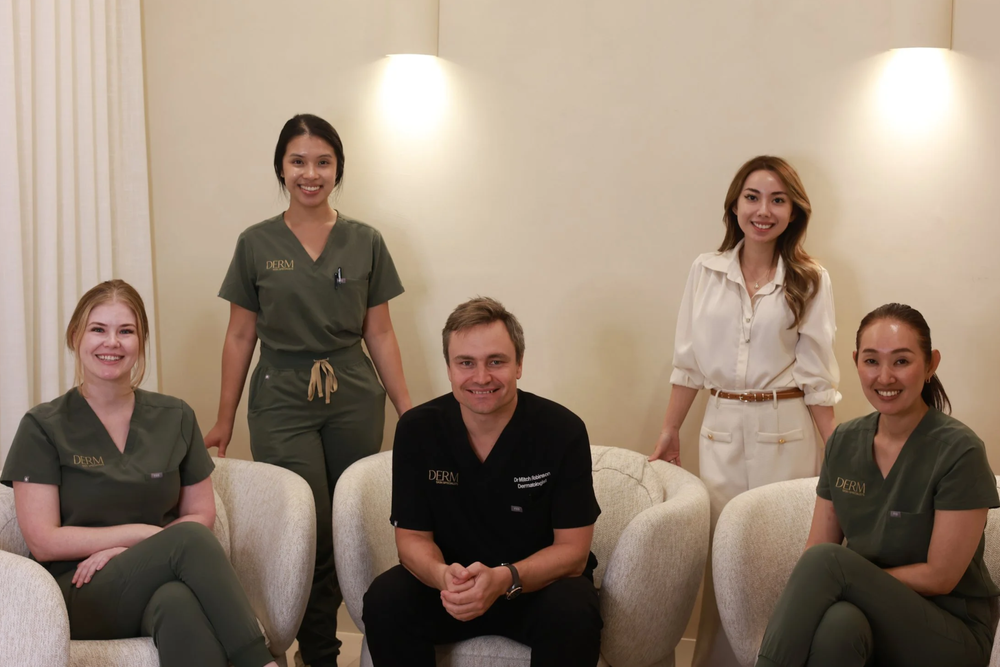
Rosacea is a medical condition first, so your care starts with a specialist dermatologist. Laser is done by our dermatologists or by our cosmetic nurses, who are Registered Nurses trained in laser.
- Dr Emily Shao and Dr Benny Yau, FACDSpecialist dermatologists who diagnose and treat rosacea and other medical skin conditions
- Dr Mitch Robinson, FACDLeads our laser suite, takes the complex cases and performs all CO2 laser, including for rhinophyma
- Registered Nurses, led by senior nurse HatsuNurse-led DermaV at published prices, with a dermatologist reviewing your progress photos
Mount Gravatt, Brisbane
Rosacea Treatment in Mount Gravatt
DERM Skin Specialists is at 2/1437 Logan Road, Mount Gravatt, about 15 minutes' drive from the Brisbane CBD, with free parking onsite. Patients come from Sunnybank, Mansfield, Wishart, Eight Mile Plains, Greenslopes and across Brisbane's southside.
Common Questions
Rosacea and Facial Redness: Common Questions
Can laser treat a port wine stain?
Often, yes. The DermaV vascular laser can lighten port wine stains over a series of sessions, usually 4 or more, about 4 weeks apart. They lighten rather than disappear completely, and some need top-up treatment. A dermatologist assesses the birthmark first.
What causes rosacea?
The exact cause isn't known. Genes, over-reactive blood vessels, the skin's immune response and tiny mites that live on everyone's skin all seem to play a part. Triggers such as sun, heat, alcohol and stress set off flares.
Does rosacea go away on its own?
Rarely for good. It tends to come and go, with flares and calmer spells. Without treatment, redness and visible vessels often slowly increase.
How can I tell if it's rosacea or acne?
Rosacea causes flushing and background redness and doesn't cause blackheads. Acne does. Some people have both, and a dermatologist can tell them apart.
Is rosacea contagious?
No. You can't catch rosacea or pass it on to anyone.
Does alcohol cause rosacea?
It doesn't cause it, but alcohol, especially red wine, is a common trigger for flushing and flares. Many people find cutting back helps.
Why is my rosacea worse in summer?
Heat, humidity and UV are among the most common triggers, so Brisbane summers are hard on rosacea. Daily SPF 50+, shade and keeping cool help.
What sunscreen should I use with rosacea?
A broad-spectrum, unscented SPF 50+. Mineral sunscreens with zinc or titanium are often less irritating. Use it every day, all year.
Can I wear make-up with rosacea?
Yes. Gentle, unscented or mineral make-up is usually fine, and a green-tinted primer can tone down redness.
Does laser get rid of rosacea for good?
No. Laser reduces redness and visible vessels, and treated vessels often stay gone, but rosacea itself continues. Many people have an occasional maintenance session.
How long do laser results last?
It varies. The American Academy of Dermatology notes that results for visible vessels tend to last 3 to 5 years. Background redness may need maintenance sooner, especially with ongoing triggers.
Do you use IPL for rosacea?
No. We use DermaV, a dedicated vascular laser, rather than IPL or broadband light devices.
Can rosacea affect my eyes?
Yes. Red, gritty, dry or sore eyes and eyelids can be part of rosacea. Eye pain or changes in vision need to be seen by a doctor the same day.
Can rosacea make my nose bigger?
In some people, mostly men, the skin of the nose slowly thickens over years. This is rhinophyma. Established rhinophyma is treated with CO2 laser, performed by Dr Mitch.
Can a nurse treat my rosacea?
Our Registered Nurses do nurse-led DermaV laser for redness and vessels. Diagnosis and medical treatment are with our dermatologists.
Do I need a referral to see a dermatologist?
No referral is needed to book. A valid referral, usually from your GP, is needed for a Medicare rebate on the consultation.
Does Medicare cover laser for rosacea?
Nurse-led and cosmetic treatment isn't covered. Some vascular conditions treated by a dermatologist may qualify if strict criteria are met. We'll check at your consultation.
What if laser doesn't work for me?
We look again at the diagnosis, the settings and your triggers, and talk through other options. We won't keep repeating sessions that aren't helping.
Get Your Redness Properly Diagnosed
Book a consultation with one of our dermatologists. We'll work out what's driving your redness, explain what treatment can and can't do, and give you a written plan with the total cost before you decide.
Not ready to book? Send us photos first for a consult and price guide.
Clinical content overseen by Dr Mitch Robinson, FACD (AHPRA MED0001946771). Updated October 2026. General information only, not medical advice. All procedures carry risks; suitability, recovery and results vary between individuals.