
RedTouch PRO 675 nm Laser · Mount Gravatt, Brisbane
RedTouch PRO Laser in Mount Gravatt, Brisbane
A newer 675 nm fractional laser for pigmentation, melasma, fine lines and skin texture, with redness for a few hours to a day or two. Planned within our dermatology practice, where several lasers mean you're matched to the one that suits your skin.
$495 a full-face session, including a peel and LED · Total confirmed in writing before you start · No referral needed to book · See fees
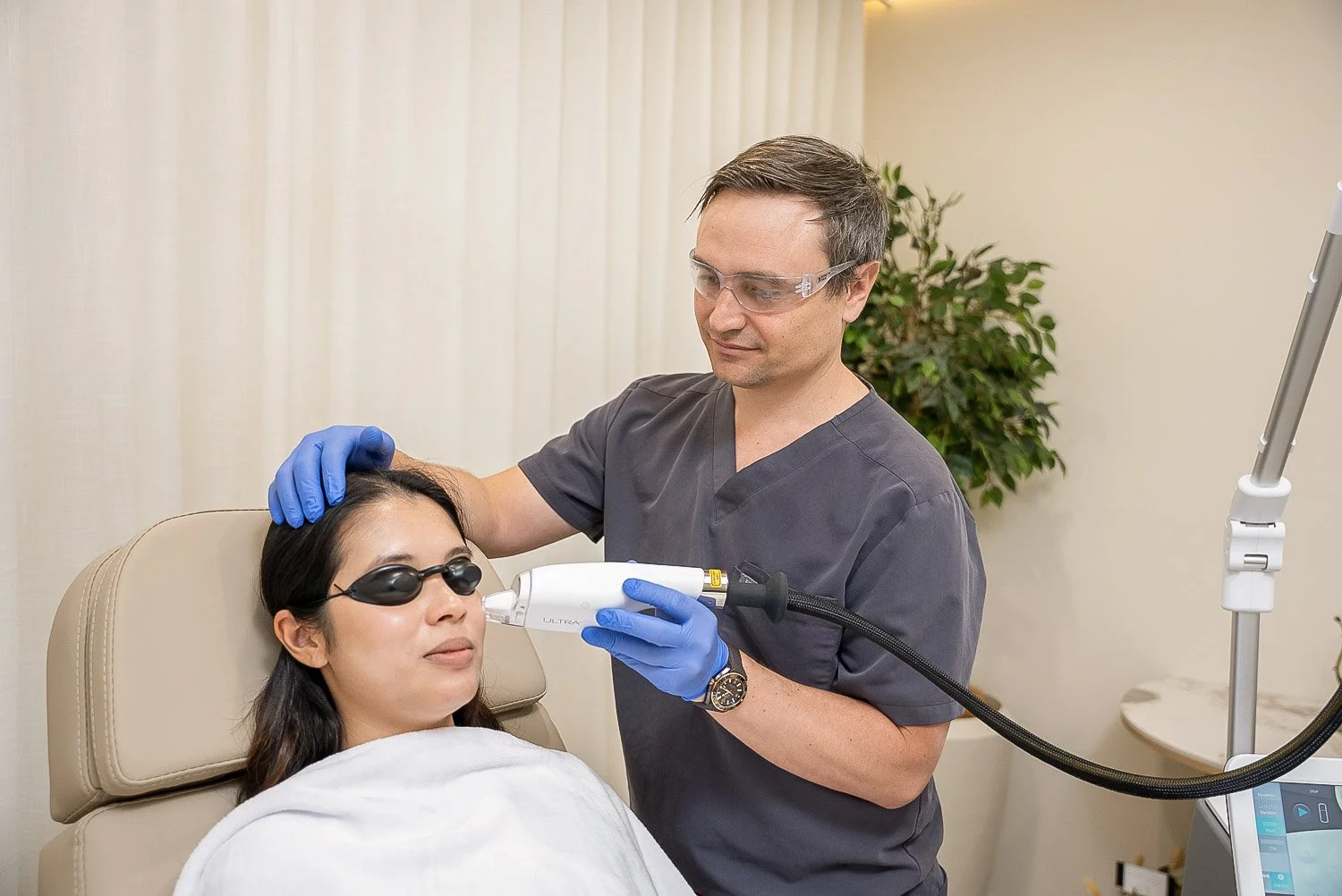
A dermatologist-led clinic, founded by Dr Mitchell Robinson, FACD, who teaches laser to dermatologists and registrars. RedTouch PRO is one of several lasers here, so the choice is about your skin, not one machine.
Meet Dr MitchRedTouch PRO at a Glance
A newer laser, explained honestly
What Is RedTouch PRO Laser?
The short answer: RedTouch PRO is a 675 nm fractional laser made by DEKA, an Italian laser company. It places a grid of tiny dots of red laser light into the skin to prompt new collagen and lift excess pigment, while leaving most of the surface intact. It can improve pigment, fine lines, texture and uneven tone, with redness for a few hours to a day or two. It's a newer laser, and the published research is encouraging.
You may also see it called the RedTouch laser or Red Touch laser; the PRO is the newer version. It's one of several lasers here, alongside PicoSure Pro, LaseMD, DermaV, CO2 and erbium. It sits between gentle treatments, such as peels and LED, and stronger resurfacing such as fractional CO2, which needs one to two weeks of recovery.
We see patients from Mount Gravatt and across Brisbane's southside, including Holland Park, Carindale and Sunnybank.
Light is quick. Collagen is slow.
What Results Can You Expect From RedTouch PRO?
Expect gradual improvement, not a new face. Pigment usually changes first: treated spots darken, then shed over 2 to 3 weeks. Texture and fine lines improve slowly as new collagen forms, so we judge your result about 3 months after your last session.
Most plans are 1 to 4 sessions, about 4 weeks apart; the published studies used 3. Melasma and acne scars may need more.
What the research says. In published studies, average scores improved by roughly 25 to 40 percent for wrinkles and melasma, with smaller gains for acne scars (details below).
What if it doesn't work for you? We'll review your photos with you and explain why. Some skin responds better to a different laser, so we may move to LaseMD, PicoSure Pro or fractional CO2 rather than repeat something that isn't helping.
Red light, aimed at collagen
How Does the 675 nm RedTouch Laser Work?
Most resurfacing lasers, including CO2, erbium and the 1927 nm thulium laser in LaseMD, are absorbed by water. That heats the top layers of skin, which is why they peel and flake.
RedTouch PRO uses red light at 675 nm. DEKA says this wavelength is absorbed by collagen and by melanin, the brown pigment in skin, more than by water and blood. So the light can reach the deeper skin, where collagen sits, while the surface stays mostly intact. In a biopsy report from one patient, treated skin showed more new collagen fibres than untreated skin 45 days later (Photobiomodulation, Photomedicine, and Laser Surgery, 2021). Encouraging, but it's one person.
The laser is fractional: a scanner places the light in a grid of tiny dots, with untreated skin in between to speed healing, and the handpiece tip is chilled. A gentle gliding mode, called Moveo, warms the skin evenly; a standard mode places stronger, deeper dots. Many treatments use both.
In plain terms
- Red laser light, not an LED facial
- Aims at collagen and pigment; the surface stays mostly intact
- Collagen keeps building for months after each session
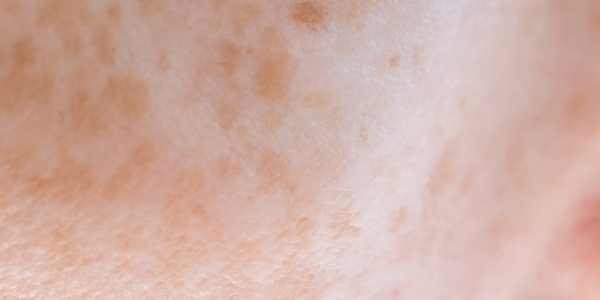
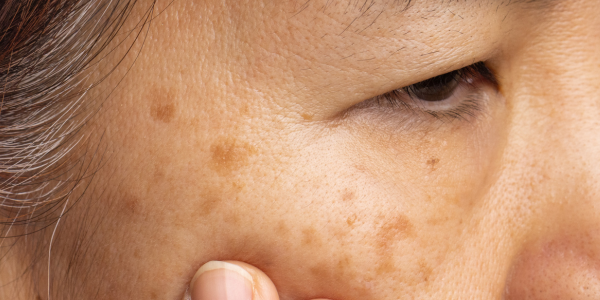
What Can RedTouch PRO Treat?
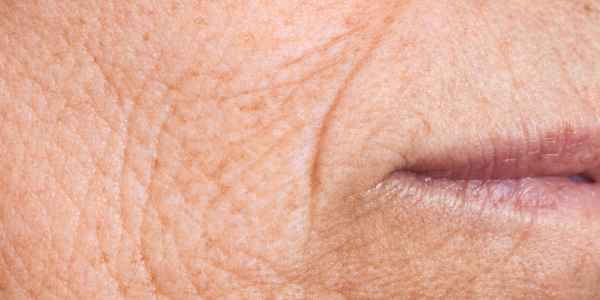
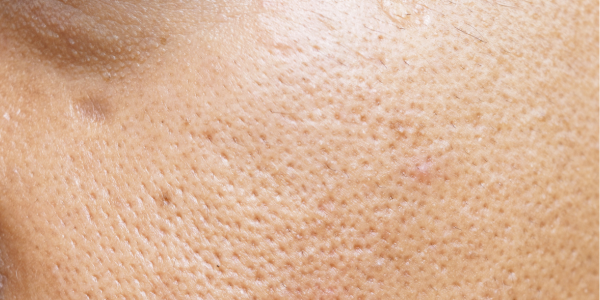
RedTouch PRO treats the skin as a whole rather than one spot at a time. Your skin is assessed first, so any spot of concern is checked by a doctor before laser.
Who Is RedTouch PRO Suited To?
It suits early signs of ageing and sun damage, when you want gradual improvement without a week off. It's often a good fit if you:
- Have fine lines, rough texture or dull, uneven skin
- Have olive or darker skin and are wary of lasers that heat the surface
- Can't take more than a day or two away from work or family
It's less suited to deep wrinkles, deep acne scars and sagging skin, which usually need fractional CO2 laser, scar procedures, skin tightening or a surgical opinion. If one session of something stronger would do more for you than three of RedTouch PRO, we'll say so.
We may wait, or suggest something else, if you
- Are pregnant or breastfeeding
- Have a tan, fake tan or recent sunburn
- Have active acne, a skin infection or a cold sore
- Have had raised scars, keloids or a reaction to laser before
- Take medicines that make your skin sensitive to light
RedTouch PRO for Olive and Darker Skin
Olive, Asian, Middle Eastern, Indian, Pacific Islander and darker skin is more prone to brown marks after heat or injury, called post-inflammatory hyperpigmentation. That's one reason people with darker skin ask about RedTouch PRO.
The early signs are encouraging. A university group in Bangkok has treated people with skin types III to V, meaning light brown to brown skin, in three studies. Its melasma and skin-ageing studies reported no post-inflammatory hyperpigmentation. But each study had only 16 to 28 people, so the risk isn't zero.
We reduce the risk by checking your skin type and tanning history, starting gently, sometimes testing a small area first, and asking you to protect your skin from sun. If brown marks appear, they usually fade over a few months and can be treated.
Tell us if you
- Tan easily or rarely burn
- Have had brown marks after spots, burns or cuts
- Have melasma, or had it in pregnancy
- Have had a reaction to a laser or peel before
Lighten, then maintain
Can RedTouch PRO Help Melasma?
Melasma is a long-term condition. Hormones, sunlight, visible light and heat all drive it, so no laser cures it. Treatment aims to lighten the patches and keep them lighter.
675 nm has been studied for melasma, including in darker skin. In a study of 28 women with skin types III to V, melasma scores were about 41 percent lower three months after three monthly sessions, and about 34 percent lower at six months, showing some pigment returning (Dermatology and Therapy, 2026).
Because heat can make melasma worse, we treat it gently, space sessions out, and pair laser with daily sun protection and a skincare plan. Most people need occasional top-ups. More on pigmentation and melasma.
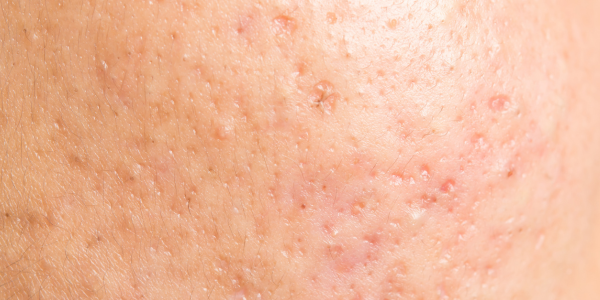
Can RedTouch PRO Help Acne Scars?
It can help mild acne scarring and the uneven texture around it, but the change is modest. In a 2025 study from Bangkok, 16 adults with skin types III to IV had three monthly sessions. Six months later, their scar scores had improved by about 15 percent on average, and blinded assessors judged half of them at least 25 percent better (Lasers in Surgery and Medicine, 2025).
Deeper scars need more. Rolling scars are tethered from underneath and usually need subcision, ice pick scars need TCA CROSS, and boxcar scars respond more to fractional CO2 laser. RedTouch PRO can be one part of a plan, for example for people with darker skin or little time for recovery. More on acne scar treatment.
Different lasers, different jobs
RedTouch PRO vs LaseMD, PicoSure Pro, CO2 and RF Microneedling
With several lasers here, we don't need to fit every concern to one machine. This guide is based on how each one works and the published research.
RedTouch PRO
675 nm, non-ablative fractional. Aims at collagen and pigment; the surface stays mostly intact. Suits pigment, fine lines, texture and melasma, including in darker skin. Redness for a few hours to 2 days.
LaseMD ULTRA
1927 nm thulium, non-ablative fractional. Absorbed by water in the upper skin. Strong for sun damage, brown spots and dullness, with 2 to 4 days of redness and flaking.
More on LaseMDPicoSure Pro
755 nm picosecond. Breaks up pigment with very short pulses. Often the first choice for distinct brown spots. Mild redness for a day or two.
More on PicoSure ProFractional CO2
Ablative. Vaporises tiny columns of skin. Tends to give more change per session for deeper wrinkles and acne scars, with about 5 to 14 days of recovery. Performed by a dermatologist.
More on CO2 laserRF microneedling
Needles plus radiofrequency. Fine needles deliver heat into the deeper skin. Suits texture, pores and acne scars, including in darker skin, with 1 to 3 days of redness or small grid marks.
XERF
Radiofrequency, no needles. For loose skin on the face and neck. Tightening rather than resurfacing, so a different job from RedTouch PRO.
More on XERFDoes RedTouch PRO Hurt?
Most people find it quite tolerable. You'll feel warmth and, in the standard mode, quick hot prickles as the dots are placed. The chilled tip helps. In two recent studies, average pain scores were about 0 to 2 out of 10 (skin ageing study, melasma study), and the melasma study used no numbing at all.
Thin or bony areas, such as the upper lip and around the eyes, can feel sharper. We can use numbing cream if you'd like it. Afterwards your skin may feel warm and tight, like mild sunburn, for a few hours.
What helps
- Cooling built into the handpiece
- Numbing cream if you want it
- Short breaks whenever you need one
- A cool compress afterwards
What Happens at Your RedTouch PRO Appointment?
From your first visit to your final review, here's what to expect.
Assessment
We ask about tanning, cold sores, medicines and past treatments, and check any brown spots so nothing suspicious is lasered. We take photos and tell you which laser suits you and what the course costs.
Treatment
Your skin is cleansed and everyone in the room wears eye protection. The laser is passed over the area with the chilled tip. Most people go back to their day afterwards.
Review
Sessions are usually about 4 weeks apart. We compare photos taken in the same lighting and adjust settings as your skin responds.
RedTouch PRO Downtime: Recovery Day by Day
Most people go back to work the same day or the next. What's typical:
- Straight after: redness and warmth, like mild sunburn, sometimes with mild swelling. It often settles within a few hours.
- Days 1 to 2: any remaining redness fades. Skin can feel dry or tight. Most people can wear makeup the next day.
- Weeks 1 to 3: treated brown spots darken, then shed as tiny crusts over 2 to 3 weeks. Let them fall off on their own.
- Week 4: skin often looks brighter and smoother, and your next session is usually due.
- Months 1 to 6: collagen keeps forming, so texture and fine lines can keep improving.
Use gentle skincare, avoid sun, saunas and hard exercise for a day or two, and wear SPF 50+ daily. Pause retinol and exfoliants for a few days either side of treatment.
Before an event. Allow at least 2 weeks after a session, and aim to finish your course 4 to 6 weeks before a wedding or big occasion. Don't have your first session in the week before.
When to call us
- Pain, heat or swelling that gets worse after the first 2 days
- Blisters, open sores or yellow crusting
- Clusters of small sores, which can be a cold sore flare
- Brown patches that appear in the weeks after treatment
Call 07 3487 1414. Outside hours, see your GP or go to an emergency department.
RedTouch PRO Side Effects and Risks, and How We Reduce Them
All procedures carry risks. Here are the main ones and what we do about each.
Common and short term
- Redness, warmth and mild swelling. Expected, usually settling within 2 days.
- Darker, flaking spots. A normal sign that pigment is lifting. Don't pick them; they shed over 2 to 3 weeks.
- Dryness and sensitivity. Common for a few days. Moisturiser helps.
- Less change than hoped. Results vary. We set realistic goals and review you between sessions.
Less common
- Brown marks after treatment. More likely in olive and darker skin, or after sun. We adjust settings, may test a small area and insist on sun protection.
- Melasma flare. Heat can stir melasma up. We treat it gently and space sessions out.
- Blisters, burns or scarring. Rare. Settings matched to your skin and the chilled tip reduce the risk.
- Cold sore flare-ups or infection. Tell us if you get cold sores; we'll plan for it.
- Eye injury. Lasers can damage the eyes, so everyone in the room wears eye protection.
If something doesn't heal as expected, you come back to us. Call the clinic and we'll see you here, with a dermatologist reviewing any complication.
How Much Does RedTouch PRO Cost in Brisbane?
A full-face RedTouch PRO session is $495, and it includes a light peel and LED in the same visit. Other areas are quoted at your assessment, and you get the price of the whole course in writing before you book.
Compare the total, not the price per session. Three sessions of a gentler laser can cost more than one session of something stronger. We'll tell you if a different option gives you more for your money.
Medicare and private health. RedTouch PRO is cosmetic, so it isn't covered by Medicare and usually isn't covered by private health insurance. No referral is needed. If you'd like a dermatologist's opinion as well, a specialist consultation starts from $395. See our fees.
Promising, but early
What Does the Research Say About 675 nm Lasers?
The first clinical studies appeared in 2020. Much of the research comes from a few groups, particularly in Italy, where DEKA is based, and Thailand.
- Melasma: 25 women with fairer skin improved three months after three sessions (Photobiomodulation, Photomedicine, and Laser Surgery, 2020). In 28 women with skin types III to V, scores were 41 percent lower at three months and 34 percent lower at six, with no post-inflammatory hyperpigmentation (Dermatology and Therapy, 2026).
- Skin ageing: 22 women with skin types II to IV had less wrinkling three months after three sessions (Photobiomodulation, Photomedicine, and Laser Surgery, 2021). In 20 people with skin types III to V, wrinkle scores were 25 to 31 percent lower up to six months later (Archives of Dermatological Research, 2026).
- Acne scars: 24 women improved three months after three sessions (Lasers in Medical Science, 2021). In 16 adults with skin types III to IV, scar scores were about 15 percent lower at six months (Lasers in Surgery and Medicine, 2025).
So we call RedTouch PRO promising, not proven, and we'll update this page as better evidence appears.
Your dermatologist
Dr Mitchell Robinson, FACD
Specialist Dermatologist · Mount Gravatt, Brisbane
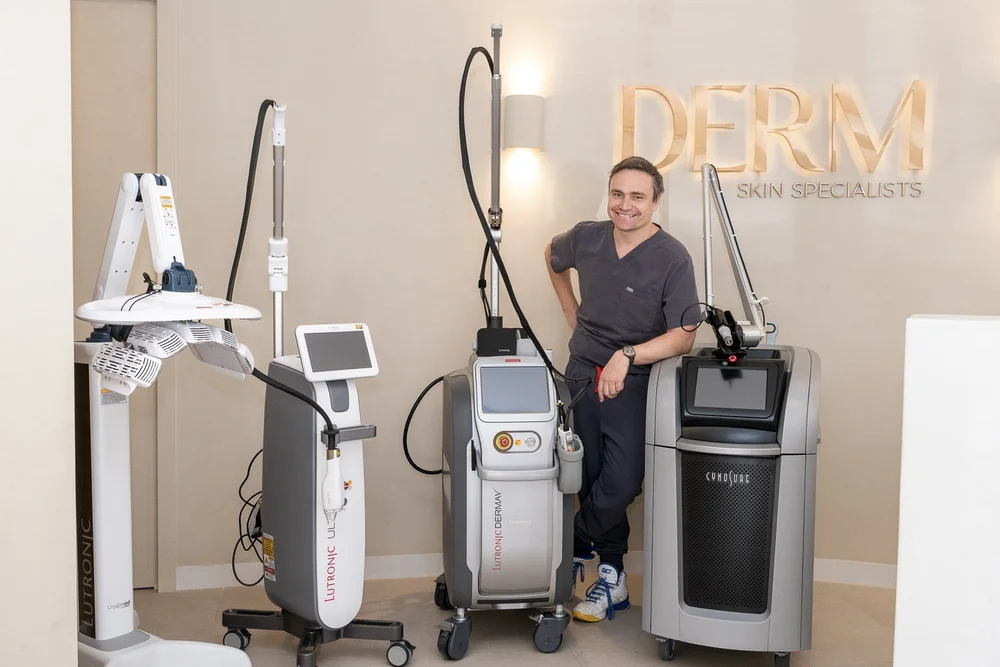
Dr Mitch founded DERM Skin Specialists and leads its laser suite. RedTouch PRO follows laser protocols he oversees and may be performed by one of our cosmetic nurses, who are Registered Nurses, or by one of our dermatologists. If a spot looks unusual or melasma isn't responding, you're seen by a dermatologist.
- Leads the laser suiteSeveral lasers, so each concern gets the device that suits it
- Teaches laser to dermatologistsAnd to dermatology registrars, and is taking up a teaching and laser role at the Royal Brisbane and Women's Hospital
- Medical and cosmetic dermatologyBrown spots and melasma are assessed medically before they're treated
Mount Gravatt, Brisbane
RedTouch PRO Laser in Mount Gravatt
DERM Skin Specialists is at 2/1437 Logan Road, Mount Gravatt, about 15 minutes' drive from the Brisbane CBD, with free onsite parking. Patients come from Upper Mount Gravatt, Mansfield, Wishart and across Brisbane.
Common Questions
RedTouch PRO: Common Questions
What is the RedTouch laser used for?
Mainly skin texture, fine lines, sun damage and uneven pigment, including melasma. It's also used for mild acne scars, with gradual improvement over a course.
Is RedTouch PRO the same as red LED light therapy?
No. LED is low-energy light that doesn't heat the skin. RedTouch PRO is a laser that heats tiny dots in the skin to prompt new collagen. More on LED.
Can I see RedTouch PRO before and after photos?
We only show our own patients' photos, with consent, never manufacturer photos. We don't have RedTouch PRO photos to show yet.
How many RedTouch PRO treatments will I need?
Usually 1 to 4, about 4 weeks apart; the published studies used 3. Melasma and acne scars may need more.
How long do RedTouch PRO results last?
New collagen is long lasting, but ageing and sun exposure carry on, and melasma tends to return. Daily SPF and occasional top-ups help.
Can I go back to work after RedTouch PRO?
Most people can, the same day or the next. Expect some redness for a few hours to two days.
RedTouch PRO or pico laser: which should I choose?
For distinct brown spots, a pico laser such as PicoSure Pro is often the first choice. For texture, fine lines and patchy pigment, RedTouch PRO may suit better.
RedTouch PRO or LaseMD: which is right for me?
LaseMD works near the surface and is strong for sun damage, with 2 to 4 days of flaking. RedTouch PRO aims deeper, with less surface change.
Does RedTouch PRO tighten loose skin?
It can firm the skin a little, but it doesn't lift sagging skin. For that, XERF tightening or a surgical opinion may suit better.
Does RedTouch PRO treat redness or broken capillaries?
It isn't mainly a vascular laser. For visible vessels and rosacea redness we usually use the DermaV laser.
Can RedTouch PRO make melasma worse?
It can, as any heat-based treatment can. We use gentle settings, space sessions out and stop if your melasma flares.
Can I have RedTouch PRO in summer?
Yes, with SPF 50+ every day and a hat. We delay treatment if you're tanned or sunburnt.
Can I have RedTouch PRO while pregnant or breastfeeding?
We usually wait until after pregnancy and breastfeeding for cosmetic laser treatment.
Is RedTouch PRO covered by Medicare or health insurance?
No. It's cosmetic, so Medicare doesn't cover it, and private health insurance usually doesn't either.
Do I need a referral?
No. A referral is only needed if you want a Medicare rebate on a specialist consultation with a dermatologist.
Will a doctor or nurse do my treatment?
One of our cosmetic nurses, who are Registered Nurses, or Dr Mitch, following laser protocols he oversees. We tell you who will treat you before you book.
Why do RedTouch reviews online vary so much?
People treat different concerns, with different settings and numbers of sessions, and change is gradual.
Can RedTouch PRO help hair loss?
It may be used alongside medical hair loss treatment, but the evidence is still emerging. A dermatologist should assess hair loss first.
Can RedTouch PRO be combined with other treatments?
Yes, often with a skincare plan, LED, chemical peels or other lasers, spaced a few weeks apart.
How should I prepare for my treatment?
Avoid tanning for 2 weeks, stop retinol and exfoliants a few days before, and come with clean skin. Tell us if you get cold sores; we'll plan for it.
Find Out If RedTouch PRO Suits Your Skin
Book an assessment. We'll look at your skin, explain what RedTouch PRO can and can't do for you, compare it with the other lasers we use, and give you the total cost in writing before you decide.
Clinical content overseen by Dr Mitchell Robinson, FACD (AHPRA MED0001946771). Updated October 2026. General information only, not medical advice. All procedures carry risks; suitability, recovery and results vary between individuals.