
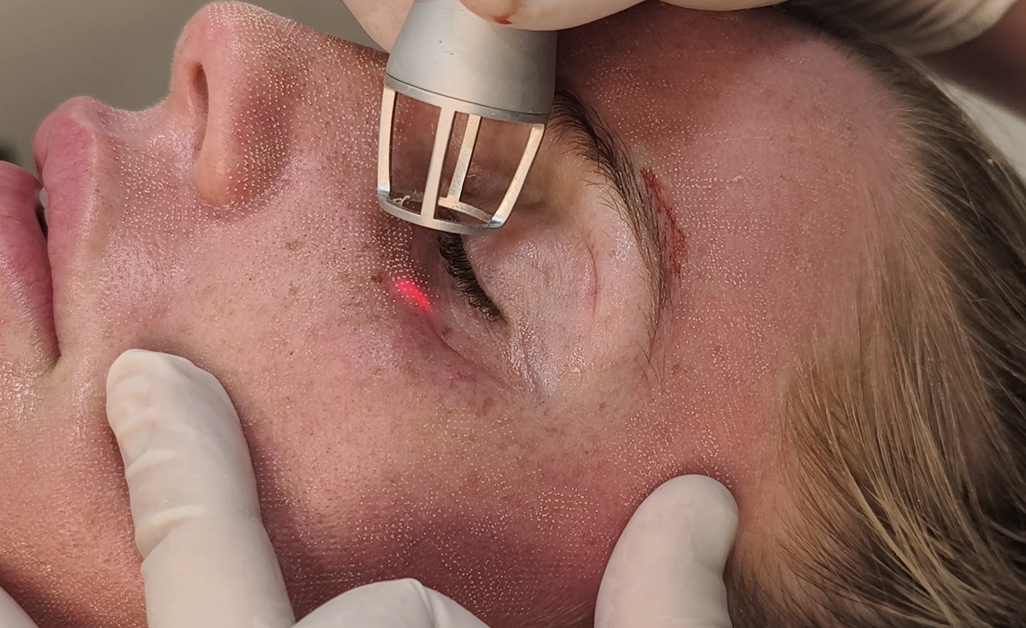
CO2 Laser | Derm Skin Specialists
CO2 Laser Resurfacing Brisbane
Fractional and fully ablative CO2 laser are two of the most effective resurfacing treatments available for deeper wrinkles, acne scarring and significant sun damage. Both involve more downtime than treatments like LaseMD or PicoSure Pro, but for the right candidate, following assessment, they can achieve a level of improvement those treatments aren't designed for. Given the depth and intensity of this treatment, CO2 laser is performed exclusively by our dermatologists at Derm Skin Specialists, it is not a nurse-led treatment.

Downtime
Extensive, 7-14 days.

Costs
Dr Mitch: Price on assessment

Treatment
CO2 Laser Resurfacing

number of sessions
Often 1-2 Sessions
Before & After’s
Medical disclaimer
This page is general information only and not medical advice. All treatments and procedures carry risks and potential complications. Suitability, expected outcomes, recovery, and costs vary between individuals and are confirmed after clinical assessment. No specific result can be guaranteed.
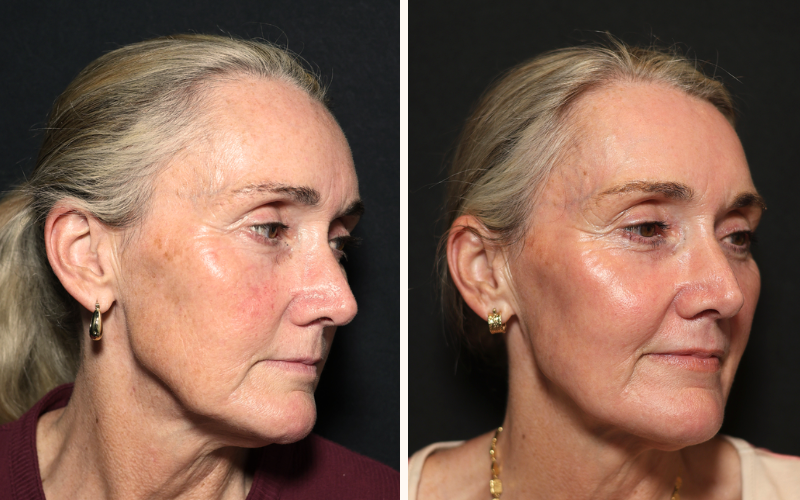
CO2 | 1 Session | Results within 4 weeks [Rejuvenation]
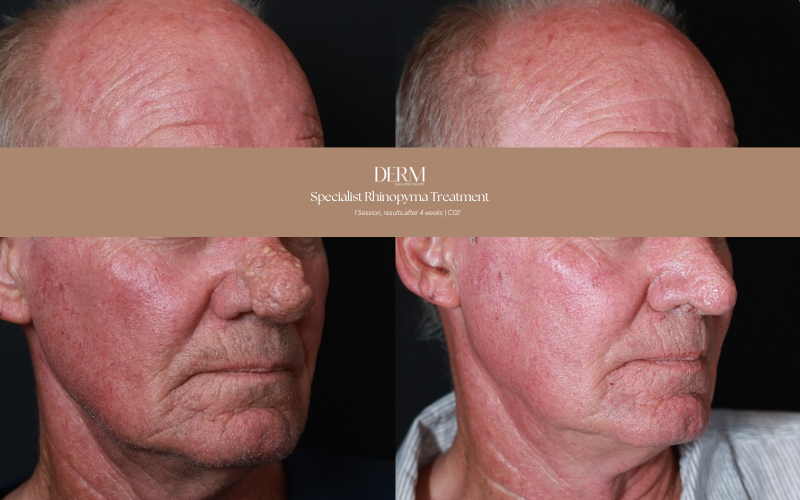
CO2 | 1 Session | Results after 4 weeks [Rhinophyma]
What CO2 May Help With
CO2 laser is used at Derm Skin Specialists for both cosmetic skin concerns and select medical/surgical conditions. Because these have quite different assessment pathways, we've separated them below.
Cosmetic & Skin Rejuvenation
Following assessment, CO2 laser resurfacing may be recommended for:
Deeper fine lines and wrinkles
Acne scarring and surgical scars
Significant sun damage and pigmentation
Skin texture and enlarged pores
Skin laxity
Medical & Surgical Uses
Beyond cosmetic resurfacing, CO2 laser is also used by our dermatologists to treat specific diagnosed medical conditions, including rhinophyma and xanthelasma. These are assessed and managed as part of a broader medical consultation rather than a cosmetic booking, and may be eligible for a Medicare rebate depending on presentation.
Visit our dedicated Rhinophyma page for more detail, or book a consultation to discuss your specific concern.
CO2 is one part of our laser suite, alongside PicoSure Pro, LaseMD and DermaV. Many patients are treated with a single laser; others benefit from a combination approach planned by their dermatologist.
-
CO2 laser uses a 10,600nm wavelength, absorbed by water in the skin, to remove or remodel damaged skin and stimulate a new collagen response as the skin heals. "CO2 laser" isn't a single treatment, though, it covers two genuinely different approaches, and the right one for you depends on your skin and goals.
Fractional CO2
Fractional CO2 treats the skin in a grid-like pattern of microscopic columns, leaving the surrounding tissue intact as a healing reservoir. Because only a fraction of the surface is treated at once, healing is generally faster, commonly around a week, with a lower risk profile. Results are excellent, though a course of more than one session is often recommended to build toward the improvement achieved by a single fully ablative treatment.
Fully Ablative CO2
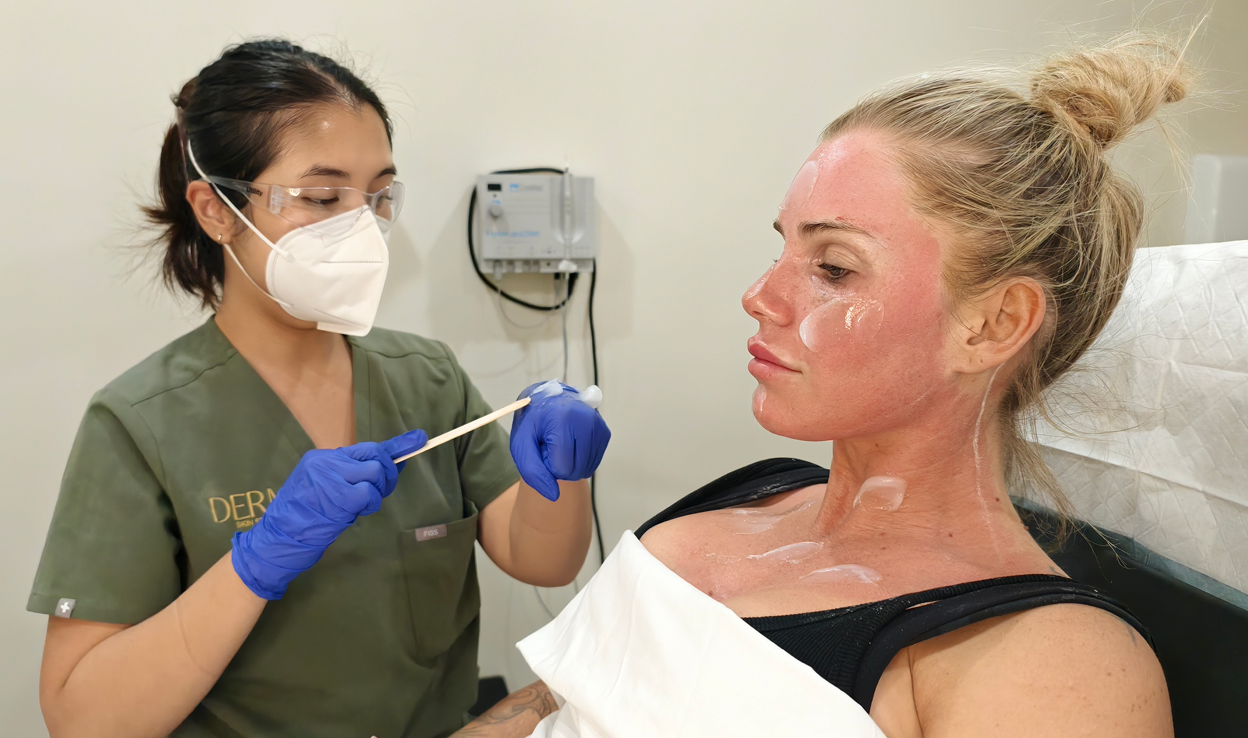
Fully ablative CO2 removes the entire skin surface across the treatment area in a single pass. This is a significantly more intensive treatment, generally achieving more dramatic improvement in deeper wrinkles, scarring or sun damage in one session, but with a longer recovery (commonly around two weeks), a higher level of aftercare, and a narrower margin for error, meaning it demands considerably more skill and experience to deliver safely.
Because it works at a deeper level than non-ablative options, CO2, particularly fully ablative CO2, is considered one of the most effective single treatments for significant textural concerns available. Given this, treatment is planned and performed by one of our dermatologists from consultation through to aftercare, rather than delegated to nursing staff. Your dermatologist will assess your skin and discuss which approach, fractional, fully ablative, or a staged combination, is right for you, weighing up the trade-offs against a gentler option like LaseMD.
-
If you've compared CO2 laser pricing between clinics, you may have noticed a significant range, and it's rarely comparing like with like. A few factors genuinely drive this:
Fractional vs fully ablative. As outlined above, these are two different treatments with different equipment, skill requirements, safety margins and results. Fully ablative CO2, in particular, requires considerably more experience and judgement to deliver safely, given it treats the entire skin surface in one pass rather than a fraction of it.
Single session vs a full course. A lighter, single-pass fractional treatment will generally cost less per session than a fully ablative treatment, but often needs to be repeated several times to approach a similar depth of result. It's worth comparing the cost of an entire treatment course, not just one session, when evaluating price.
Who performs the treatment. At Derm Skin Specialists, CO2 laser, fractional or fully ablative, is planned and performed by a specialist dermatologist, not delegated to a therapist or technician, from your initial assessment through to aftercare and follow-up.
Safety and complication management. Because CO2 is ablative, incorrect settings or technique carry real risk, including scarring, infection or pigment changes, particularly with fully ablative treatment. Specialist oversight throughout the process is part of what's reflected in cost.
If you've seen CO2 laser advertised elsewhere at a significantly different price, it's worth asking whether it's fractional or fully ablative, how many sessions are included to reach a comparable result, and who is performing the treatment.
-
Consultation first. Every laser treatment at Derm Skin Specialists begins with a clinical assessment to confirm suitability. Because CO2 involves genuine downtime, this consultation is also where your dermatologist will discuss whether the intensity and recovery period fit your circumstances and expectations.
During treatment. Your treatment is performed by one of our dermatologists. Topical anaesthetic is applied beforehand to help manage discomfort. Most patients describe the sensation afterward as similar to sunburn, heat and tightness in the treated area.
Downtime. This is the key difference from our other lasers, and varies depending on which approach is used. Fractional CO2 typically involves visible redness, swelling and skin shedding for approximately 5–7 days. Fully ablative CO2 involves a more significant recovery, commonly around two weeks, with more pronounced swelling, oozing and shedding in the initial days. A structured aftercare routine (healing ointments, gentle skincare and strict sun protection) will be provided to support recovery either way.
Results timeline. Initial improvement is often visible within a few weeks, with collagen remodelling continuing to improve skin texture and firmness over the following 3–6 months.
Number of sessions. Fully ablative CO2 often achieves significant improvement in a single session, given its intensity. Fractional CO2 more commonly involves a short course of sessions to build toward a comparable result, with less downtime per session. Your dermatologist will recommend the most appropriate approach, and number of sessions, at your consultation.
-
CO2 laser resurfacing isn't the right fit for everyone. Suitability depends on your skin type, medical history, current medications and your ability to commit to the recovery period, which is why this treatment is only ever undertaken following a thorough consultation with, and performed by, one of our dermatologists. If CO2 isn't appropriate for you, your dermatologist will recommend a more suitable alternative, such as LaseMD or PicoSure Pro.
Book your consultation here or learn more about acne scarring
-
With several laser options available, and every skin different, it's not always obvious which treatment is the right fit, especially when weighing up a more involved treatment like CO2 against gentler alternatives.
If you're specifically considering CO2, or have deeper scarring or sun damage, the most direct path is a consultation with one of our dermatologists, since CO2 is planned and performed by our dermatology team.
If you're unsure whether your concern needs CO2 or would suit a gentler option like LaseMD or PicoSure Pro, our complimentary nurse-led cosmetic consultation is a helpful lower-commitment starting point. Our nursing team will assess your skin, talk through suitable options, and let you know if a dermatologist review is the next step.
Book a dermatologist consultation | Book a free cosmetic consult
About CO2 Laser Resurfacing
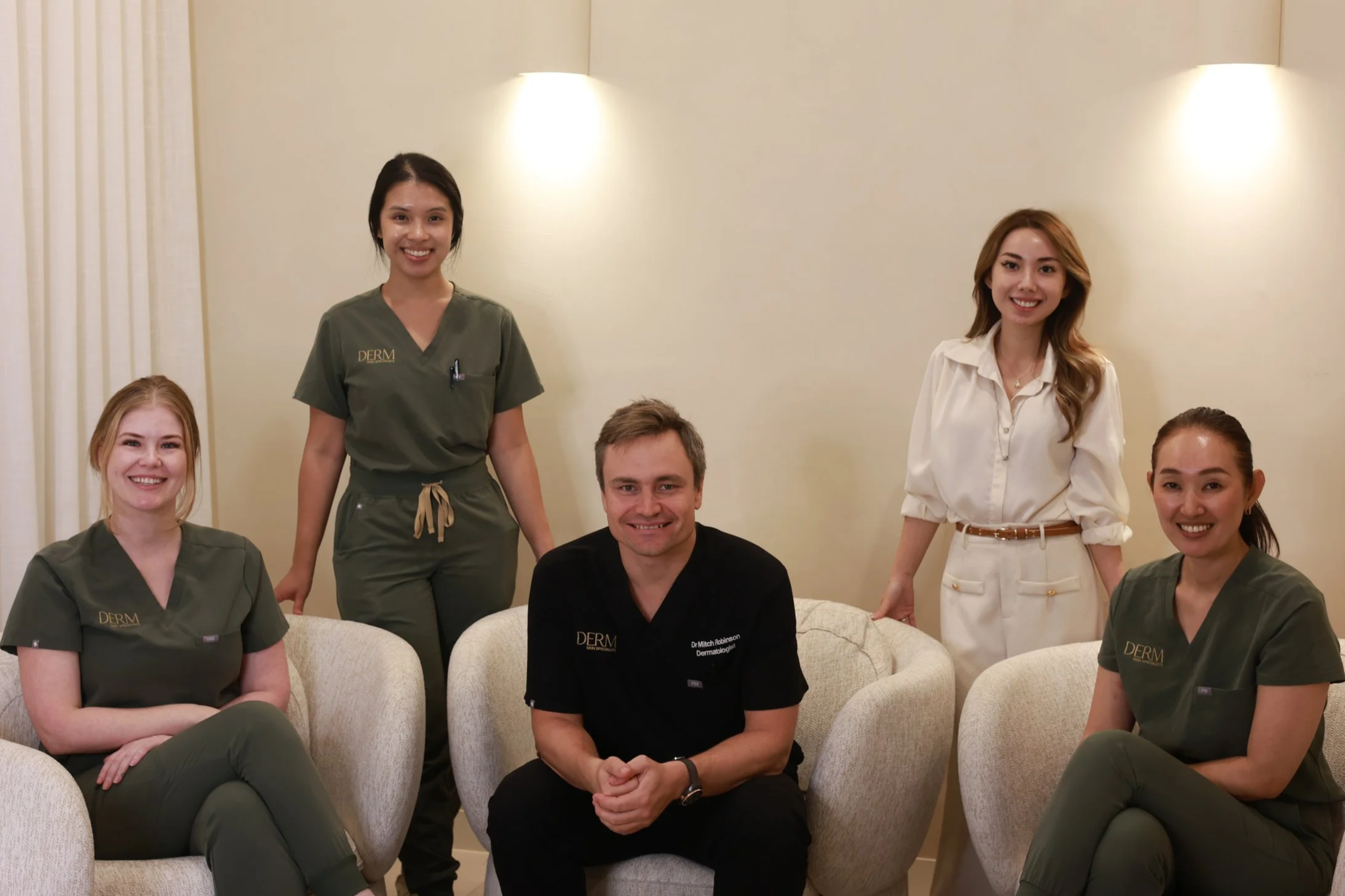
You can choose a consultation with our nurses or our dermatologist
An example of one persons journey with CO2 fully ablative resurfacing
Wondering if laser is right for you?
With several laser options available, and every skin different, it's not always obvious which treatment is the right fit. That's exactly what our complimentary nurse-led cosmetic consultation is for.
In this appointment, our experienced nursing team will:
Assess your skin and discuss your concerns
Talk through suitable options, including laser and other dermal therapies
Let you know if a review with one of our dermatologists is recommended
There's no obligation, and it's a helpful first step if you're weighing up CO2 against other options in our laser suite.
Prefer to send a message?
We’ll get back to you as soon as possible.
Our Most Commonly Asked Questions
Medical disclaimer
This page is general information only. Suitability, expected outcomes and Medicare eligibility depends on individual assessment.
-
CO2 laser pricing varies significantly depending on whether it's fractional or fully ablative, how many sessions are needed to reach a comparable result, and who performs it. At Derm Skin Specialists, treatment is planned and performed by a specialist dermatologist, with your safety and results guided by specialist training throughout, from consultation to aftercare
-
CO2 laser resurfacing is performed exclusively by our dermatologists, from initial consultation through to treatment and aftercare. This differs from some of our other laser treatments, which may be delivered by our nursing team under dermatologist-guided protocols
-
Fractional CO2 treats the skin in a grid of microscopic columns, leaving surrounding tissue intact. This generally means faster healing (around a week) but often needs a short course of sessions. Fully ablative CO2 treats the entire skin surface in one pass, generally achieving more dramatic results in a single session, but with a longer recovery (around two weeks) and a narrower safety margin. Your dermatologist will recommend the right approach for your skin and goals
-
Topical anaesthetic is applied beforehand to help manage discomfort during treatment. Afterward, most patients describe a sunburn-like heat and tightness, which is managed with aftercare and, if needed, simple pain relief.
-
This depends on the approach used. Fractional CO2 healing (redness, swelling, shedding) generally takes around 5 to 7 days. Fully ablative CO2 involves a longer recovery, commonly around two weeks. Full results continue to develop over 3 to 6 months either way, as collagen remodelling progresses.
-
CO2 is an ablative laser, meaning it removes or remodels a controlled area of skin, which allows for more significant results but requires a longer recovery than non-ablative options. PicoSure Pro and LaseMD are non-ablative, generally suited to milder concerns or patients who can't accommodate extended recovery. Your dermatologist can advise which is appropriate for you.
-
This depends on whether fractional or fully ablative CO2 is recommended. Fully ablative CO2 often achieves significant results in a single session, while fractional CO2 more commonly involves a short course. This is discussed at your consultation.
-
This depends on your stage of healing and will be covered in your personalised aftercare instructions.
-
This depends on why you're being treated. Laser treatment for cosmetic concerns (wrinkles, acne scarring, sun damage) is generally not covered by Medicare. However, treatment for certain diagnosed medical conditions, such as rhinophyma or xanthelasma, may be eligible for a Medicare rebate depending on your clinical presentation. This will be clarified at your consultation.
-
Yes, these are treated by our dermatologists as diagnosed medical conditions. Visit our Rhinophyma page for more detail, or book a consultation to discuss your specific concern.