
Erbium YAG Laser · Mount Gravatt, Brisbane
Erbium YAG Laser Resurfacing in Mount Gravatt, Brisbane
Erbium laser resurfacing for fine lines, sun damage, rough texture and shallow acne scars, performed by our specialist dermatologists on the Sciton Contour erbium laser. Dr Mitch Robinson, FACD, treats the complex cases. We also use CO2 laser, so your plan uses the laser that suits your skin, or both.
Specialist consultations from $395 · No referral needed to book · Treatment price confirmed in writing before you start · See fees
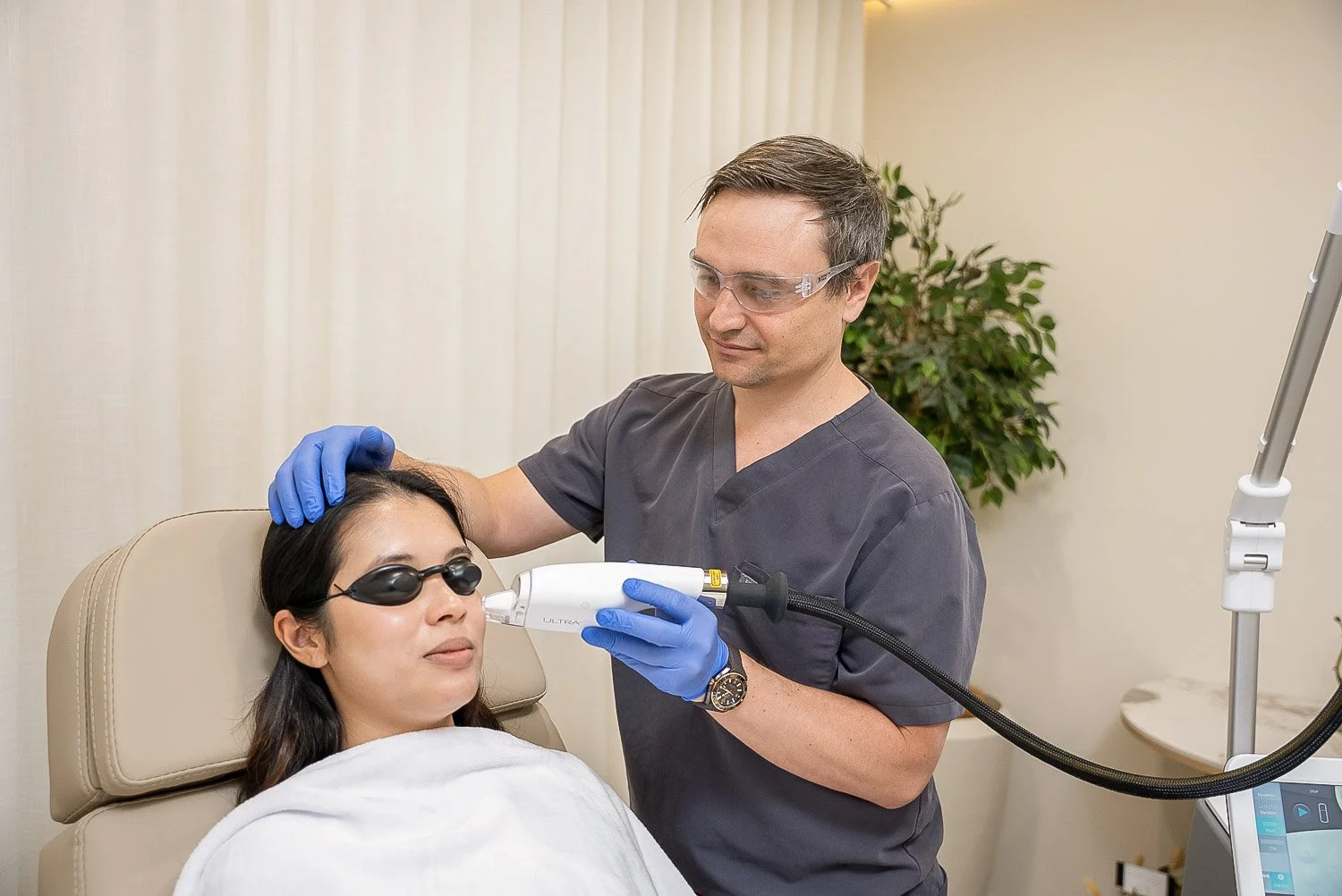
A dermatologist-led clinic, founded by Dr Mitchell Robinson, FACD, who teaches laser to dermatologists and registrars and performs both erbium and CO2 laser resurfacing.
Meet Dr MitchErbium Laser at a Glance
What Is Erbium YAG Laser Resurfacing?
The short answer: an erbium YAG laser is a resurfacing laser that removes very thin layers of skin with little heat spreading into the skin around them. It can smooth fine lines, sun damage, rough texture and some acne scars. Recovery is usually shorter than after a CO2 laser treatment of similar depth, but erbium tightens the skin less.
We use the Sciton Contour TRL, an erbium laser that works at a wavelength of 2,940 nm and lets us set the depth of skin removed and the amount of heating separately. Water in the skin absorbs this light more than ten times more strongly than CO2 laser light, so the energy is used up right at the surface. The skin is removed layer by layer, with fine control over depth, and smoother skin grows back from below.
Because little heat spreads around each pulse, there is usually less redness and swelling afterwards. The trade-off is less heating of the deeper skin, which is what drives tightening with CO2. That's why the two lasers do different jobs, and why some plans use both.
We see patients from Mount Gravatt and across Brisbane's southside, including Holland Park, Carindale and Sunnybank. Every erbium treatment starts with a consultation with one of our dermatologists.
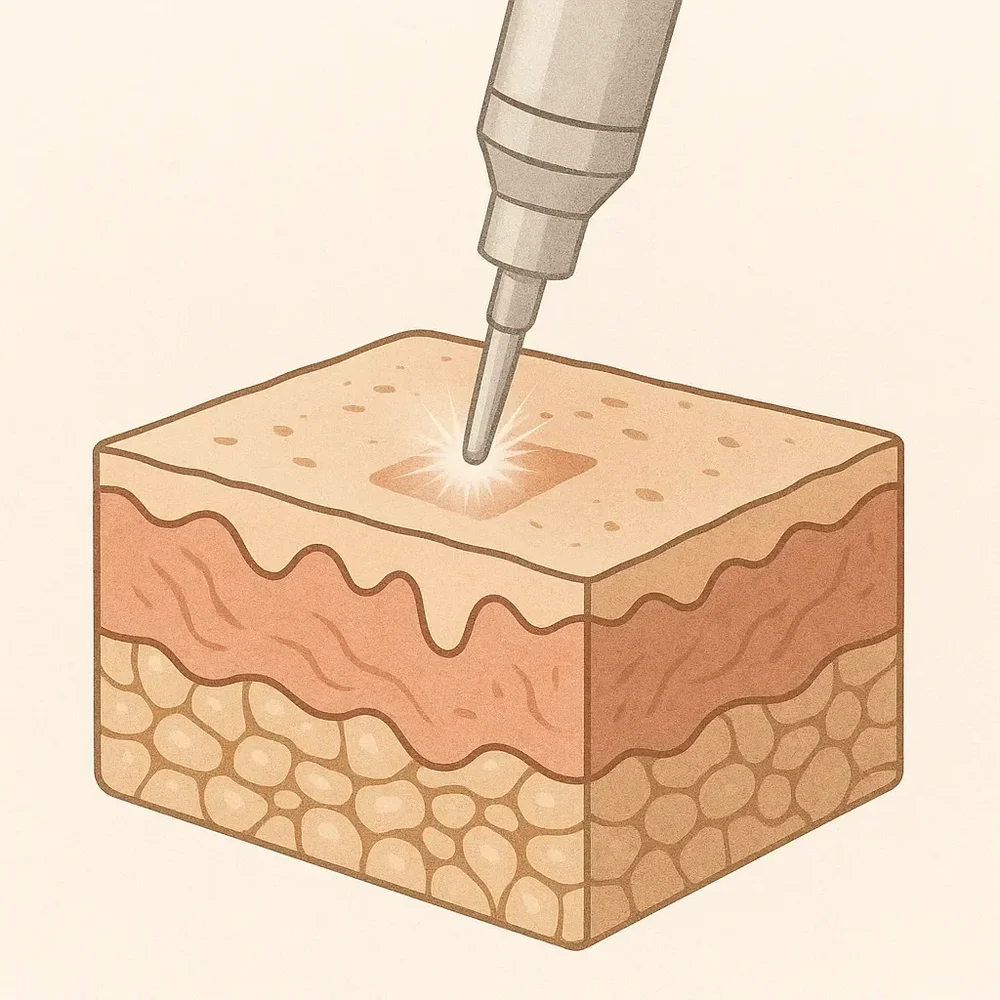
Thin layers. Less heat.
What Results Can You Expect From Erbium Laser?
Most people see smoother, more even skin: softer fine lines, less roughness, fewer sun spots and shallow scars that are less noticeable. It's an improvement, not brand-new skin. Deep folds, sagging and lost volume don't change much with erbium.
Some change shows as soon as your skin has healed and the pinkness fades, usually within 2 to 6 weeks. The rest builds over 3 to 6 months as new collagen forms. We judge results at least 3 months after your last session.
What the research says. In a split-face study of 21 people with fair skin, one side was treated with erbium and the other with CO2. CO2 improved wrinkles a little more, but the erbium side healed faster, was red less often at 2 and 8 weeks, and was much less likely to develop lighter patches of skin (5% of erbium sides versus 43% of CO2 sides) (Archives of Dermatology, 1999). In 50 people treated with full-field erbium, new skin formed in about 5 days on average. 40% had temporary brown marks, lasting about 10 weeks on average, and none had lighter patches or scarring (Plastic and Reconstructive Surgery, 2003).
Before and after photos. We don't yet have erbium before and after photos of our own patients to show. You can see results from CO2 laser, a similar resurfacing treatment, on our CO2 laser page.
Two lasers, two jobs
Erbium vs CO2 Laser: Which Is Better for You?
Neither laser is better overall. They work differently, and the right one depends on your skin, what you want to change and how much downtime you can take.
Erbium (2,940 nm)
- Less heat. Removes thin layers with little heat spreading into the skin.
- Quicker healing. Usually less redness and swelling than CO2 at a similar depth.
- Fewer lighter patches. Less likely to leave paler skin than CO2 in studies comparing the two.
- Fine control. Suits fine lines, texture and thin skin around the eyes and mouth.
- Less tightening. It heats the deeper skin less, so it tightens less.
CO2 (10,600 nm)
- More heat. Heats the deeper skin, which drives more collagen remodelling.
- Some tightening. Helps deeper lines and mildly loose skin.
- Longer recovery. About 5 to 7 days for fractional CO2 and about 2 weeks for fully ablative CO2.
- More redness. Pinkness often lasts longer afterwards.
- Less bleeding. The heat seals small blood vessels during deep treatments.
Erbium often suits fine lines, sun damage and rough texture when you want a shorter recovery, olive skin, where less heat can mean less risk of pigment change, and smaller areas such as around the eyes or mouth.
CO2 often suits deeper lines, more marked sun damage, deeper acne scars and mildly loose skin, where more heat gives a bigger change from one treatment. More on CO2 laser.
Using both. Some treatments combine the two lasers. For rhinophyma, Dr Mitch combines CO2 and erbium to reshape the thickened skin of the nose. More on rhinophyma.
For acne scars. In a randomised split-face study of 24 Asian patients, two sessions of fractional erbium on one side and fractional CO2 on the other gave similar improvement at 6 months: scars were more than half better on 55% of erbium sides and 65% of CO2 sides, which was not a significant difference. CO2 was more uncomfortable (Dermatologic Surgery, 2013).
What Is Erbium Laser Used For?
Erbium smooths problems in the upper layers of the skin. Any mole or spot of concern is diagnosed before any laser treatment.
Fine Lines
- Lines around the eyes and mouth
- Upper lip lines
- Crepey, thin-looking skin
Acne Scars
- Shallow boxcar and rolling scars
- Sharp scar edges and texture
- Often combined with subcision or TCA CROSS
Rhinophyma
- Thickened skin on the nose
- Combined with CO2 to reshape
- May attract a Medicare rebate
Surgical Scars
- Uneven or raised edges
- Texture after an injury
- Once the scar has settled
Fractional or Full-Field Erbium: What's the Difference?
Erbium laser can be used in two ways. The choice changes your downtime and how many sessions you need.
Full-field erbium
Treats the whole surface of an area to a set depth. It gives the biggest change from one treatment, for fine lines, sun damage or texture across the face or around the mouth and eyes. New skin forms in about 5 to 10 days, longer after deeper treatments, and pinkness then fades over several weeks. Usually one session.
Fractional erbium
Treats thousands of tiny columns of skin and leaves the skin between them untouched, so healing is faster: about 3 to 5 days of redness, swelling and fine crusting. Each session does less, so most people need 2 to 4 sessions, about 4 to 8 weeks apart. It suits milder concerns, people who can't take much time off and many olive skin types.
Is Erbium Laser Right for You?
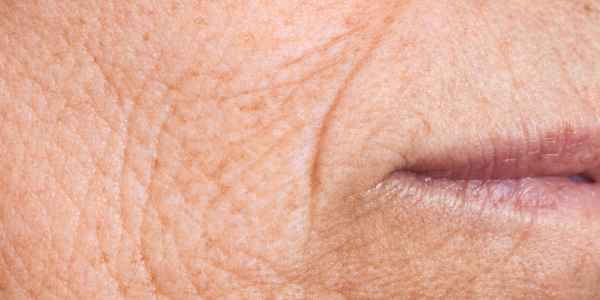
Erbium suits people with fine lines, sun damage, rough texture or shallow scars who want a real change in the surface of their skin, and who can plan for a few days to two weeks of healing.
What erbium can't do. It doesn't lift sagging skin, restore lost volume or smooth deep folds such as the lines from nose to mouth. On its own, it won't fix deep ice pick scars or scars tethered from underneath; those need TCA CROSS or subcision as well. If erbium isn't the right tool, Dr Mitch will tell you and suggest what is. That may be CO2, a gentler non-ablative laser or no treatment at all.
What we check first. Your skin type and how you tan, any history of cold sores, brown marks after injuries, melasma or slow healing, your medicines and skincare, and any spots that need diagnosing. Tell us if you get cold sores; we'll plan for it.
You may need to wait, or choose another option, if you
- Have a tan, or will be in strong sun soon after
- Have active acne, a rash or an infection in the area
- Are pregnant
- Have melasma in the area
- Have had slow healing, raised scars or keloids
- Have started new medicines or had other skin treatments recently
Can Erbium Laser Treat Pigmentation and Melasma?
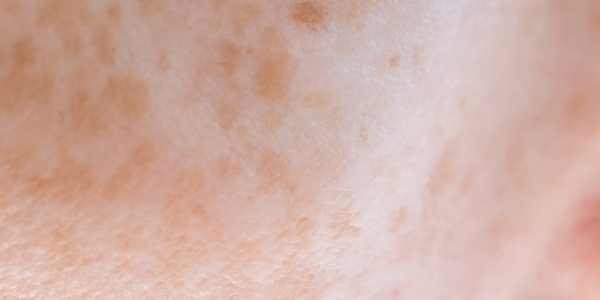
It depends on the type of pigment. Sun spots and the blotchy brown of sun damage sit in the outer layer of skin, so resurfacing can lighten much of that pigment as the new skin grows back. New spots can still form with sun exposure.
Melasma is different. It's driven by hormones, heat and light, and the heat and inflammation of resurfacing can make it darker. Erbium usually isn't used for melasma, and there are gentler options. More on pigmentation and melasma.
If brown spots are your main concern and your texture is fine, a pigment laser or a gentler laser may do the job with much less downtime.
Erbium Laser for Olive and Darker Skin
Erbium can be used in olive, Asian, Middle Eastern, Indian and some darker skin, and its lower heat is one reason it's often chosen for these skin types. But any resurfacing laser can leave temporary brown marks, called post-inflammatory hyperpigmentation, and the darker your skin, the more likely they are.
What the research says. In 20 people with skin types III to V treated with full-field erbium for acne scars, brown marks appeared in 60% at 2 to 4 weeks, but lasted longer than 3 months in only one person (5%). Redness lasted beyond 3 months in half of them (Aesthetic Plastic Surgery, 2003). In the Asian acne scar study above, fractional erbium and fractional CO2 gave similar results.
We reduce the risk by choosing fractional rather than full-field treatment for many olive and darker skin types, using gentler settings over more sessions, preparing your skin beforehand, timing treatment for the cooler months and reviewing you early if marks appear. Brown marks usually fade over a few months, and they can be treated.
Tell us if you
- Tan easily or rarely burn
- Have had brown marks after spots, burns or cuts
- Have had melasma
- Have had a reaction to a previous laser or peel
Does Erbium Laser Hurt?
For most people it's uncomfortable rather than very painful, and we plan pain relief with you before the day.
Numbing cream goes on about an hour before treatment. For a deeper full-face treatment, you're also given extra pain relief about 30 minutes before, and the skin is numbed with local anaesthetic nerve blocks and tumescent anaesthetic (a dilute local anaesthetic fluid placed under the skin). We'll go through your pain relief plan at your consultation, and after a full-face treatment you'll need someone to drive you home. During treatment most people feel heat and a fast snapping or prickling. Your eyes are protected throughout.
Afterwards your skin feels hot and tight, like sunburn, for a day or two. Simple pain relief is usually enough.
How long it takes. From about 15 minutes for a small area to about an hour for a full face, plus time for the numbing cream to work beforehand.
What Happens at Your Erbium Laser Treatment?
From your first visit to your final review, here's what to expect.
Consultation
Dr Mitch examines your skin, checks any spots of concern, asks about cold sores, healing and medicines, and takes photos. You get a written plan: erbium, CO2 or both, how many sessions, the downtime and the total cost.
Preparation
For 1 to 2 weeks beforehand, avoid tanning and strong sun, and pause active skincare such as retinol and acids if advised. You get written instructions and your aftercare plan before the day.
Treatment and Review
Your skin is numbed, your eyes are protected and the laser is passed over the area. You go home the same day with ointment and an aftercare sheet, and we review you while your skin heals.
Erbium Laser Recovery Day by Day
This is a typical full-field recovery. Fractional erbium follows the same pattern, only faster: most people look red and swollen for 2 to 3 days, with fine crusting that flakes off by about day 5.
- Day 0. Your skin is red and hot, and may ooze or show tiny spots of bleeding. You go home with ointment on.
- Days 1 to 3. Swelling peaks, especially around the eyes, and the skin weeps and crusts. Cleanse gently and reapply ointment several times a day. Sleep with your head raised.
- Days 4 to 7. Crusts lift and new pink skin shows underneath. Itching is common. Don't pick.
- Days 7 to 14. Most full-field treatments have healed. Once your skin has healed, you can usually go back to work and wear makeup.
- Weeks 2 to 8. Pinkness fades. If brown marks appear, it's usually now, so call us early.
- Months 3 to 6. Collagen keeps building and texture keeps improving.
Time off. Plan for 2 to 4 days at home after fractional erbium, and about 1 to 2 weeks after full-field erbium. Avoid sun, heat, saunas and hard exercise until your skin has healed, then use SPF 50+ every day. In Brisbane, many people book resurfacing in the cooler months.
When to call us
- Increasing pain, heat or swelling after the first 2 days
- Yellow crusting, pus or a fever
- Blisters or clusters of sores, which can be a cold sore flare
- Open areas that haven't healed after 2 weeks
- Patches that are getting darker, or thick and raised
Call 07 3487 1414. Outside hours, see your GP or go to an emergency department.
Healing is quick. Pinkness is slow.
When Should You Have Erbium Laser Before an Event?
Plan around the pinkness, not just the healing. New skin can look pink for weeks after it has healed.
- Fractional erbium: at least 2 weeks before your event, ideally 4 weeks or more.
- Full-field erbium: at least 6 weeks before, ideally 3 months, so pinkness has faded and collagen has had time to build.
- A course of sessions: plan the last session to fall at least 4 weeks before the date.
Avoid booking just before a beach holiday or an outdoor event. New skin burns and marks easily for several weeks, so allow some spare time in case your skin heals more slowly than expected.
What Are the Risks of Erbium Laser? And How We Reduce Them
All procedures carry risks. Here are the main ones and what we do about each.
Common and short term
- Redness and swelling. Expected, and pinkness can last weeks after full-field treatment. We plan the timing around your work and social life.
- Brown marks. More likely in olive and darker skin. We adjust settings, prepare your skin and insist on sun protection.
- Acne flares and milia (tiny white bumps). Common while the skin heals under ointment. They usually settle, and we treat them if they don't.
- Itching and flaking. Usual as new skin forms. Your aftercare plan covers what to use.
- Less change than hoped. Especially after one fractional session. Your plan sets out how many sessions to expect.
Less common
- Infection, including cold sore flares. We check your history and plan your treatment around it.
- Redness lasting more than a month. Seen in 6% of people in the 50-person erbium study above. It usually settles with time; we review you and treat it if needed.
- Lighter patches of skin. Less common after erbium than after CO2 in studies, but possible after deep treatments. We match the depth to your skin.
- Lower eyelid pulling or dry eyes. Rare, after treatment close to the lower lid. We check eyelid support first.
- Scarring. Rare. Careful technique, the right depth for your skin and following your aftercare reduce the risk.
If something doesn't heal as expected, you come back to us. Call the clinic and we'll see you here. Dr Mitch reviews any complication himself.
How Much Does Erbium Laser Cost in Brisbane?
A specialist consultation with Dr Mitch starts from $395. The cost of erbium treatment depends on whether it's full-field or fractional, the size of the area, the depth, the anaesthetic needed and how many sessions you need, so we quote it after we've seen your skin.
At your consultation you get a written plan with the total cost of the whole course, not just one session. That's the number worth comparing between clinics: several fractional sessions can add up to more than one full-field treatment, and a cheaper session that needs repeating isn't always cheaper in the end.
Erbium or CO2? If both lasers suit your skin, ask us to price both. The differences in recovery and results matter as much as the difference in price.
Medicare and private health. Cosmetic erbium treatment isn't covered by Medicare or private health insurance. Treatment for some medical conditions, such as rhinophyma or severe scarring, may attract a partial Medicare rebate, and we'll tell you at your consultation whether yours does. A GP referral isn't needed to book, but a valid referral is needed for any Medicare rebate on the consultation. See our fees.
Your dermatologist
Dr Mitchell Robinson, FACD
Specialist Dermatologist · Mount Gravatt, Brisbane
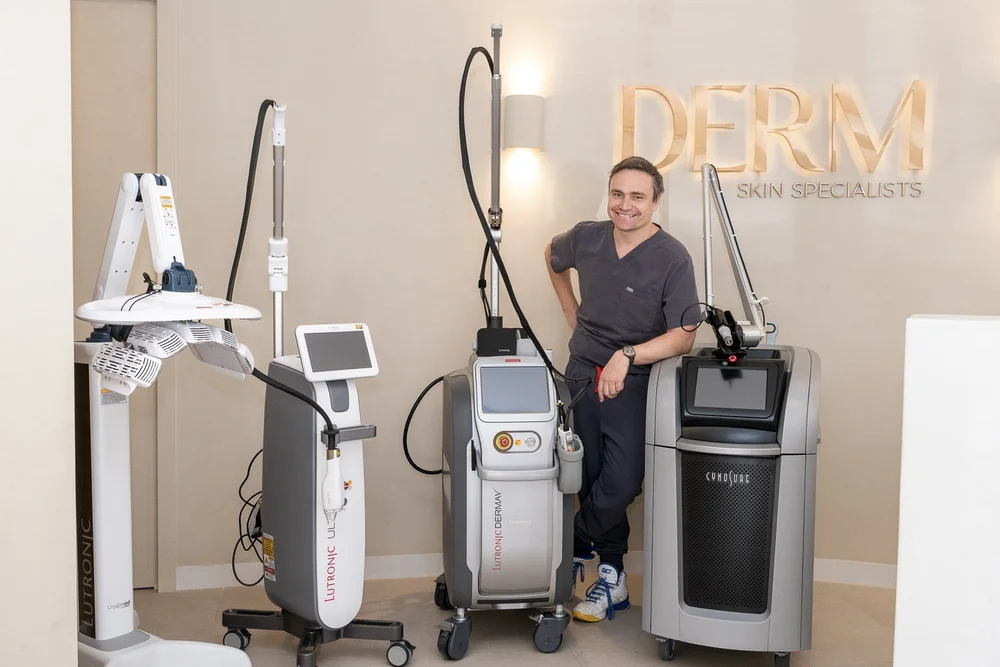
Dr Mitch leads our laser suite and performs the complex erbium treatments himself, such as deeper full-field resurfacing. Dr Emily Shao and Dr Benny Yau also perform laser treatments. Because he uses both erbium and CO2 lasers, he can recommend whichever suits your skin, or a combination of the two.
- Teaches laser to dermatologistsLectures on laser protocols and safety in Australia and Asia
- Fellowship training in complex scarringPlus cutaneous oncology and laser surgery
- Checks your skin firstAny spot of concern is diagnosed before resurfacing
Dr Mitch is a clinical presenter and Signature Partner for Cynosure Lutronic, a laser manufacturer.
Mount Gravatt, Brisbane
Erbium Laser in Mount Gravatt
DERM Skin Specialists is at 2/1437 Logan Road, Mount Gravatt, about 15 minutes' drive from the Brisbane CBD, with free parking onsite. Patients come from Upper Mount Gravatt, Mansfield, Wishart, Eight Mile Plains, Greenslopes and across Brisbane's southside.
Common Questions
Erbium Laser: Common Questions
What is an erbium YAG laser?
A resurfacing laser with a 2,940 nm wavelength. It removes very thin layers of skin with little heat, so smoother skin can grow back. It can treat the whole surface (full-field) or tiny columns of skin (fractional).
Is erbium laser better than CO2?
Neither is better overall. Erbium usually heals faster with less redness. CO2 heats deeper, tightens more and gives a bigger change from one treatment. Some plans use both.
Is erbium laser ablative?
Yes. It removes skin, either across the whole area or in tiny columns. That's why it has more downtime than non-ablative lasers, which heat the skin without removing it.
How many erbium sessions will I need?
Usually one full-field treatment, or 2 to 4 fractional sessions about 4 to 8 weeks apart. Deeper scars and darker skin types often need more, gentler sessions.
How long does it take to heal after erbium laser?
About 3 to 5 days after fractional erbium, and about 5 to 14 days after full-field erbium, depending on depth. Pinkness can last several weeks after that.
When can I wear makeup after erbium laser?
Once your skin has fully healed: usually around day 5 after fractional treatment and day 7 to 14 after full-field. Makeup on unhealed skin raises the risk of irritation and infection.
When can I go back to work?
Most people take 2 to 4 days off after fractional erbium and 1 to 2 weeks after full-field erbium. If you work outdoors, allow longer.
Does erbium laser help acne scars?
It can soften shallow boxcar and rolling scars and improve texture. Deep ice pick and tethered scars need TCA CROSS or subcision as well. Scars improve rather than disappear.
Can erbium laser be used under the eyes?
Yes. It's often used for fine lines and crepey skin under the eyes, because its depth can be finely controlled. Expect swelling there for a few days. It won't remove eye bags or loose skin.
Can erbium laser be used on olive or darker skin?
Often, with care. Brown marks are more likely in darker skin, so we may suggest fractional treatment, gentler settings, skin preparation and treatment in the cooler months.
Will erbium laser get rid of sun spots?
It can lighten many sun spots, because the pigment sits in the outer layer of skin. New spots can form with sun exposure, so daily SPF 50+ matters. It isn't used for melasma.
Can erbium laser remove moles or skin spots?
Any mole or spot of concern is diagnosed first. Lasering an undiagnosed mole destroys the tissue needed to test it, so moles are usually cut out and checked by a lab instead. More on skin checks.
Does erbium laser tighten skin?
A little. Erbium heats the deeper skin less than CO2, so it tightens less. For loose skin, CO2 or other treatments usually do more, and surgery suits marked sagging.
How long do erbium laser results last?
Smoother texture and softer lines last for years, but your skin keeps ageing and new sun damage can form. Sun protection and good skincare help your results last.
When will I see results from erbium laser?
Once your skin has healed and the pinkness fades, usually within 2 to 6 weeks. Results keep improving for 3 to 6 months as collagen builds.
Is erbium laser cheaper than CO2?
Not necessarily. The cost depends on the area, depth and number of sessions as much as the laser. Compare the total cost of the course; you get ours in writing after your consultation. See fees.
Does Medicare cover erbium laser?
Not for cosmetic treatment. Some medical conditions, such as rhinophyma, may attract a partial rebate. We'll tell you at your consultation if yours does.
Do I need a referral?
No referral is needed to book. A valid referral, usually from your GP, is needed if you want a Medicare rebate on your consultation.
Who performs erbium laser at DERM Skin Specialists?
One of our specialist dermatologists: Dr Mitch Robinson, Dr Emily Shao or Dr Benny Yau. Your dermatologist assesses your skin, plans your treatment and performs it, and Dr Mitch takes the complex cases, such as deeper full-field resurfacing.
Can I see erbium laser before and after photos?
We don't have erbium before and after photos of our own patients to show yet. You can see CO2 laser results, a similar resurfacing treatment, on our CO2 laser page.
Can I have erbium laser in summer?
Yes, with care, but healing skin burns and marks easily. Many people in Brisbane book in the cooler months, especially for full-field treatment or if they have olive skin.
What should I avoid before erbium laser?
Tanning, sunburn and fake tan for at least 2 weeks before, and active skincare such as retinol or acids if advised. Tell us about cold sores and any medicines you take.
Can erbium and CO2 be used together?
Yes. Some plans use erbium for the surface and CO2 for deeper heating, in the same session or staged. Dr Mitch uses both lasers to treat rhinophyma.
Find Out Which Laser Suits Your Skin
Book a consultation with Dr Mitch. He'll check your skin, explain what erbium can and can't do for you, compare it with CO2 and give you a written plan with the total cost before you decide.
Clinical content overseen by Dr Mitchell Robinson, FACD (AHPRA MED0001946771). Updated October 2026. General information only, not medical advice. All procedures carry risks; suitability, recovery and results vary between individuals.