
LED Light Therapy · Mount Gravatt, Brisbane
LED Light Therapy in Mount Gravatt, Brisbane
Red, blue and near-infrared light from our Healite II panel to support acne treatment, calm skin after laser and gently freshen tired skin. Given by our registered nurses in a specialist dermatologist clinic, with honest advice on what LED can and can't do.
LED sessions from $95 · No referral needed · Your plan and total cost confirmed before you start · See fees
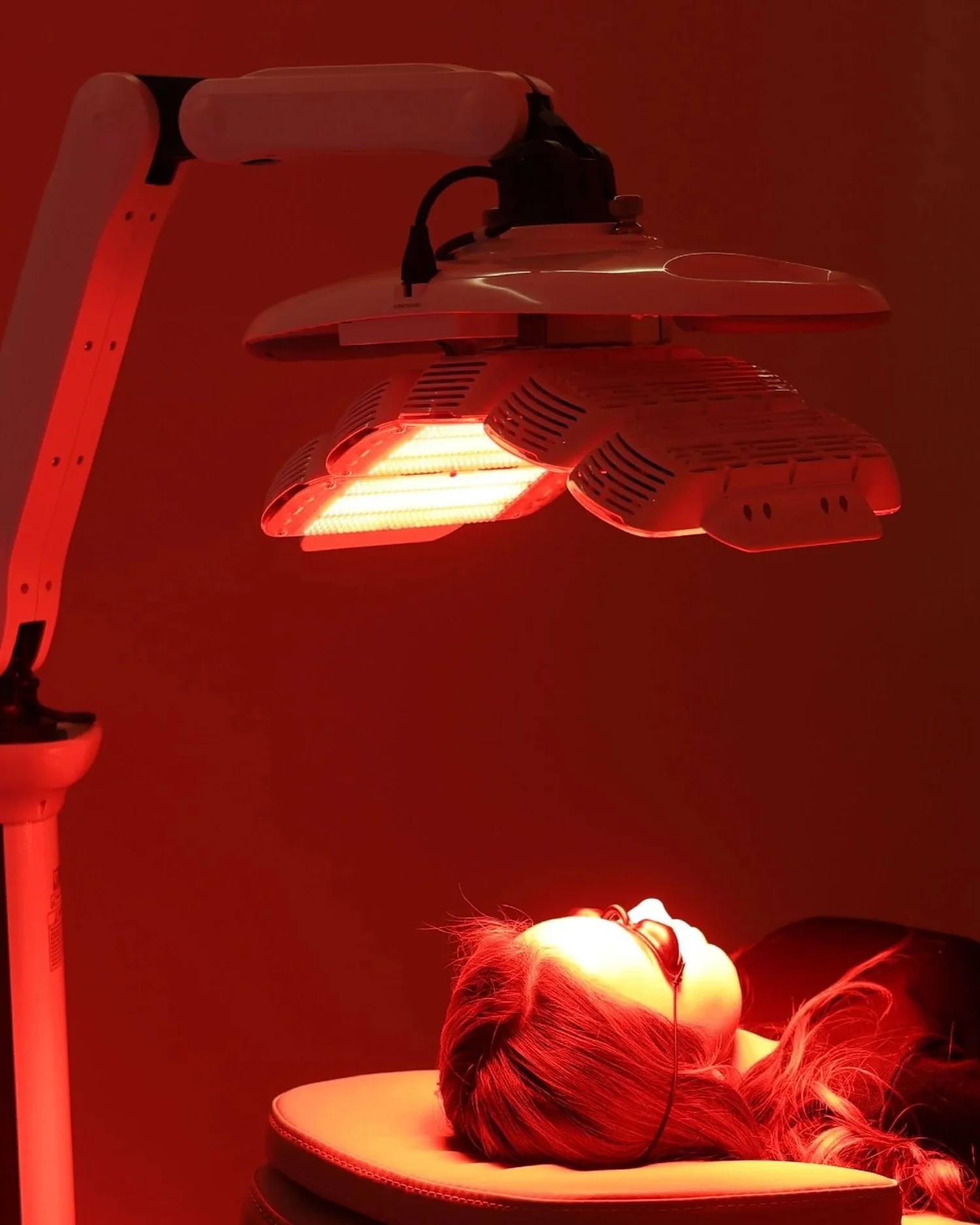
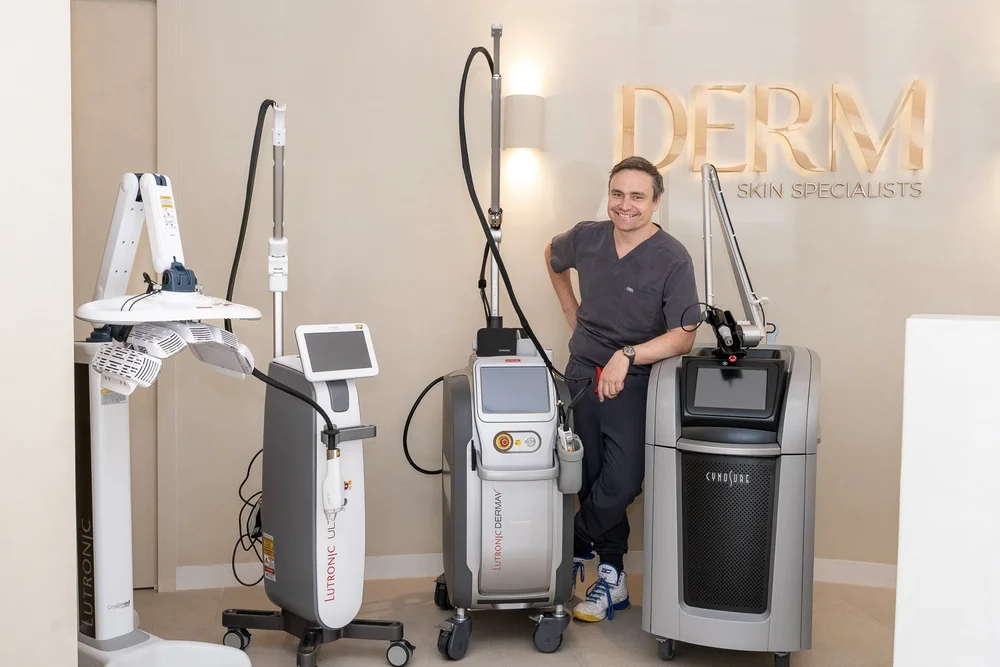
A dermatologist-led clinic, founded by Dr Mitch Robinson, FACD, who leads our laser suite and teaches laser to dermatologists and registrars. LED is one of our laser and light treatments in Brisbane, given by our registered nurses.
Meet Dr MitchLED Light Therapy at a Glance
What Is LED Light Therapy?
The short answer: LED light therapy shines low-energy red, blue or near-infrared light onto your skin to calm inflammation and support healing. It doesn't heat, cut or peel the skin, and most people go straight back to their day. The evidence is modest: it can help as part of an acne plan, settle skin after laser and gently freshen tired skin, but it won't clear acne or remove wrinkles on its own.
LED stands for light-emitting diode. Different colours of light reach different depths in the skin. Red and near-infrared light are absorbed by the energy-producing parts of skin cells, which is thought to calm inflammation and support repair, a process called photobiomodulation. Blue light is absorbed by natural compounds made by acne bacteria, which damages the bacteria.
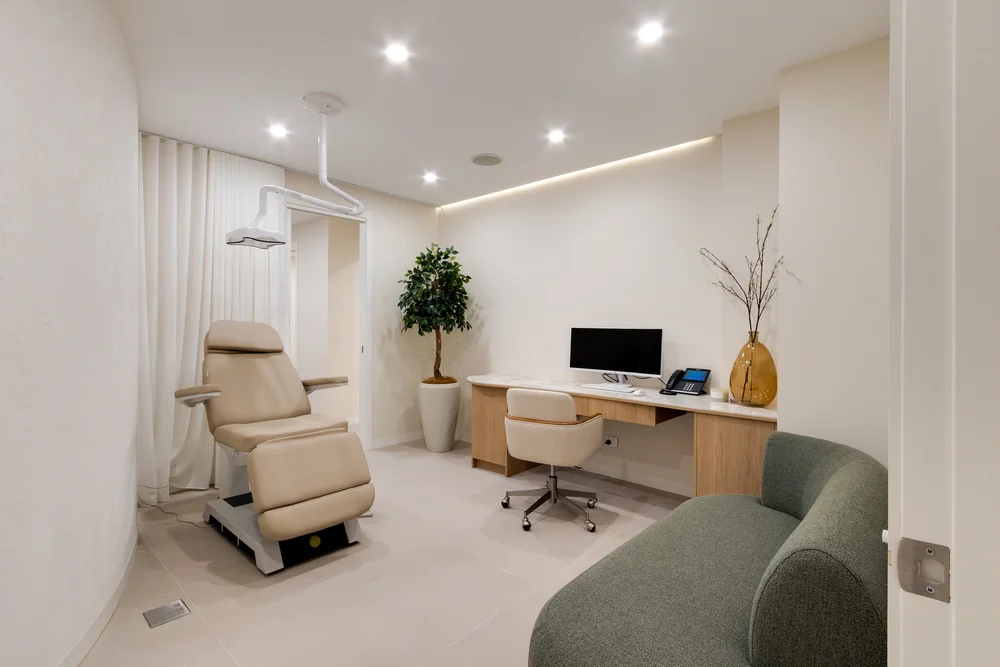
At DERM Skin Specialists in Mount Gravatt, LED is given by our registered nurses as a short course or straight after another treatment such as laser or a peel. Patients come from across Brisbane's southside, including Holland Park, Carindale and Upper Mount Gravatt.
Gentle light. Modest gains.
Does LED Light Therapy Work, and Is It Worth It?
LED is one of the gentlest treatments we offer, and its results are gentle too. Over a course, expect calmer, more even-looking skin and, for some people, fewer inflamed spots. Don't expect clear skin, smoother scars or a big change in wrinkles.
What the research says. A 2018 systematic review of 31 randomised controlled trials of LED in dermatology rated the evidence for acne as moderate (grade B) and found support for wound healing (Lasers in Surgery and Medicine, 2018). For skin ageing, a controlled trial in 136 people found that 30 sessions of red light, twice a week, improved skin roughness and collagen density measured by ultrasound, compared with untreated people (Photomedicine and Laser Surgery, 2014).
So is it worth it? It can be, when you want low-risk support alongside a wider plan: after laser or a peel, between acne treatments, or when you can't take time off. It's usually not worth it as your only treatment for moderate or severe acne, scars, pigmentation or deep lines. If another treatment would do more for your money, we'll tell you.
When something else will do more
- Moderate or severe acne: a medical plan with a dermatologist
- Acne scars: subcision, TCA CROSS or CO2 laser
- Brown spots and melasma: pico laser, peels and skincare
- Visible veins and flushing: vascular laser
- Lines and sun damage: laser resurfacing
Three colours, three depths
What Do Red, Blue and Near-Infrared Light Do?
The benefits of LED light therapy depend on the colour, or wavelength, of the light. Your nurse chooses one colour or a combination for your skin: often blue and red for acne, and red and near-infrared for recovery.
Blue light (around 415 nm)
- Reaches the surface of the skin. Used for acne, as it targets the bacteria involved in breakouts.
- Doesn't unblock pores. So it does little for blackheads and whiteheads.
- Used with care in olive and darker skin. It can darken pigment and stir up melasma.
Red light (around 633 nm)
- Reaches a little deeper. Used to calm redness and inflammation.
- May support collagen. Used for gentle rejuvenation of tired or dull skin.
- Often paired with blue light for acne. Blue targets bacteria; red calms the inflammation.
Near-infrared light (around 830 nm)
- Invisible, and reaches deepest. Used to support healing after laser, microneedling and peels.
- Light, not heat. Near-infrared LED is not the same as an infrared sauna or heat lamp.
- Suits most skin types. Often chosen where pigment is a concern.
Blue Light Acne Treatment: Can LED Help Acne?
LED can help inflamed acne settle, but it isn't a cure. Blue light targets acne bacteria and red light calms inflammation, so LED acne treatment often combines the two. It works on red, inflamed spots. It does little for blackheads, whiteheads or deep, painful cysts.
The research is mixed. A 2019 review of 14 trials of blue light for acne (698 people) found the studies too limited to draw firm conclusions: spot counts showed no clear difference, although skin was rated as improved in some trials (Annals of Family Medicine, 2019). A Cochrane review of 71 trials of light treatments for acne also found that high-quality evidence is lacking (Cochrane, 2016).
So we use LED as one part of an acne plan, not the whole plan: an add-on to the skincare or medical treatment your dermatologist recommends, or a gentle option between treatments. If your acne is moderate or severe, leaving marks or scars, or not improving with skincare, see a dermatologist first. Treating acne early is the most reliable way to prevent scarring. More on acne treatment.
LED for acne, honestly
- Helps: red, inflamed spots, as part of a plan
- Helps less: blackheads and whiteheads
- Doesn't help: deep cysts, or acne scars
- Courses: often 6 to 10 weekly sessions
LED After Laser and Peels: Does It Help Recovery?
LED is often added straight after laser resurfacing, RF microneedling or a chemical peel. Red and near-infrared light may help redness and swelling settle, and many people find it soothing when their skin feels hot and tight.
In the 2018 review of LED trials, wound healing was one of the uses with supporting evidence (Lasers in Surgery and Medicine, 2018). We use LED as a support for your recovery, alongside your aftercare.
LED doesn't replace your aftercare. Gentle cleansing, a bland moisturiser and SPF 50+ still do most of the work. If you're having CO2 laser, thulium laser or a peel with us, ask whether LED is worth adding to your plan.
Where LED fits after a procedure
- Straight after treatment, or in the next few days
- After CO2 laser, twice-weekly sessions while your skin settles
- Only on skin that is healing as expected
- Alongside, not instead of, your aftercare
Can LED Help Fine Lines, Redness and Dull Skin?
Fine lines and dull skin
Red and near-infrared light may gently improve skin texture, tone and fine lines over a course of sessions. Changes are subtle and build over weeks. LED won't remove wrinkles or tighten loose skin. For visible change in lines and sun damage, laser resurfacing or skin tightening does more, and LED can sit alongside them.
Redness and rosacea
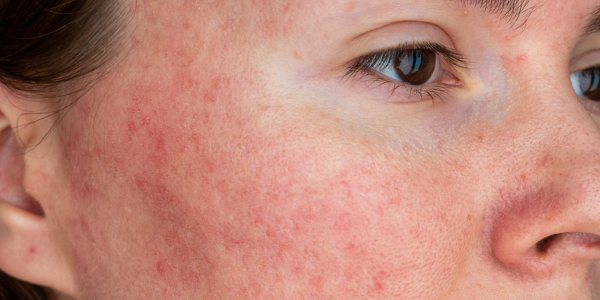
LED can calm redness and irritation for a while, and some people with rosacea find it soothing. The evidence for rosacea is limited, though. LED doesn't close visible blood vessels or stop flushing. For lasting redness, a dermatologist can plan medical treatment and vascular laser. More on rosacea and redness.
Red Light Therapy in Brisbane: Face Panel or Full-Body Bed?
Many people searching for red light therapy in Brisbane are looking for full-body red light beds for wellness, muscle recovery or sleep. We don't offer those. DERM Skin Specialists is a medical skin clinic, and our LED is the Healite II, a facial panel made by Lutronic, positioned close to your skin and used for skin concerns.
Red light therapy and LED light therapy are the same idea: red is one colour of LED light, and near-infrared is invisible light just beyond red. A facial panel concentrates the light on your skin concern, with settings chosen by a nurse.
If full-body red light is what you're after, wellness studios offer it. If your goal is your skin, start here. Red light is also sold for hair loss; if that's your concern, see a dermatologist first, as hair loss has many causes.
How Many LED Sessions Will You Need?
It depends on why you're having it. As a guide:
- After laser or a peel: one session, or a few. After CO2 laser, sessions are offered twice a week while your skin settles.
- Acne: weekly sessions as part of an acne plan, often a course of 6 to 10.
- Skin quality: as an add-on within a wider skin plan, often a course of 6 to 10.
- Top-ups: benefits fade over time. Some people come back for occasional top-ups, but there's little research on how often is ideal.
Each session takes 10 to 30 minutes under the panel. More often isn't better: skin needs time to respond between sessions.
What if it doesn't work? We review your skin at the end of a course. If you haven't noticed a difference after about 6 to 8 sessions, more of the same is unlikely to help, so we'll talk about other options.
When will I notice a change?
- After laser: calmer skin within days
- Acne: usually 4 to 8 weeks
- Tone and texture: gradually over a course
Assess first, then plan
What Happens During an LED Session?
From your first visit to your last session, here's what to expect at DERM Skin Specialists.
Skin check and plan
Your nurse looks at your skin and asks about your goals, medicines, health conditions, pregnancy, recent treatments and anything that's made your skin react before. Any spot that needs a doctor's look is checked first. If LED isn't right for you, we'll say so.
Your session
Your skin is cleansed and your eyes are covered with protective goggles or shields. You lie back while the panel sits close to your face for 10 to 30 minutes. Most people feel gentle warmth and find it relaxing. No numbing is needed.
Afterwards
Any pinkness usually settles within a few hours. After a stand-alone session you can go back to work, and wear makeup and sunscreen. We review your skin at the end of your course and adjust the plan.
LED Therapy Risks, and How We Reduce Them
LED is low risk, but no treatment is without risk. Here are the main ones and what we do about each.
Common, Short-Term Side Effects of LED Therapy
- Warmth, mild pinkness or tightness. Usually settles within hours. We check your skin and adjust the session if needed.
- Dryness. A gentle moisturiser is usually enough.
- Glare and eye discomfort. You wear eye protection for every session.
- Little visible change. Results are subtle. We set expectations at the start and review you after your course.
Less Common LED Therapy Risks
- Darker patches or a melasma flare. More likely in olive and darker skin with blue light. We use red and near-infrared light where pigment is a concern.
- A reaction in light-sensitive skin. Some conditions and medicines make skin react to light. We check your history and medicines first.
- Headache or migraine. Bright light can trigger them. Tell us if light triggers migraines or seizures.
- A spot that needed checking. We don't treat over new or changing spots; a doctor checks them first. See skin checks.
LED for olive and darker skin
Because LED doesn't heat the skin, it suits most skin types, including olive, Asian, Middle Eastern, Indian and darker skin. The main caution is pigment, so we lean on red and near-infrared light, and daily sun protection still matters.
Check with us first if you
- Are pregnant or breastfeeding
- Have epilepsy or light-triggered migraines
- Have a condition, medicine or supplement that makes you sensitive to light
- Have melasma or tan easily
- Have had skin cancer, or have a spot that's changing
- Have an eye condition
What's the Difference Between LED and Photodynamic Therapy?
Both use light, but they're different treatments for different problems.
LED light therapy uses light on its own, with no cream. It's a gentle, supportive treatment for acne-prone skin, redness, recovery and rejuvenation, and it's nurse-led.
Photodynamic therapy (PDT) is a medical treatment. At DERM it's used for some superficial skin cancers, once a biopsy has confirmed the diagnosis. A light-sensitive cream is applied first, then a light source activates it to target abnormal cells. A dermatologist confirms it suits your lesion, and downtime is typically 4 to 5 days of redness, swelling and some crusting or peeling.
LED can't treat skin cancer or sun damage spots. If you're looking for photodynamic therapy, see PDT at DERM, and for rough, scaly sun damage spots, see sun damage and actinic keratoses.
At a glance
- LED: no cream, cosmetic and supportive, nurse-led, from $95
- PDT: cream plus light, for some skin cancers, dermatologist-planned
- Recovery: LED usually straight back to your day; PDT typically 4 to 5 days
At-Home LED Masks vs In-Clinic LED: Which Is Better?
Home LED masks are lower powered than clinic panels, so they're designed for frequent use, often several times a week for weeks or months. Some have research behind them: a 2025 review of 6 trials (216 people) found home LED devices reduced mild to moderate acne compared with sham or comparison devices, with only mild dryness or irritation (JAMA Dermatology, 2025). Light output and quality vary a lot between brands.
An in-clinic session delivers more light in one sitting, the colour and settings are chosen for your skin, and a registered nurse looks at your skin each time. That matters if you have acne, pigment-prone skin or a spot that hasn't been checked.
If you use a home mask, follow the instructions, protect your eyes, stop if your skin reacts, and don't use it in place of acne treatment or skin checks. Not sure whether one is worth buying? Ask at your appointment. We'd rather you spend your money on what will help most.
How Much Does LED Light Therapy Cost in Brisbane?
LED sessions at DERM Skin Specialists start from $95 per session. See our fees.
What a course costs. Most goals need a course, so look at the total, not the price of one session. At $95 a session, a course of 6 comes to $570, and a course of 10 comes to $950. Your nurse confirms your plan and the total cost before you start, including any LED that's part of a laser or peel plan.
Honest advice. If LED is unlikely to give you the change you want, we'll tell you before you spend money on a course.
Medicare and private health. LED for the skin is a cosmetic treatment, so Medicare doesn't cover it, and private health funds usually don't either. You don't need a referral to book.
Is LED Done by a Nurse or a Dermatologist?
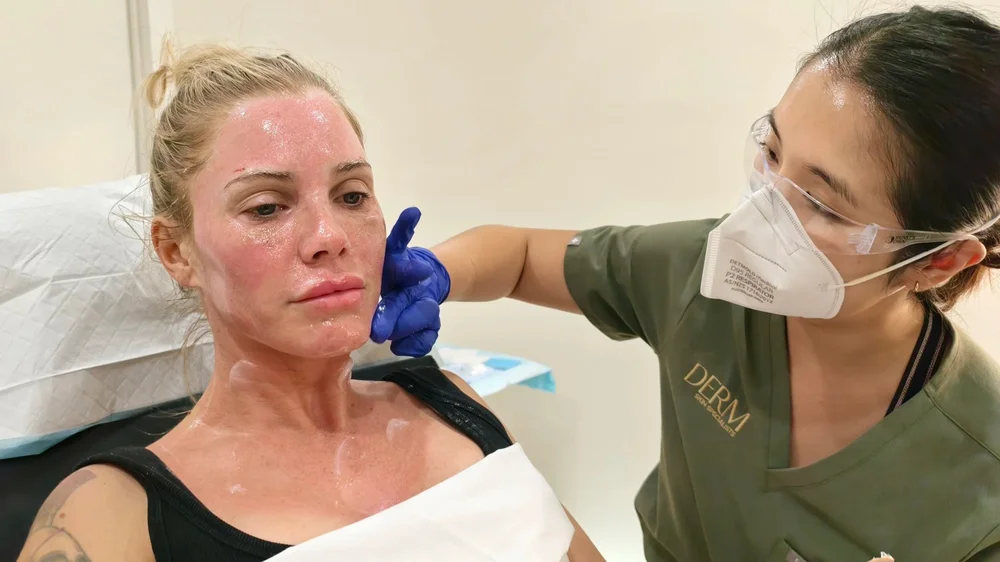
LED is nurse-led. Your session is given by one of our cosmetic nurses, who are Registered Nurses, in a clinic led by specialist dermatologists. That's what medically led skin care means here: your nurse works alongside the dermatologists, in the same clinic.
If your nurse sees something that needs a doctor, such as acne that needs medical treatment, rosacea, or a spot that should be checked, they'll arrange for you to see one of our dermatologists: Dr Mitch Robinson, Dr Emily Shao or Dr Benny Yau.
Not sure where to start? Book a nurse skin assessment. If your main goal is planning, a nurse-led consult can help you get oriented, and we'll tell you if a dermatologist assessment is needed.
Aftercare, Events and When to Call Us
After a stand-alone LED session there's little to do. Keep to gentle skincare, use SPF 50+ every day, and you can wear makeup the same day. If LED followed laser or a peel, follow the aftercare for that treatment.
Before an event. A single session a few days before suits most people, as any pinkness usually settles within hours. For a course to make a difference, start about 4 to 6 weeks before. If you're also having laser, plan around the laser's recovery, not the LED.
When to Call Us After LED Therapy
- Redness, swelling or itch that's getting worse instead of settling after a day
- Blisters, a rash or burning, especially if you've started a new medicine
- Eye pain or changes in your vision after a session
- A breakout or skin change that worries you
Call 07 3487 1414. Outside hours, see your GP or go to an emergency department.
Dermatologist-led clinic
Your LED Dermatologist: Dr Mitch Robinson, FACD
Specialist Dermatologist · Founder, DERM Skin Specialists
Dr Mitch founded DERM Skin Specialists and leads its laser suite. LED is given by our registered nurses in a clinic led by specialist dermatologists, so it fits alongside medical acne care, laser and skin checks rather than standing alone.
- Founder and laser leadLeads the laser suite at DERM Skin Specialists
- Teaches laser to dermatologistsAnd to dermatology registrars
- Medical and cosmetic dermatologyTreats acne, rosacea and sun damage, so LED fits a wider plan
Dr Mitch is a clinical presenter and Signature Partner for Cynosure Lutronic, a laser manufacturer.
Mount Gravatt, Brisbane
LED Light Therapy in Mount Gravatt
DERM Skin Specialists is at 2/1437 Logan Road, Mount Gravatt, about 15 minutes' drive from the Brisbane CBD, with free parking onsite. If you're looking for LED light therapy near you on Brisbane's southside, we're close to Holland Park, Mansfield, Wishart and Sunnybank, and an easy drive from Bulimba.
Common Questions
LED Light Therapy: Common Questions
Is there real evidence that LED light therapy works?
Yes, for some uses. Reviews find moderate evidence for acne and support for wound healing.
Will LED clear my acne?
Not on its own. It can help inflamed spots settle as part of a wider acne plan. For moderate or severe acne, see a dermatologist first.
Is blue light or red light better for acne?
They do different jobs: blue targets acne bacteria and red calms inflammation, so they're often combined. In olive or darker skin we lean on red.
Does blue light help acne scars?
No. LED doesn't fill or smooth scars. See acne scars for treatments that do.
Does LED light therapy work on wrinkles?
Only gently. It may soften fine lines and improve texture over a course, but it won't remove wrinkles.
Does LED help rosacea and redness?
It can calm redness for a while, but the evidence for rosacea is limited and it doesn't close visible blood vessels.
How often should I have LED light therapy?
Usually weekly as part of an acne plan, or twice a week after CO2 laser while your skin settles.
When will I see results?
After laser, skin often feels calmer within days. For acne or skin tone, subtle changes build over 4 to 8 weeks.
Does LED light therapy hurt?
Most people find it relaxing. You may feel gentle warmth. No numbing is needed.
Is LED light bad for your eyes?
The light is bright, so your eyes are always covered during treatment. Tell us if you have an eye condition.
Can I have LED while pregnant?
There's little research in pregnancy, so we usually suggest waiting. Talk to us first.
Is LED suitable for dark or olive skin?
Usually, yes, as it doesn't heat the skin. Blue light can darken pigment, so we lean on red and near-infrared light.
Can I have LED straight after laser or a peel?
Often, yes. Red and near-infrared light are commonly used straight after procedures. Your nurse plans the timing.
Is red light therapy the same as LED light therapy?
Red light is one colour of LED light therapy. Clinic panels can also use blue and near-infrared light.
Do you offer full-body red light beds?
No. We use the Healite II, a clinic LED panel made by Lutronic, for skin concerns. Wellness studios offer full-body beds.
Is near-infrared LED the same as an infrared sauna?
No. A sauna heats your body. Near-infrared LED is low-energy light used on the skin without heating it.
Is LED the same as IPL or laser?
No. IPL and lasers use stronger light that heats targets in the skin. LED doesn't, so its effects are gentler.
Are at-home LED masks worth it?
They can help some people with mild acne if used often, but they're lower powered and vary in quality. Ask us before you buy one.
Is this the same as an LED facial?
Some salons add LED to a facial. Here, LED is a stand-alone session or an add-on after a skin treatment, given by a registered nurse.
Do you have LED before and after photos?
Not on this page. Changes from LED are subtle and gradual. Ask us what's realistic for your skin.
How much does LED light therapy cost?
From $95 per session, so a course of 6 to 10 is from $570 to $950. Your total is confirmed before you start. See fees.
Do I need a referral for LED?
No. You can book directly. LED isn't covered by Medicare.
Is DERM a nurse-led skin clinic?
DERM is a dermatologist-led clinic. LED and some other treatments are nurse-led, given by Registered Nurses, with dermatologists in the same clinic.
Find Out If LED Suits Your Skin
Book an LED session or a nurse skin assessment. Your nurse will check your skin, explain what LED can and can't do for you, and confirm your plan and total cost before you start.
Clinical content overseen by Dr Mitch Robinson, FACD (AHPRA MED0001946771). Updated October 2026. General information only, not medical advice. All procedures carry risks; suitability, recovery and results vary between individuals.