
Skin Cancer Checks · Mount Gravatt, Brisbane
Skin Cancer & Melanoma Checks in Mount Gravatt, Brisbane
Full-body skin checks with dermoscopy, with our GP Dr Jimmy Wang or with a specialist dermatologist. If a spot needs a biopsy or treatment, it's done here, in the same clinic.
GP skin check $195 · Specialist dermatologist from $395 · No referral needed to book · Book with a dermatologist · See fees
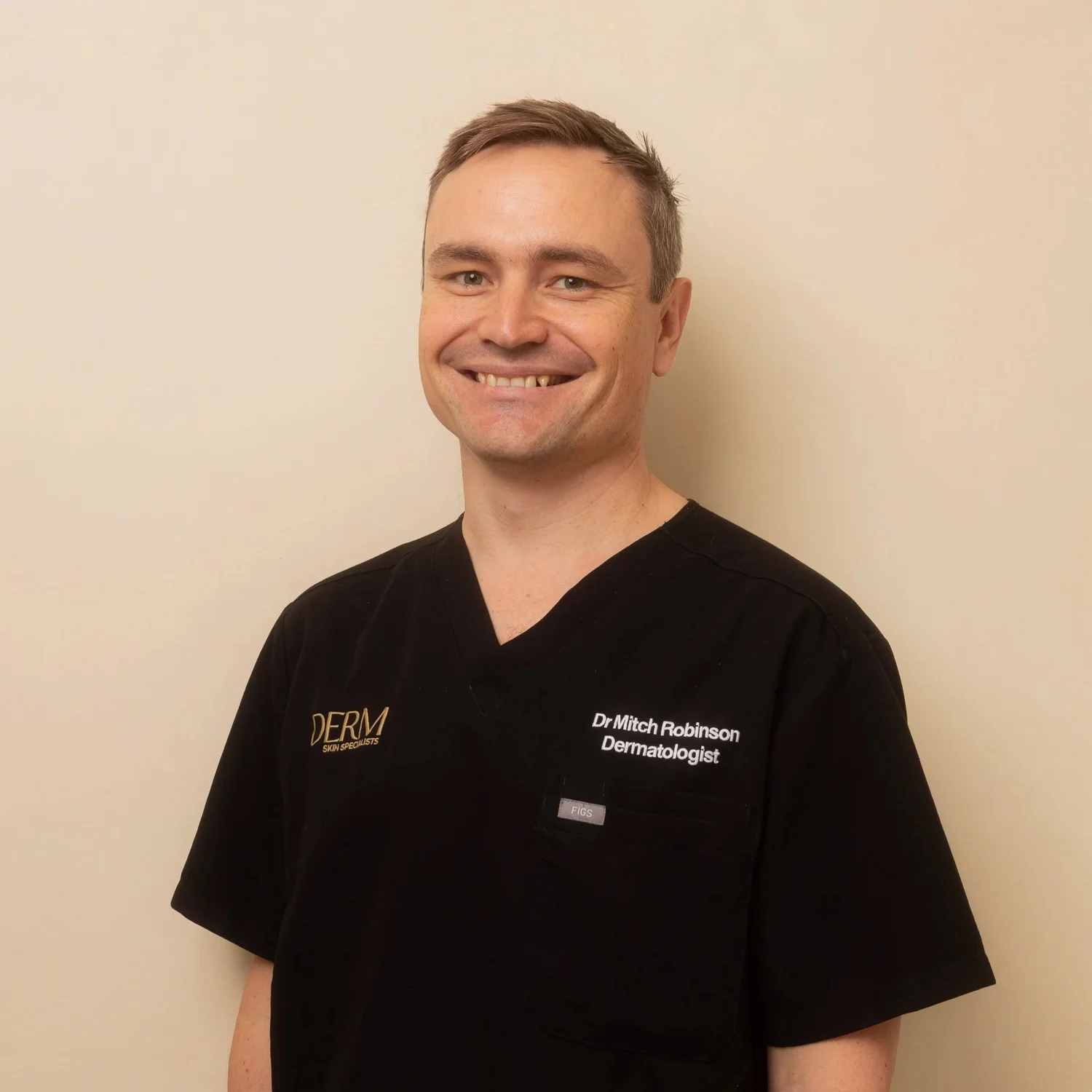
A dermatologist-led clinic, founded by Dr Mitchell Robinson, FACD, first author of Australia's clinical practice guideline for lentigo maligna, an early form of melanoma.
Meet Dr MitchSkin Checks at a Glance
What Is a Skin Check, and Do I Need One?
The short answer: a skin check is a head-to-toe examination of your skin by a doctor, who uses a dermatoscope to look closely at any spot of concern. Book one now if you have a new or changing spot. If you're at higher risk, have one every 6 to 12 months. If you've never had one, a baseline check is a good place to start.
Australia has some of the highest skin cancer rates in the world, and Queensland has the highest melanoma rates in Australia. Cancer Council Australia estimates that about 2 in 3 Australians will be diagnosed with skin cancer by the age of 70. Most skin cancers can be treated simply when they're found early, which is the whole point of a check.
At DERM Skin Specialists you can choose a GP skin check or a specialist dermatologist assessment, both in the same clinic. Either way, you leave knowing what looks benign, what needs watching, and what needs a biopsy or treatment.
We see people from Mount Gravatt and across Brisbane's southside, including Holland Park, Carindale, Mansfield and Upper Mount Gravatt.
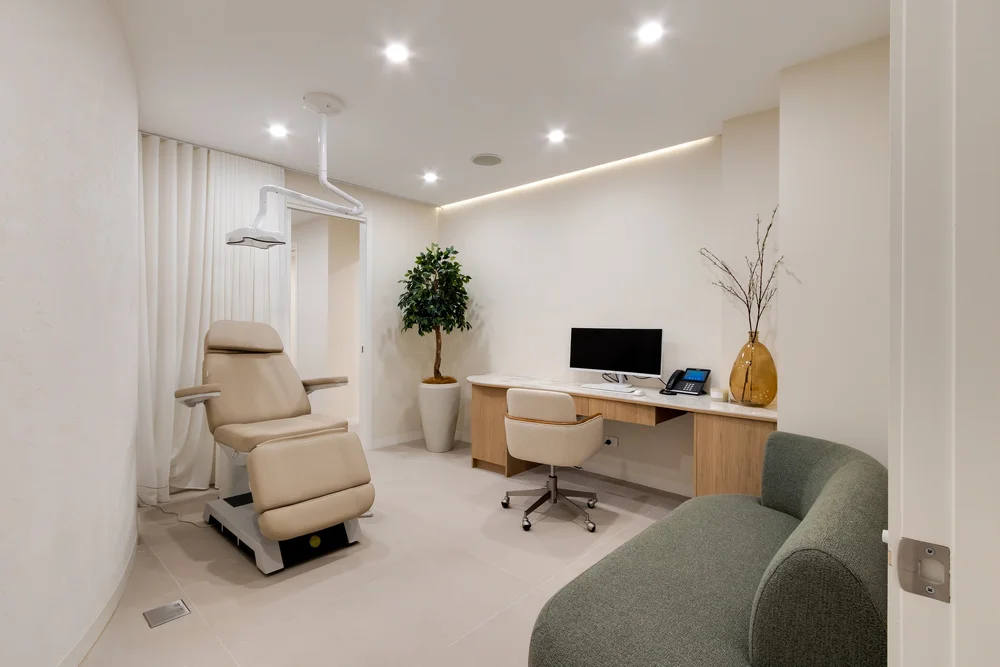
Same careful check. Your choice of doctor.
GP or Dermatologist Skin Check: Which Should You Book?
Every skin check here is a full-body check with dermoscopy. The difference is who does it, what it costs, and who it suits.
GP Skin Check
$195 · Dr Jimmy Wang, GP
- Full-body check with dermoscopy
- Done under protocols set by our dermatologists
- A dermatologist on site if anything complex or high-risk is found
- Suits routine checks for people at average risk
Dr Mitch Robinson
From $395 · Specialist dermatologist, FACD
- Master of Skin Cancer (UQ)
- First author of Australia's lentigo maligna guideline
- Suits past melanoma, many or unusual moles, or a spot of real concern
- Biopsy and skin cancer surgery in our own theatre
Dr Emily Shao or Dr Benny Yau
From $395 · Specialist dermatologists, FACD
- The same full-body check with dermoscopy
- Dr Shao sees adults and children, if you'd prefer a female doctor
- Dr Yau does skin checks and skin cancer surgery, and won the Kossard Prize in Dermatopathology
How to choose
If you're at average risk and want a routine check, the GP skin check is a sound, lower-cost choice. Dr Jimmy follows the same dermoscopy-based process our dermatologists set, and if he finds something complex, a dermatologist is in the building rather than a referral away.
Book a specialist dermatologist if you've had melanoma or several skin cancers, have many or unusual moles, have a strong family history, have a weakened immune system, or have one spot that really worries you. A dermatologist can also diagnose and treat other skin conditions at the same visit.
Not sure? Call us on 07 3487 1414 and we'll help you choose.
Dr Mitch's view
"A lot of Australians get skin checks through GP-run skin clinics, and many patients are managed well that way. The difference at DERM Skin Specialists is that you're seeing a specialist dermatologist, which means my training is dedicated to skin disease and skin cancer, full time, over many years."
From Dr Mitch's own notes on early detection.
No surprises on the day
How Much Does a Skin Check Cost, and Is It Bulk Billed?
GP skin check: $195. This is a full-body check with Dr Jimmy Wang. A Medicare rebate may apply where you're eligible, which reduces your out-of-pocket cost.
Specialist dermatologist skin check: from $395. No referral is needed to book. To claim a Medicare rebate on a specialist consultation, you need a valid referral, usually from your GP. Without one, you can still be seen, but no rebate applies.
Are skin checks bulk billed here? No. DERM Skin Specialists is a private billing practice, so a fee applies to every doctor appointment. If cost is what's stopping you, a bulk-billing GP can check your skin and refer you on if needed. A check anywhere is better than no check.
If you need a biopsy or treatment. Biopsies and skin cancer removal have their own fees, and Medicare rebates often apply to them. Pathology is billed separately by the laboratory. We explain the likely cost before any procedure, so you can decide on the day or plan it for later.
What changes the cost
- Seeing our GP or a dermatologist
- Whether you have a valid referral
- Whether a biopsy or removal is needed
- Pathology fees, billed by the lab
What Happens at a Full Body Skin Check?
A full skin check usually takes about 15 to 30 minutes, longer if you have lots of moles or need a biopsy.
Your history
We ask about your skin type, sunburn history, any past skin cancers, family history of melanoma, your medicines and any spots that are worrying you. Point out anything new or changing.
Head-to-toe check
Most people undress to their underwear. We check systematically from scalp to soles, including ears, between the toes and the nails, and look at spots of concern with a dermatoscope. Tell us if you'd like a chaperone.
Your plan
You find out which spots look benign, which need watching and which need a biopsy or treatment. A biopsy can often be done on the day. We tell you when your next check is due, based on your risk.
A closer look
What Is Dermoscopy, and Why Does It Matter?
A dermatoscope is a handheld magnifier with its own light. Placed on the skin, it shows colours and structures under the surface that you can't see with the naked eye. It doesn't hurt and takes seconds per spot.
As Dr Mitch puts it, diagnosis is more than a quick look: "It's dermoscopy, pattern recognition, and knowing which lesions are truly low-risk versus which need biopsy or treatment." That can help in two ways: finding melanomas earlier, and avoiding cutting out harmless moles just to be sure.
What the research says. A Cochrane review of 104 studies found that, in face-to-face checks, dermoscopy plus a careful look was more accurate for melanoma than looking with the naked eye alone (Cochrane, 2018). The authors noted the studies varied a lot and were mostly done in specialist clinics, so results in everyday practice may differ.
Know your ABCDE
What Are the Signs of Melanoma?
Melanoma can start as a new spot or in an existing mole. Doctors use the ABCDE guide:
- A, asymmetry. The two halves don't match.
- B, border. The edge is uneven, notched or blurred.
- C, colour. Blotchy, with several shades of brown, black, blue, red or white.
- D, diameter. Getting bigger, or larger than about 6 mm.
- E, evolving. Changing in size, shape, colour or feel.
Some melanomas break these rules. Nodular melanoma grows quickly as a raised, firm lump that can be pink, red or skin-coloured rather than dark. Think EFG: elevated, firm and growing for more than a month. Don't wait for a routine check if you notice one.
Also watch for the "ugly duckling": a spot that looks different from all your other moles.
Book a check if you notice
- A new mole, especially after age 25
- A mole changing in size, shape or colour
- A sore that won't heal
- A spot that bleeds again and again
- A scaly patch that doesn't go away
- A fast-growing lump of any colour
Not always a dark mole
What Does Skin Cancer Look Like?
Skin cancer can be a scaly patch, a sore that won't heal, a spot that bleeds easily or a slowly growing lump. These are the main types we check for.
Melanoma
- A new or changing mole, or a fast-growing lump
- Less common, but the most likely to spread
- Found thin, it's usually treated with surgery alone
Basal Cell Carcinoma
- The most common skin cancer
- A pearly or shiny lump, or a sore that bleeds, heals and returns
- Grows slowly and rarely spreads, but can damage skin around it
Squamous Cell Carcinoma
- A thick, scaly or crusted spot that may be tender
- Can grow over weeks to months
- Includes early Bowen's disease, a red scaly patch
Sunspots
- Rough, scaly actinic keratoses on sun-exposed skin
- Not cancer, but a marker of sun damage and higher risk
- A few can turn into squamous cell carcinoma
Lentigo Maligna
- A slowly spreading flat brown patch, usually on the face
- An early melanoma that's easy to mistake for a sunspot
- Most common in older adults with sun damage
Unusual Moles
- Moles that look different from your others
- Many unusual moles raise your melanoma risk
- Often monitored rather than removed
Dr Mitch's research area
What Is Lentigo Maligna, and Why Is It Easy to Miss?
Lentigo maligna is an early form of melanoma that stays in the top layer of the skin, often for years. It shows up on sun-damaged skin, usually the face, as a flat brown patch with uneven colour and edges that slowly grows. Because it looks so much like an ordinary sunspot or age spot, it's easy to overlook. Left untreated, it can become invasive melanoma.
Dr Mitch is first author of Australia's evidence-based clinical practice guideline for lentigo maligna, developed through Cancer Council Australia (Robinson et al., Dermatology, 2020). The guideline recommends surgery with clear margins where possible, and radiotherapy when surgery isn't suitable. It advises against freezing and laser for lentigo maligna. Much of the evidence behind it comes from observational studies, which is common for this condition.
That's why a flat brown patch on the face shouldn't be frozen or lasered as a "sunspot" until it has been properly assessed.
Have a brown patch checked if it
- Has slowly grown over months or years
- Has uneven colour or a blurred edge
- Looks different from your other sunspots
- Came back after being frozen or lasered
Based on your risk
How Often Should You Get a Skin Check?
There's no single schedule that suits everyone. Cancer Council Australia advises people at higher risk to have a full skin examination by a doctor every 6 to 12 months, and people at very high risk about every 6 months (Cancer Council Australia). Everyone else should get to know their own skin and see a doctor about any new or changing spot.
After your first check, we'll recommend when to come back, based on your skin type, moles and history. If you've had melanoma, your follow-up plan comes from your dermatologist.
What the research says. In a large Queensland study, people who'd had a whole-body skin check by a doctor in the 3 years before diagnosis were 14% less likely to be diagnosed with a thick melanoma, and 40% less likely for the thickest ones (Aitken et al., 2010). Thinner melanomas are easier to treat. This was an observational study, so it shows a link rather than proof, and only about half of the people invited as controls took part.
You're at higher risk if you have
- Many moles, or unusual moles
- Had melanoma, or a parent, brother or sister who has
- Had other skin cancers before
- Fair skin that burns, freckles, light eyes or red or fair hair
- Lots of past sun or sunburn, including outdoor work
- A weakened immune system, such as after an organ transplant
How Do You Check Your Own Skin Between Visits?
Many melanomas are first noticed by patients or their partners, so knowing your own skin matters. Every few months, undress fully in good light and use a full-length mirror and a hand mirror. Check everywhere, including skin that doesn't see the sun: scalp, ears, back, buttocks, soles, between the toes and under the nails. Ask someone to check your back and scalp.
Taking photos of your back or of particular moles on your phone is a handy way to spot change over time.
Can an app check my moles? Not reliably. A review in the BMJ looked at 9 studies of 6 skin cancer apps and found that they can't be relied on to detect all melanomas. Up to 45% of photos couldn't be assessed, and the studies were small, so real-world accuracy is likely to be lower (Freeman et al., BMJ, 2020). Use your phone to take photos, not to make a diagnosis.
Your self-check list
- Good light and two mirrors
- Scalp, ears and behind the ears
- Back, buttocks and backs of legs
- Palms, soles, nails and between toes
- Photos to compare next time
What Happens If a Spot Needs a Biopsy?
A biopsy takes a sample of a spot, or removes it completely, so a pathologist can look at it under a microscope. It's the only way to be sure what a suspicious spot is.
The area is numbed with local anaesthetic first, so most people feel a brief sting and then only pressure. Depending on the spot, we use a shave, a small punch or a full excision. Many biopsies can be done on the same day as your skin check. Others are planned for another visit, depending on the spot and where it is.
Small biopsies usually heal within 1 to 2 weeks. If you have stitches, we tell you when they come out, which depends on the area. You may be left with a small scar.
We follow up your results and explain the next step, whether that's reassurance, treatment or surgery. If biopsies are taken, you won't be left wondering.
When to call us
- Pain, heat, redness or swelling getting worse after the first 2 days
- Pus, yellow crusting or a fever
- Bleeding that doesn't stop after 20 minutes of firm pressure
- The wound opening up
Call 07 3487 1414. Outside hours, see your GP or go to an emergency department.
Diagnosis first, then the right tool
How Is Early Skin Cancer Treated?
In Dr Mitch's words: "Not every early skin cancer needs to be cut out, and not every spot should be left alone." Treatment depends on the type of lesion, how deep it is and where it is.
Freezing
- Liquid nitrogen for suitable sunspots and some very superficial lesions
- Quick, done during your visit
- Blisters and crusts for about 1 to 2 weeks
Curette and Cautery
- Scraping and sealing selected superficial cancers
- Under local anaesthetic
- Heals over a few weeks, leaving a pale mark
Field Treatment
- Creams for wider areas of sun damage and early change
- Used for a set number of weeks, with a planned review
- Expect redness and crusting while it works
Photodynamic Therapy
- A cream activated by light, for selected early lesions and sun damage
- Spares surrounding skin
- Laser-assisted PDT in carefully chosen cases
Surgery
- For invasive, aggressive, recurring or higher-risk cancers
- Planned around margins, anatomy and closure
- Done under local anaesthetic in our own theatre
Watch and Review
- For spots that look low-risk but are worth tracking
- A short-interval review with clear signs to watch for
- Avoids procedures you don't need
How Do I Prepare for a Skin Check?
- Take off nail polish and skip the makeup, so we can see your nails and facial skin clearly.
- Wear clothes that are easy to take off. You'll undress to your underwear.
- Make a list of spots that worry you, and take a photo of any that are hard to see or point to.
- Bring your history: past skin cancers, biopsy results, any family history of melanoma, and a list of your medicines.
- Bring a valid referral if you want a Medicare rebate on a specialist consultation.
- Tell us your preferences, such as a chaperone or a female doctor.
There's no need to shave or to stay out of the sun beforehand. Just avoid fake tan in the days before, as it can hide spots.
Your dermatologist
Dr Mitchell Robinson, FACD
Specialist Dermatologist · Master of Skin Cancer (UQ) · Mount Gravatt, Brisbane
Dr Mitch founded DERM Skin Specialists and sets the skin check protocols our GP works under. He sees people at higher risk and people with complex or worrying spots, and performs skin cancer surgery in our own theatre.
- Master of Skin Cancer (UQ)Postgraduate training in diagnosing and treating skin cancer
- National guideline authorFirst author of Australia's clinical practice guideline for lentigo maligna
- Teaches dermatologyLectures medical students and teaches dermatology registrars
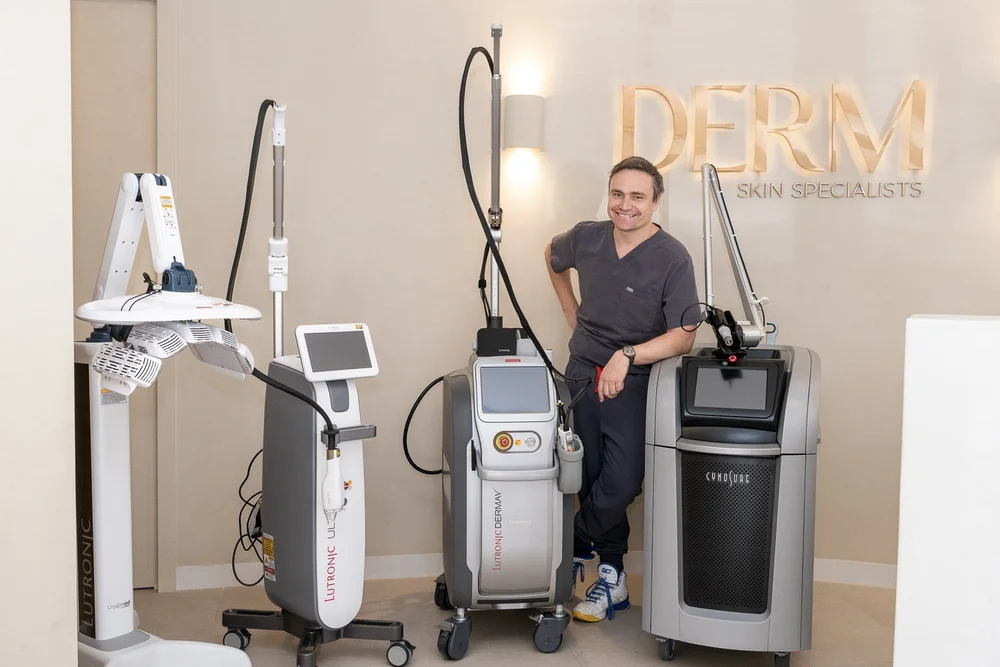
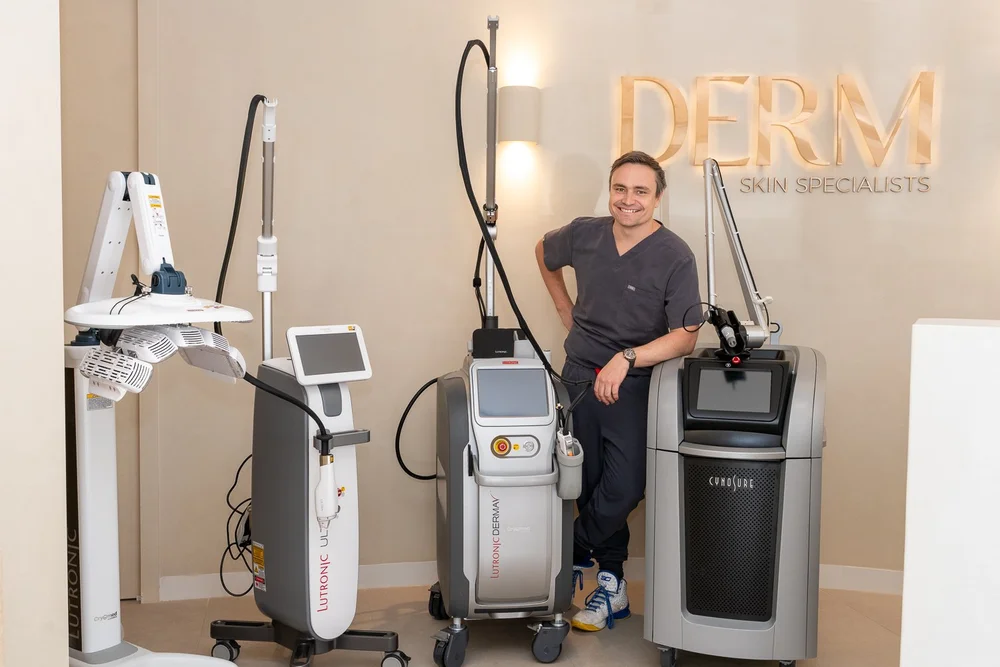
Dr Mitch is a clinical presenter and Signature Partner for Cynosure Lutronic, a laser manufacturer.
Mount Gravatt, Brisbane
Skin Checks in Mount Gravatt
DERM Skin Specialists is at 2/1437 Logan Road, Mount Gravatt, about 15 minutes' drive from the Brisbane CBD, with free parking onsite. It's an easy trip from Wishart, Eight Mile Plains, Greenslopes and the rest of Brisbane's southside.
Common Questions
Skin Checks: Common Questions
How long does a skin check take?
Usually about 15 to 30 minutes. It takes longer if you have many moles, a complex history or need a biopsy at the same visit.
Do I have to get undressed?
Most people undress to their underwear so the check is complete. You can keep your underwear on, and you can ask for a chaperone.
Do you check the scalp, feet and private areas?
We check the scalp, ears, nails, soles and between the toes. Checking intimate areas is up to you, but please tell us about any spot there that worries you.
Do you bulk bill skin checks?
No. We're a private billing practice. A GP skin check is $195 and a specialist skin check is from $395, and a Medicare rebate may apply where you're eligible.
Do I need a referral for a skin check?
No referral is needed to book. A valid referral, usually from your GP, is only needed if you want a Medicare rebate on a specialist dermatologist consultation.
Should I see a GP or a dermatologist for a mole check?
A GP skin check suits routine checks at average risk. See a dermatologist if you've had melanoma, have many or unusual moles, or have one spot of real concern.
Can I see a female doctor?
Yes. Dr Emily Shao is a female specialist dermatologist who does skin checks. Call 07 3487 1414 to book with her.
Can a biopsy be done on the same day?
Often, yes. If a spot needs a biopsy, it can usually be done at the same visit under local anaesthetic. Sometimes it's planned for another day, depending on the spot and the site.
Does a biopsy hurt, and will it scar?
The local anaesthetic stings briefly, then you should feel only pressure. Most biopsies leave a small scar that fades over months.
How do I get my biopsy results?
We follow up your results and contact you with the next step, whether that's reassurance, treatment or surgery.
Do you offer mole mapping or total body photography?
A standard skin check here doesn't include total body photography. If your risk is very high, we'll talk about whether it would help you.
Are skin cancer apps accurate?
Not accurate enough to rely on. A BMJ review found current apps can miss melanomas. Phone photos are useful for tracking change, but any worrying spot should be seen by a doctor.
At what age should I start getting skin checks?
There's no set age. Get to know your skin as an adult, see a doctor about any new mole after about age 25, and start regular checks earlier if you're at higher risk.
How often do I need a check after melanoma?
Usually more often, at least every 6 to 12 months and sometimes more. Your dermatologist sets your follow-up plan based on the melanoma and your other risk factors.
Are sunspots skin cancer?
No, but they're a sign of sun damage and higher risk, and a small number can turn into squamous cell carcinoma. A doctor can tell a sunspot from an early cancer.
Does a skin check hurt?
No. Looking at your skin and using the dermatoscope doesn't hurt. Only a biopsy needs a small injection of local anaesthetic.
Can I wear nail polish or makeup?
It's better not to. Melanoma can occur under the nails, and makeup can hide spots on the face. Fake tan can also hide spots.
Can you remove a mole I don't like?
Ask at your appointment. Moles removed for appearance only aren't covered by Medicare, and every removal leaves a scar, so we'll talk it through first.
How soon can I get a skin check appointment?
Skin check appointments are usually available within a week. If a spot is changing fast or bleeding, call us on 07 3487 1414 and tell us.
What happens if you find skin cancer?
We explain the diagnosis and your options. Many early skin cancers can be treated here, from freezing and creams to photodynamic therapy and surgery in our own theatre.
Book Your Skin Check
Choose a GP skin check with Dr Jimmy Wang, or a specialist check with one of our dermatologists. Both are full-body checks with dermoscopy, in our Mount Gravatt clinic.
Clinical content overseen by Dr Mitchell Robinson, FACD (AHPRA MED0001946771). Updated October 2026. General information only, not medical advice. All procedures carry risks; suitability, recovery and results vary between individuals.