
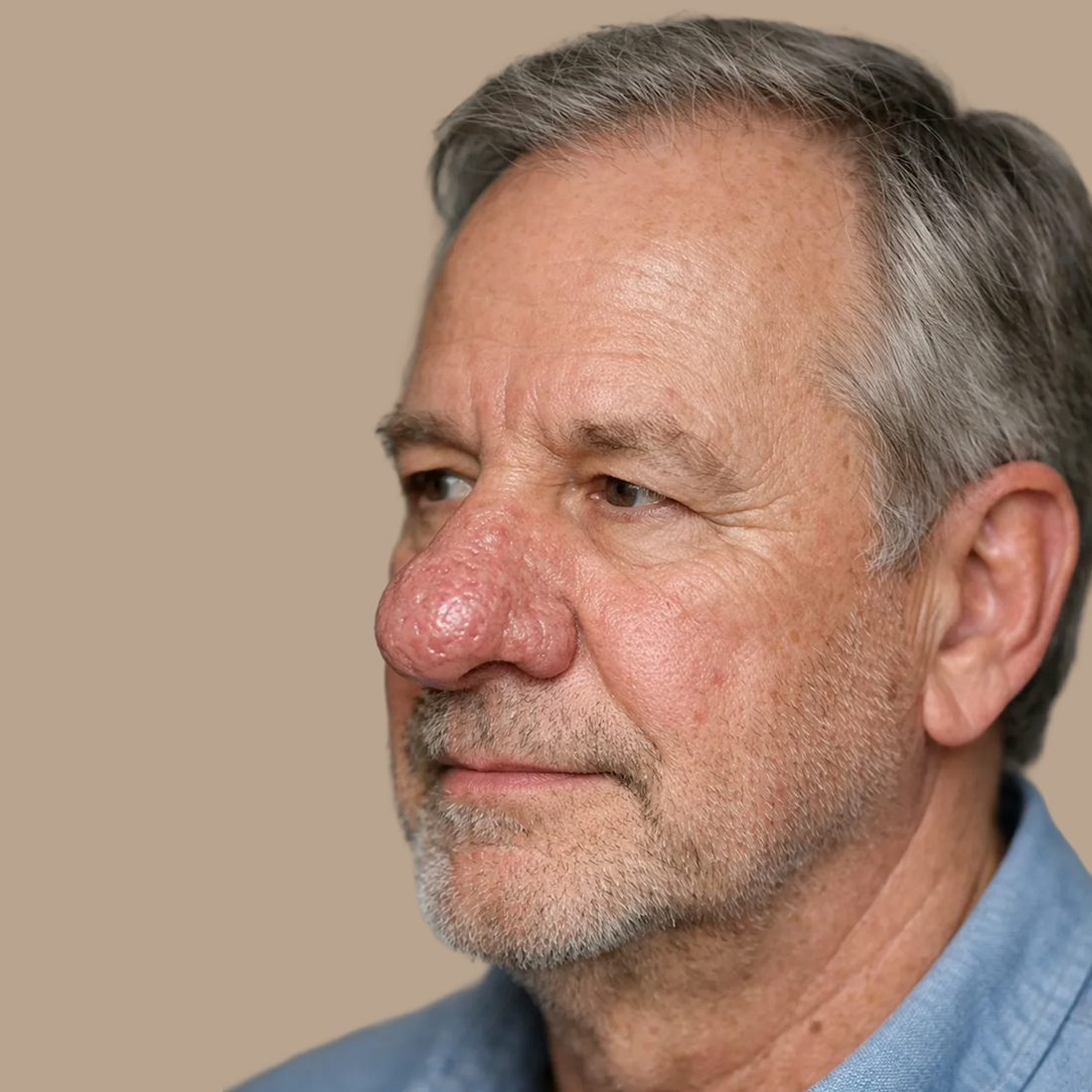
Rhinophyma
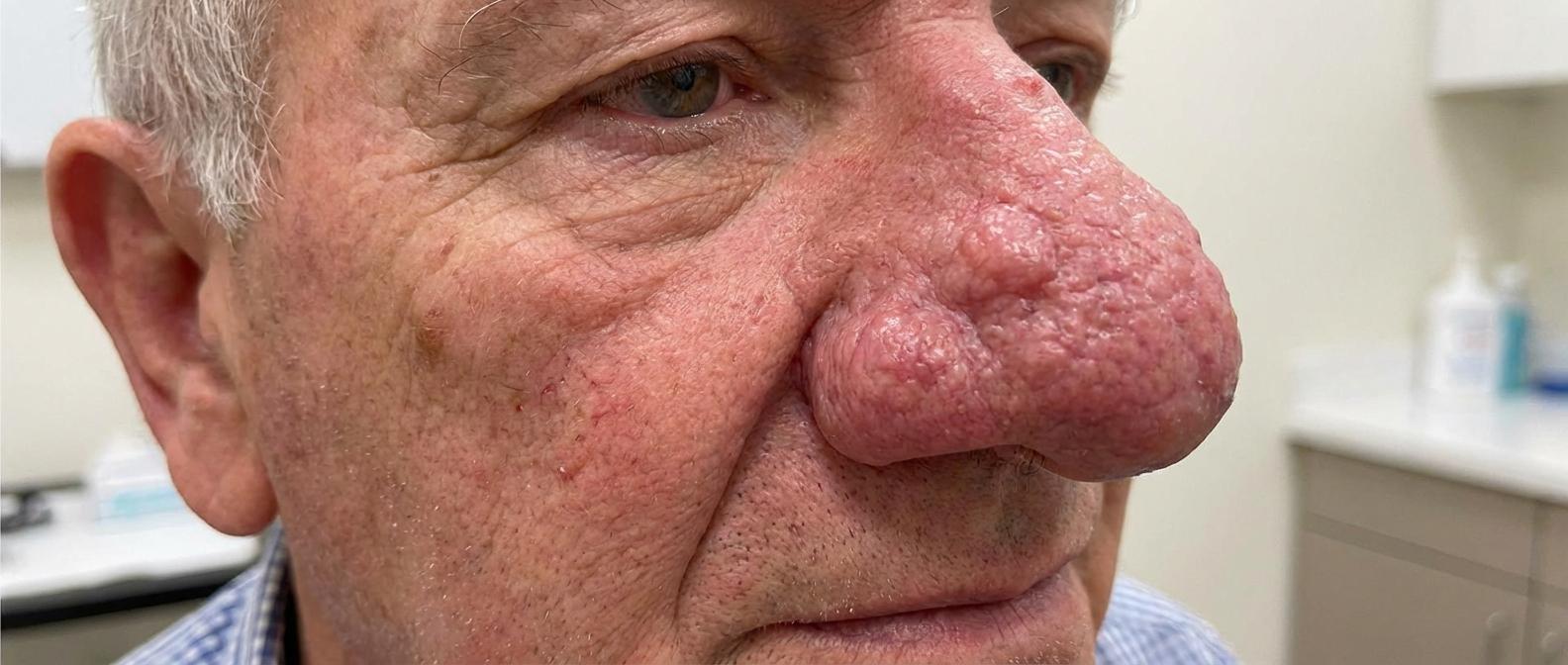
Rhinophyma causes thickened skin on the nose, leading to redness and an uneven texture.
Dr Mitch’s Take
I see rhinophyma as a medical problem, not a cosmetic one. It creeps up over years. Most men don’t talk about it, but they hear the comments — “What’s wrong with your nose?” and it chips away at confidence.
A lot of patients don’t realise it can be managed very well. Once the tissue has thickened and the shape has changed, creams and tablets rarely reverse that in a meaningful way. That’s why I generally recommend contour resurfacing when rhinophyma is established.
It’s a significant procedure and it needs downtime. But it’s usually a one-off. When patients can commit to the recovery, they’re typically very happy with the result.
What results to expect
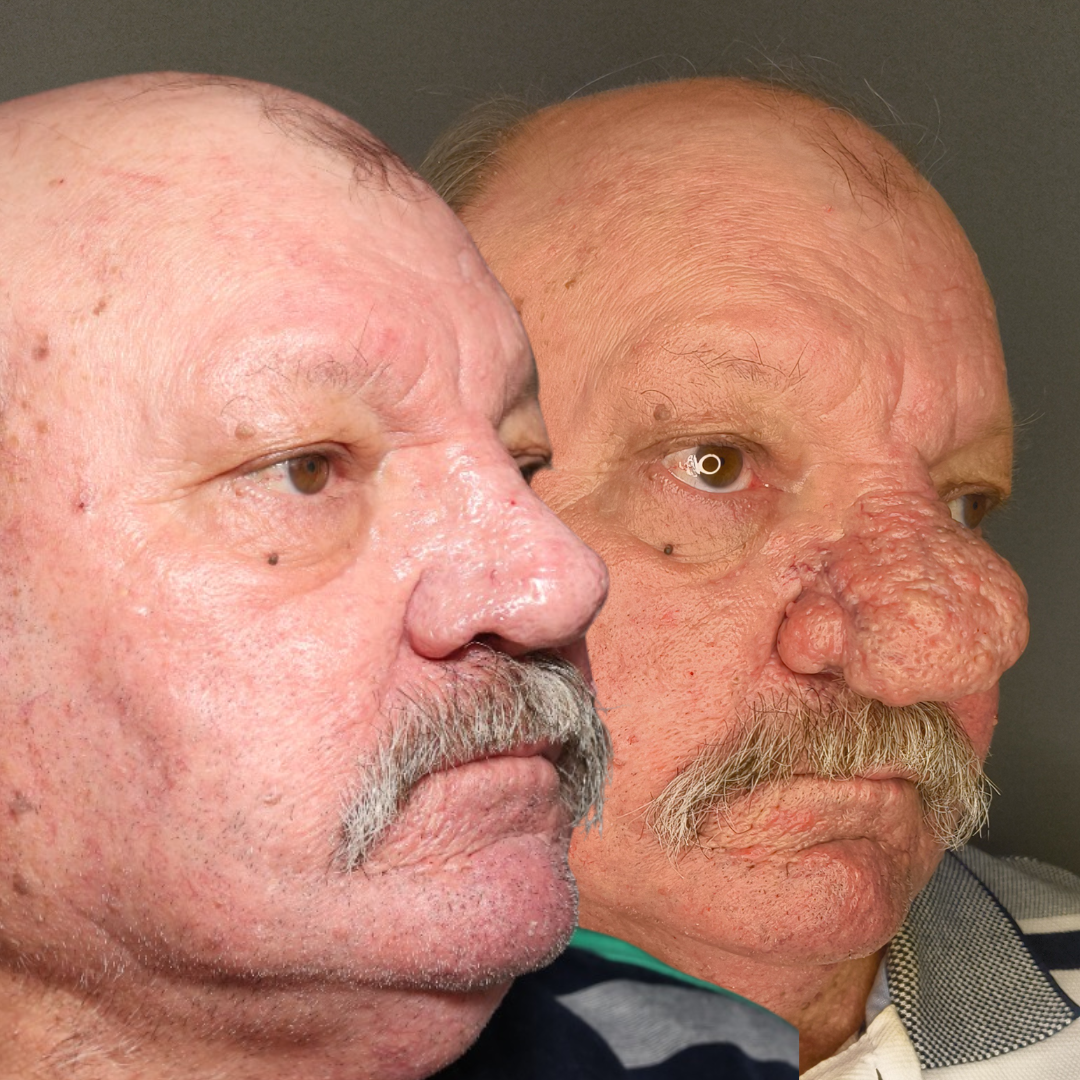
Most patients get a long period of improvement from a single treatment. The point is not to ‘polish’ the skin, it’s to treat a progressive condition and restore a more normal contour. Results depend on severity and healing response. Occasionally a second procedure is considered, but most patients do not need repeated sessions.
Before and after: 12 weeks following fully ablative CO2 laser rhinophyma contouring
Medical disclaimer
Before and after images are for general information only. Results may vary between individuals and are not guaranteed. Images show outcomes for one patient only and may not reflect typical results. Any procedure or treatment should be considered only after a clinical assessment, by a qualified health practitioner.
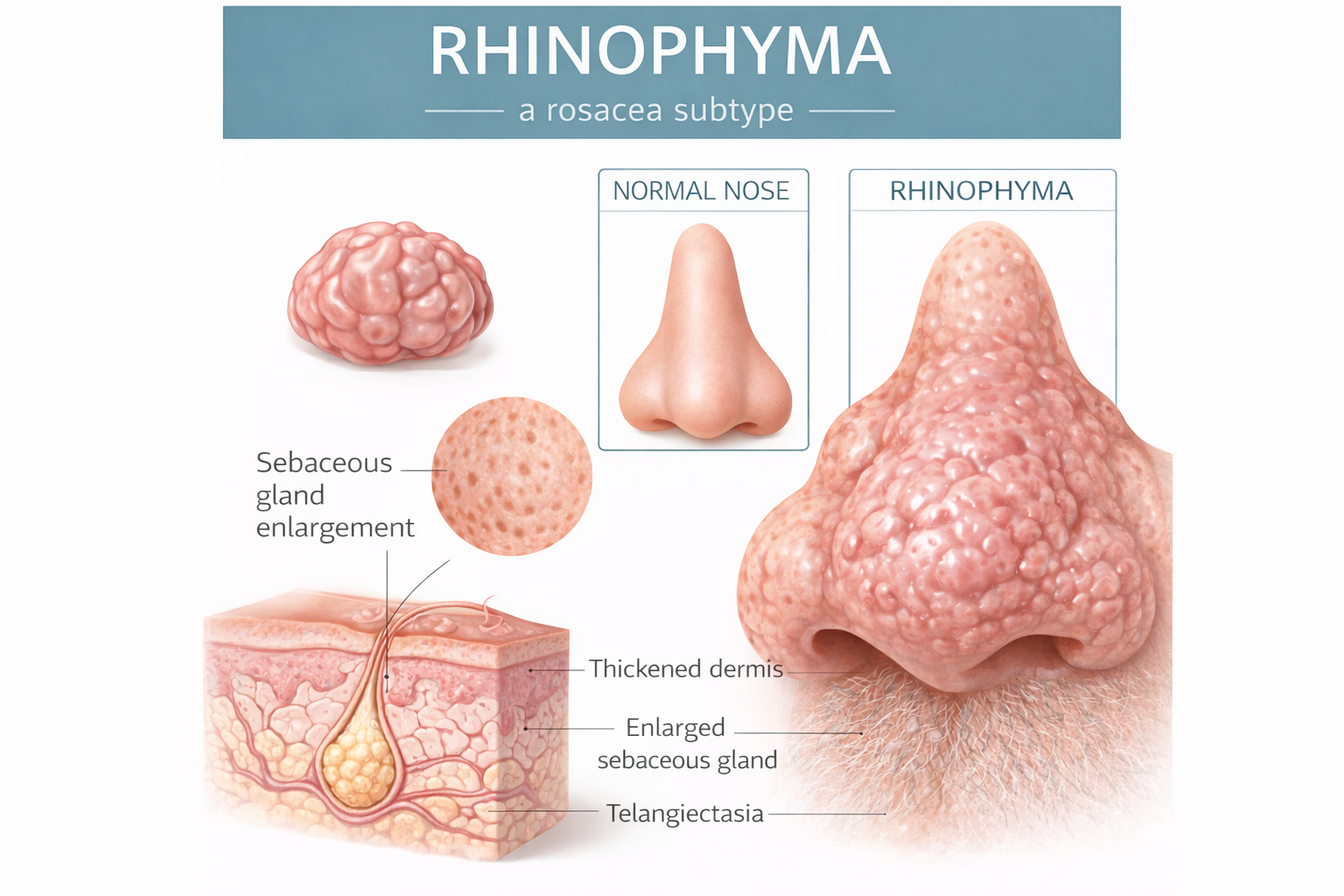
What Is Rhinophyma?
Rhinophyma is a medical condition that causes the skin on the nose to thicken, often resulting in a larger, bulbous appearance. It’s a common concern for men in their 40s, 50s, and 60s, but many are unaware that it can be effectively treated. While it may seem like a cosmetic issue, it’s actually a medical condition that can impact both your appearance and your confidence.
At our clinic, we focus on reconstructive dermatology, not cosmetic procedures. This treatment is designed to restore the nose to its natural shape and improve both the look and function. In some cases, rhinophyma can also affect breathing, as the thickened tissue can block the nasal sidewalls.
Treatment can help alleviate these issues as well. With Medicare rebates available, this isn’t just about enhancing appearance, it’s about providing medically necessary care that improves quality of life. Our goal is to offer men a safe, professional, and medically-focused solution that helps restore their skin and confidence.
At a glance

Downtime
7-14 days

Costs
From $4990

Results
7-14 days

number of sessions
1 single session
How we treat Rhinophyma
We confirm the diagnosis, assess severity, and discuss what result is realistic for your nose shape and skin type.
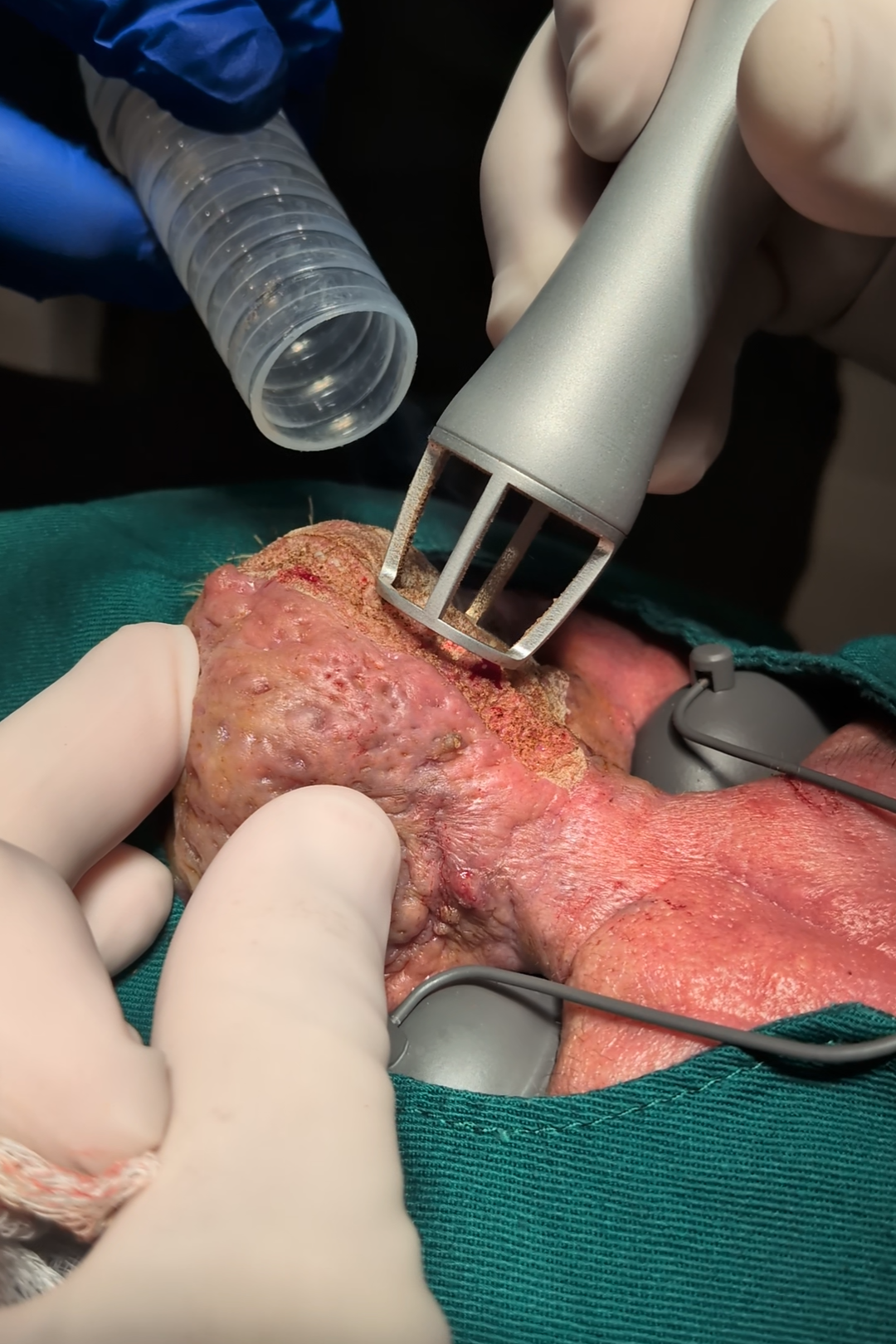
For established rhinophyma, the mainstay is contour resurfacing to remove excess tissue and re-shape the nose. The goal is to restore the form and function, smoother contour, less bulk, and a more natural nasal outline.
Medicare item numbers may apply when eligible, because this is treated as a medical condition rather than a cosmetic one. We’ll tell you clearly what applies after assessment.
Other treatment options
01
Medication
Medication can help the underlying rosacea and inflammation, and in earlier cases it may reduce oiliness and slow progression. In established rhinophyma, tablets usually have a limited effect on the overall bulk and shape of the nose, which is why they’re not the main treatment once thickening is significant.
In some patients, medication is considered later on, after contour resurfacing, as part of longer-term control. This is selective an depends on how active the underlying rosacea is and the risk of recurrence.
02
Surgery
Traditional surgical approcahes can remove tissue effectively, but the recovery can be longer and the final contour can be less predicatble than resurfacing techniques. We’ll talk thgough the pros and cons and recommend the approach that best matches your severity, downtime, tolerance and goals.
What the journey looks like at
Derm Skin Specialists
01
Treatment process & initial recovery
The procedure typically lasts 45 minutes to 1 hour and is performed under local anaesthetic with a nasal block. Afterward, you maay experience swelling and minor oozing. The first 1-2 weeks are considered the active healing phase, with follow-up appointments on day 1, day 5, day 7 and day 14 for cleaning and infection checks.
02
Pain, healing & social normalcy
Pain after the procedure is minimal once the local anesthetic wears off, Healing typically takes around 3-4 weeks for socially normal appearance, though redness can persist. In some cases, background redness may take up to 6 months to fully resolve.
03
Risks & aftercare
While infection, scarring, and colour change are rare, they remain potential risks. To minimise these risks, we’ll provide aftercare and regular reviews. You’ll also be assigned a patient coordinator to ensure seamless scheduling and follow-up care throughout your recovery.
Why rhinophyma needs specialist care
Rhinophyma is a progressive skin condition that requires specialist care to manage effectively. Left untreated, it can lead to thickened, uneven skin on the nose, which becomes more difficult to address over time.
Expert diagnosis & treatment
Our dermatologists specialise in diagnosing rhinophyma and creating treatment plans that address the underlying skin changes.
Minimising further progression
Rhinophyma is a condition that can worsen over time, but with the right specialist care, we can slow its progression and prevent it from affecting your appearance any more
Advanced laser technology
We use precise lasers to reduce skin thickening and restore a smoother appearance with minimal downtime.
Not sure where to start?
The best starting point is a dermatology consultation. That’s where we confirm the acne pattern, scarring risk, and the most appropriate pathway.
If your main goal is treatment planning and understanding device options, a nurse-led consult can help you get oriented, and we’ll tell you if dermatologist assessment should come first.
Our Most Commonly Asked Questions
Medical disclaimer
This page is general information only. Suitability, expected outcomes and Medicare eligibility depends on individual assessment.
-
Medication can help rosacea and inflammation, and may slow progression in earlier cases. Once rhinophyma is established, tablets usually don’t change the overall shape of the nose in a meaningful way.
-
Yes. Surgery is one option, but we mainly use contour resurfacing because the contour outcome is often better and the recovery is usually more predictable. We’ll recommend the right approach after assessment.
-
About 45 minutes to 1 hour under local anesthetic.
-
Expect swelling and oozing early, with one or two weeks of active healing. Most people look much more settled by 3-4 weeks, but redness can linger for months.
-
We usually review in person at day 1, day 5, day 7 and day 14.
-
Infection, scarring, and longer-term colour changes are possible. We monitor closely to reduce risk.
-
Often no. Occasionally a second session is considered, depending on severity and goals.