
Dermatologist-Led Laser Clinic · Mount Gravatt, Brisbane
Laser Suite in Mount Gravatt, Brisbane
Laser skin treatment for pigmentation, sunspots, redness, acne scars, wrinkles and loose skin, led by specialist dermatologist Dr Mitch Robinson, FACD. We diagnose your skin first, then choose the laser that suits it.
Specialist consultations from $395 · No referral needed to book · Treatment costs confirmed in writing before you start · See fees
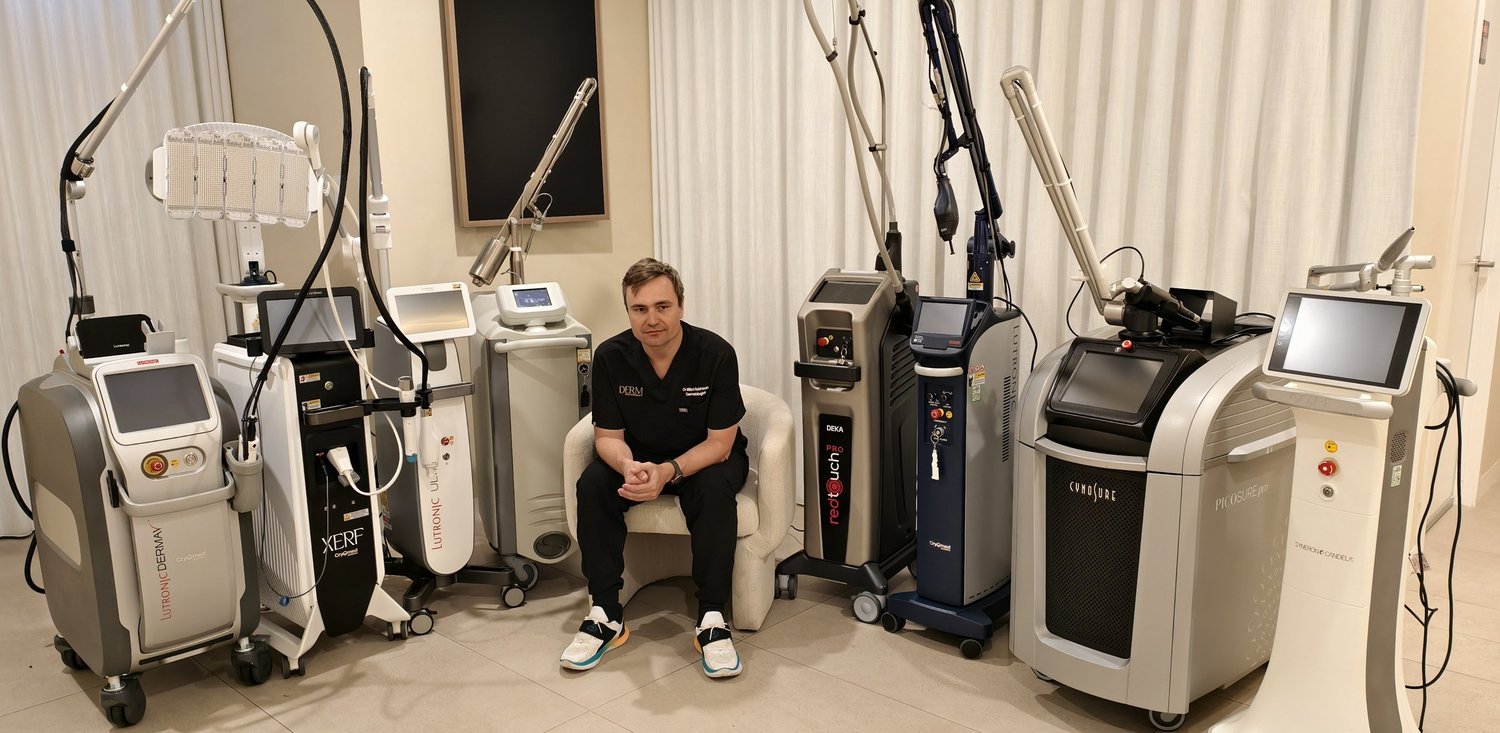
A dermatologist-led clinic, founded by Dr Mitch Robinson, FACD, who leads our laser suite and teaches laser to dermatologists and registrars.
Meet Dr MitchLaser Suite at a Glance
What Is a Laser Dermatologist?
The short answer: a laser dermatologist is a specialist dermatologist who uses lasers to treat skin. There's no separate laser specialty, so look for the letters FACD (Fellow of the Australasian College of Dermatologists). What a dermatologist adds is diagnosis: working out what a spot, patch or redness actually is before deciding whether a laser is the right tool at all.
That matters because skin problems often look alike. A brown spot can be a sunspot, melasma or, now and then, a skin cancer. Redness can be rosacea, broken capillaries or a rash that needs a different treatment entirely. Each needs a different plan, and some shouldn't be lasered.
At DERM Skin Specialists in Mount Gravatt, Dr Mitch Robinson leads a laser suite of seven lasers plus radiofrequency and LED devices, and teaches laser to dermatologists and registrars. Some treatments are done by our cosmetic nurses, who are Registered Nurses, under his supervision.
Patients come to our laser clinic from across Brisbane's southside, including Holland Park, Carindale and Sunnybank.
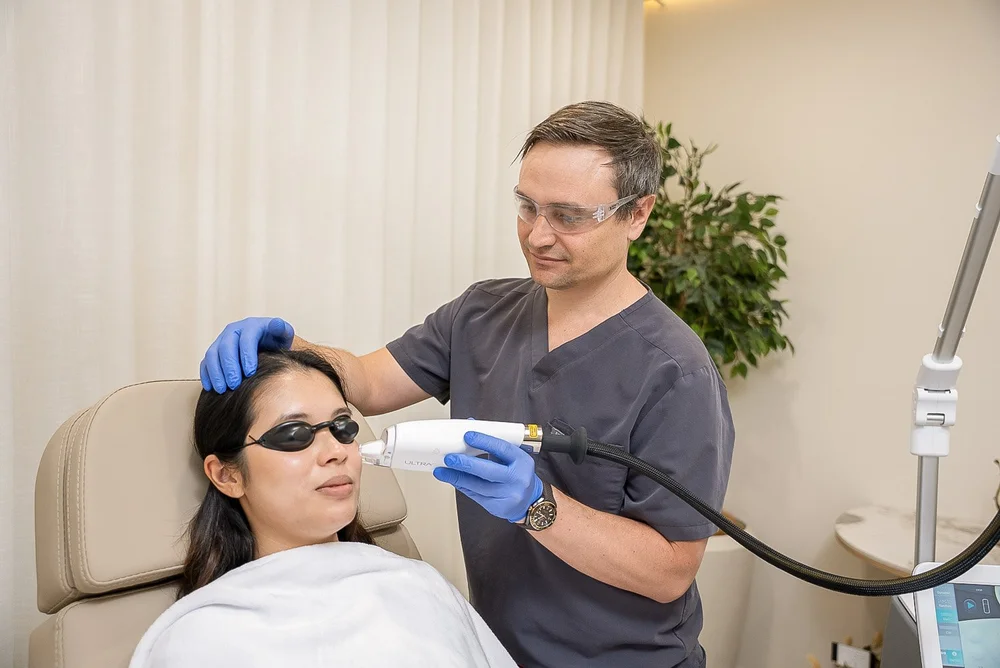
Start with the problem, not the machine
Which Laser Is Right for Me?
Find your main concern to see which lasers usually help. The final choice depends on your skin type, the cause and how much downtime you can take.
Comparing lasers for acne scars
Pigmentation and melasma
- Brown patches and uneven tone
- Usually PicoSure Pro or LaseMD
- Gentle settings and daily SPF 50+ for melasma
Sunspots and sun damage
- Dark spots on the face, hands and chest
- PicoSure Pro or DermaV for single spots
- LaseMD, CO2 laser or PDT for wider damage
- Every spot checked first
Redness and rosacea
- Flushing and background redness
- Broken capillaries on the nose and cheeks
- DermaV vascular laser, often 2 to 6 sessions
Acne scars
- Rolling, boxcar and ice pick scars
- CO2 or erbium laser for texture
- Usually with subcision or TCA CROSS
Wrinkles, texture and pores
- Fine lines and crepey skin
- CO2 or erbium laser for more change
- LaseMD or RedTouch PRO for gentler courses
Rhinophyma
- Thickened, bumpy skin on the nose
- CO2 laser, performed by Dr Mitch
- Often 1 to 2 sessions
Loose skin
- Early jowls and a softer jawline
- Crepey neck skin
- XERF radiofrequency, 1 to 2 sessions
- Firms skin; doesn't replace surgery
Tattoos
- PicoSure Pro picosecond laser
- Several sessions, weeks apart
- Some colours fade less, and complete clearance can't be promised
Acne and red marks
- Active acne and red marks after acne
- DermaV and LED
- Alongside medical acne care
Not sure what you have, or have more than one concern? That's what the consultation is for. Many plans combine two or more treatments.
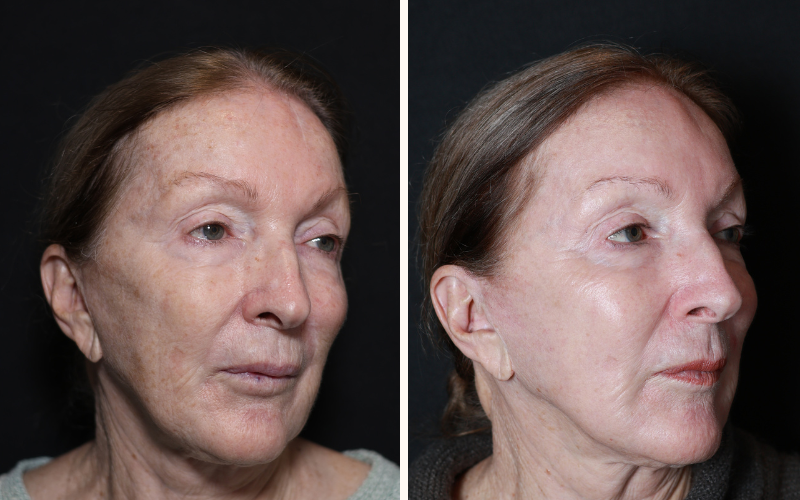
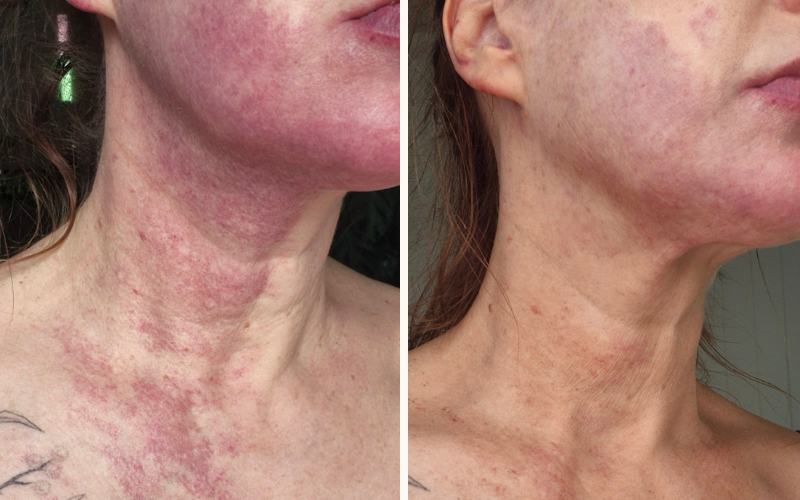
Laser Before and After Photos
Patients of DERM Skin Specialists, photographed in the same conditions. Laser results build over weeks to months, and most treatments need a course of sessions.
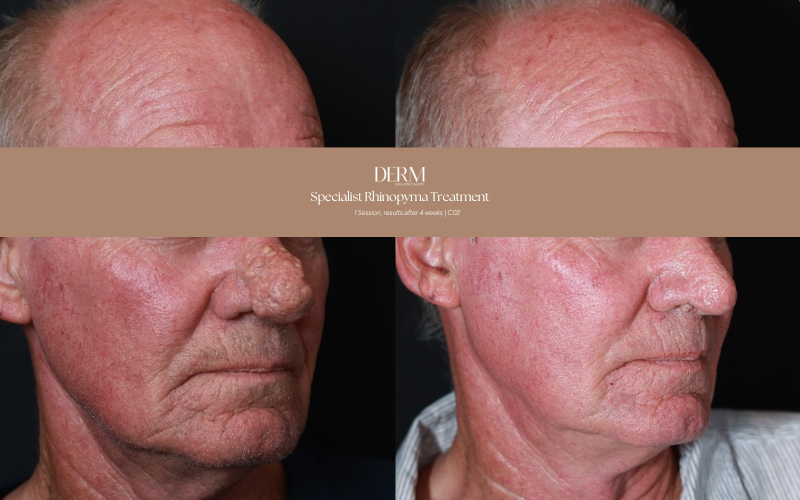 BeforeAfter 4 weeks
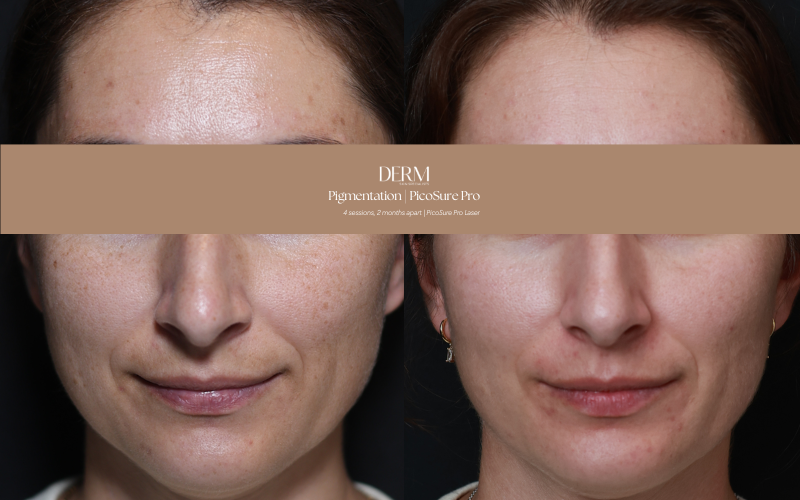 BeforeAfter
 BeforeAfter
 BeforeAfter
Before photo on the left in each pair. Tap a photo to see it larger. Individual results vary. Results depend on your skin, the laser used, the number of sessions and how your skin heals. All procedures carry risks; see the risks section below.
Different lasers, different jobs
Our Brisbane Laser Suite: What Each Laser Does
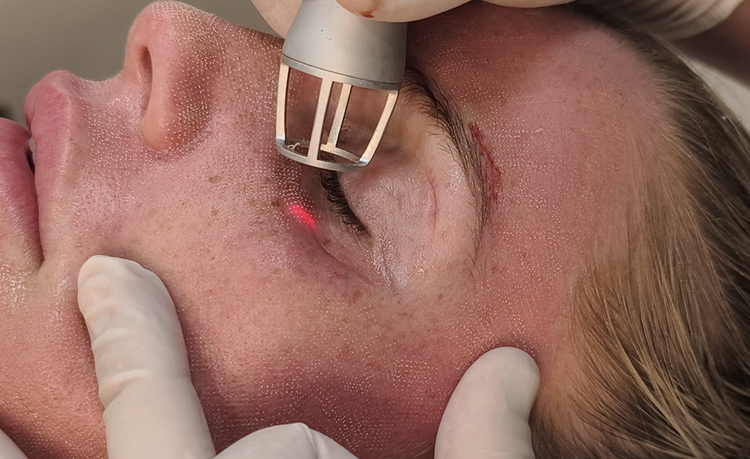
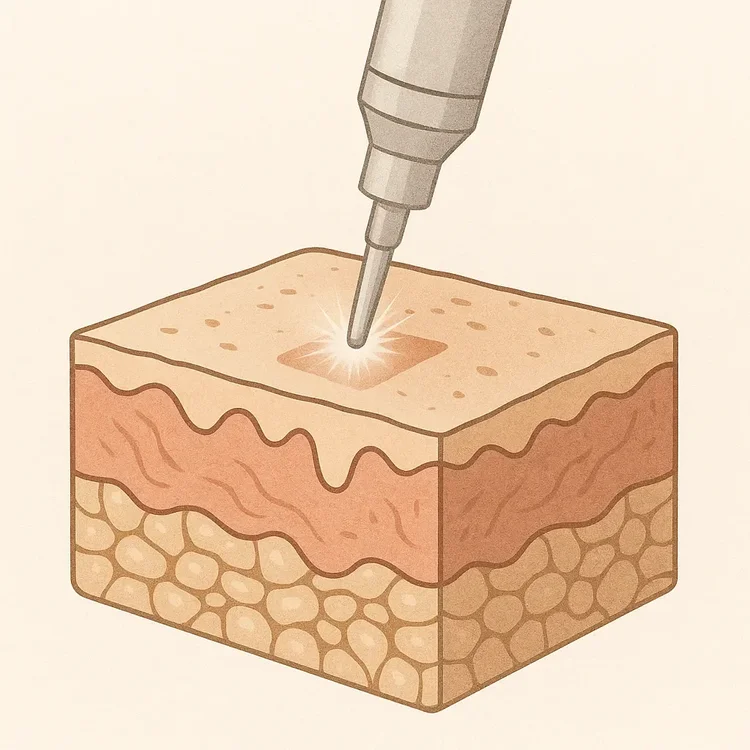
Each laser targets something different, such as water, pigment or blood vessels, at a set depth. No single laser treats everything.
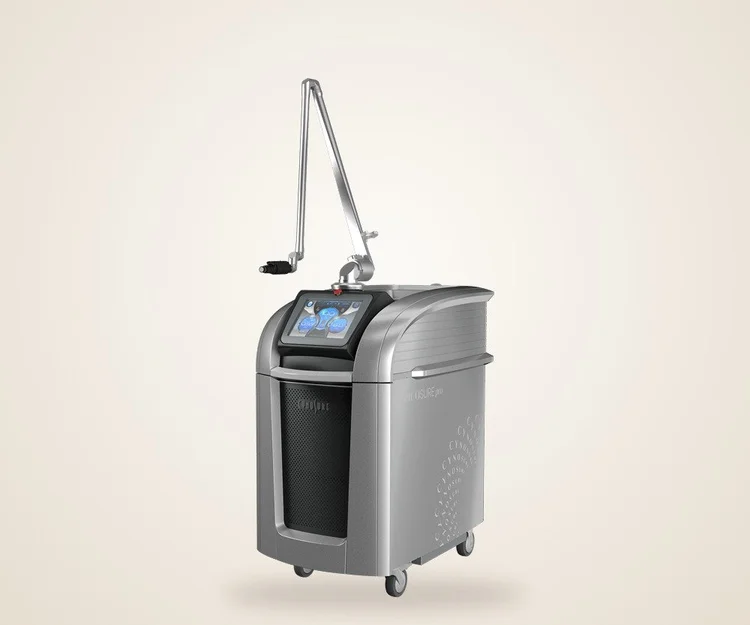
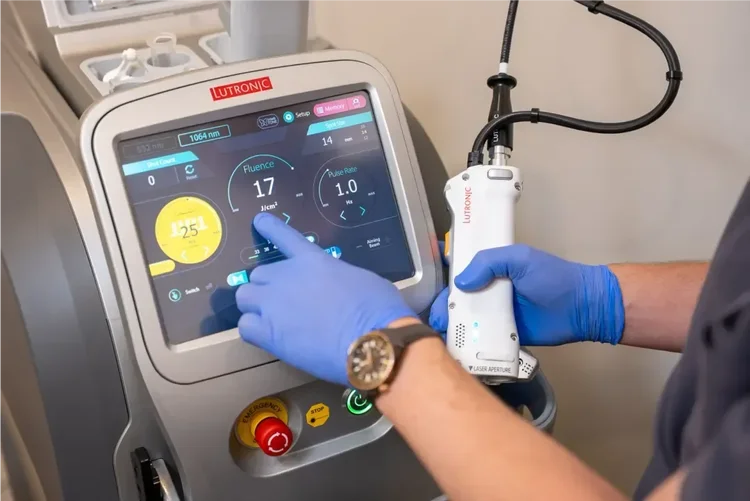
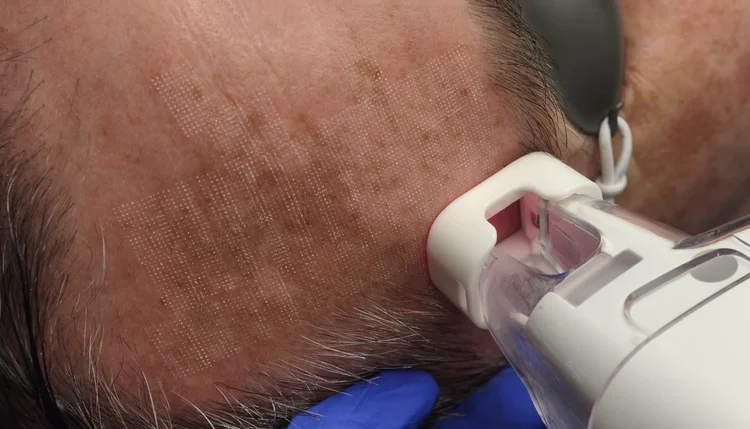
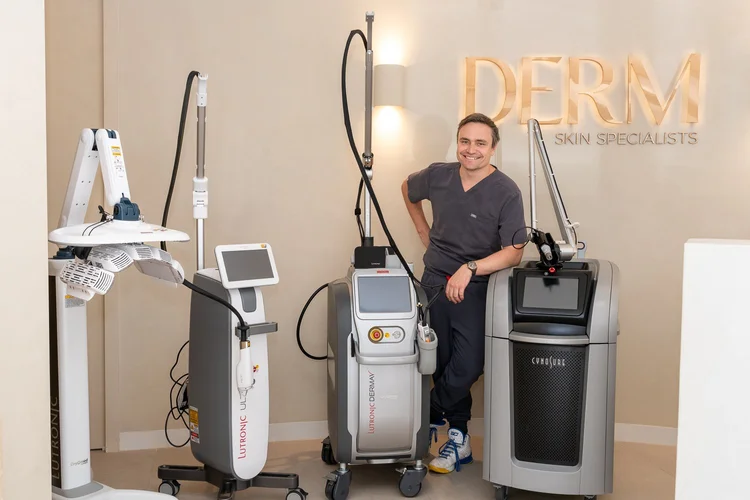
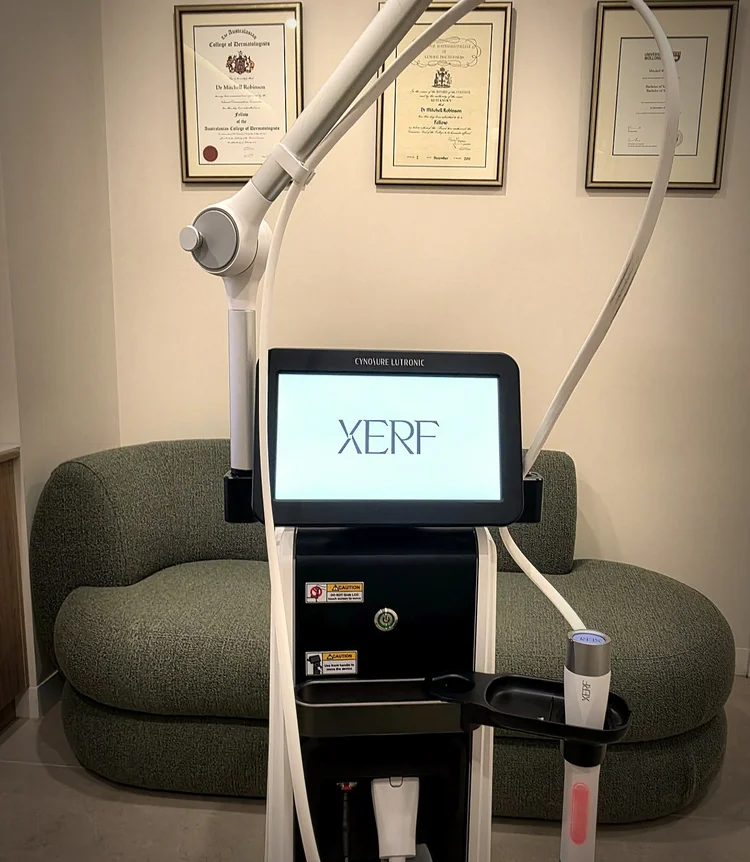
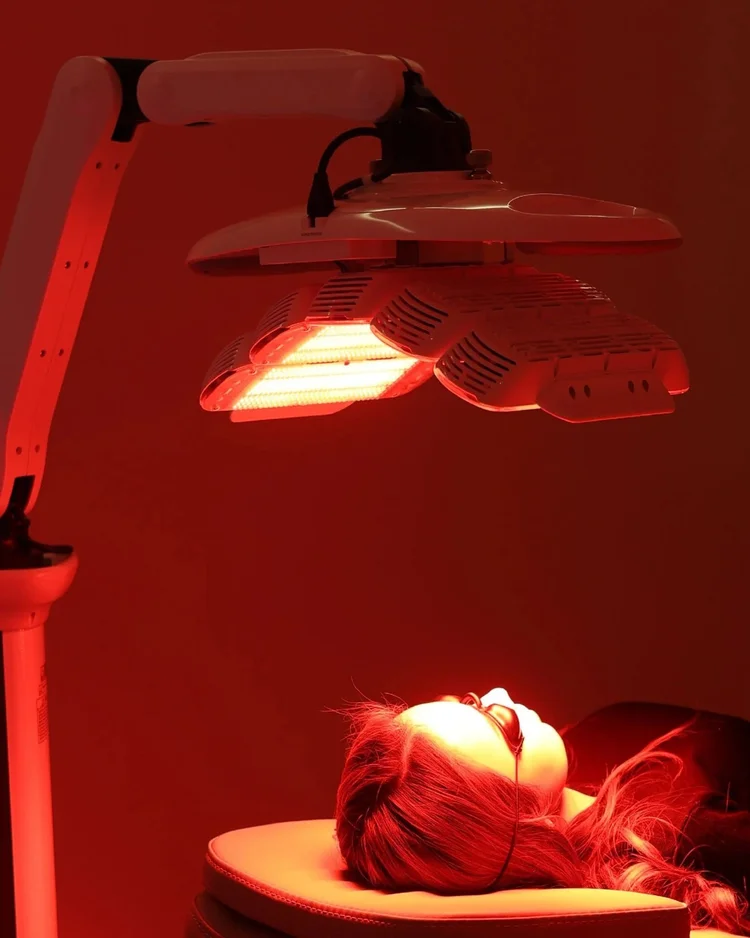
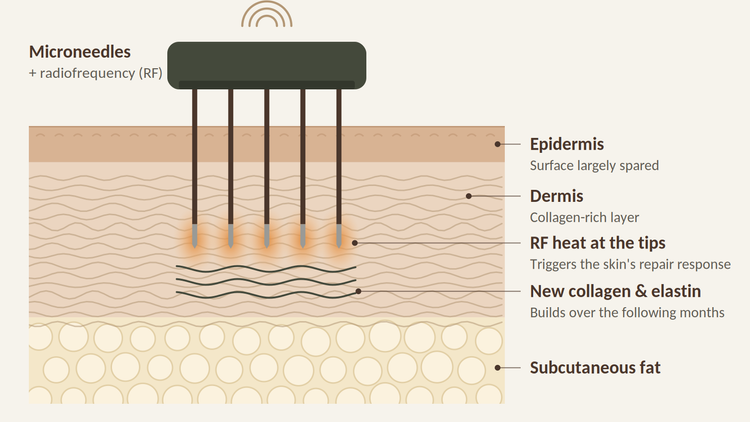
Diagnosis first. Laser second.
Why Choose a Dermatologist-Led Laser Clinic?
A diagnosis before any laser. A dermatologist examines your skin, so treatment targets the right problem. Sometimes the answer isn't a laser.
A skin check before spots are treated. Lasering a skin cancer can fade its colour and delay the diagnosis, so brown spots are checked first. About skin checks.
Plans for olive and darker skin. The wrong laser or settings can leave dark or light patches that take months to settle. We choose the wavelength and settings for your skin type.
The laser fits your skin. With several lasers in one suite, the choice depends on your skin, not on which machine is in the room.
Medical care when you need it. If redness turns out to be rosacea that needs medical treatment, our dermatologists Dr Emily Shao and Dr Benny Yau can help too.
Who does what
- Dr Mitch: diagnosis, CO2 and erbium laser, rhinophyma, scar procedures and complex plans
- Cosmetic nurses (Registered Nurses): PicoSure Pro, DermaV, LaseMD, XERF and LED, under Dr Mitch's supervision
- You can choose a dermatologist for most laser treatments; dermatologist-led treatment is priced after assessment
Where to start
See one of our dermatologists for a diagnosis, a spot you're unsure about, or erbium or scar treatment. CO2 laser, including rhinophyma, is always with Dr Mitch. If you know your concern, such as sunspots or redness, you can start with a nurse skin assessment.
How Does a Course of Laser Treatment Work?
Most laser treatment is a course, not a one-off. Here's what happens from your first visit to your final review.
Your Laser Assessment
We examine your skin, check any spots you want treated, and ask about your skin type, sun exposure, medicines, cold sores and past reactions. Photos are taken in standard lighting.
Your written plan
You get a plan that sets out which laser, how many sessions, the gap between them, the downtime to expect and the total cost. We may test a small patch first.
Laser Treatment and Review
Sessions take about 15 to 60 minutes, with numbing where needed. Most courses are 2 to 6 sessions, 3 to 6 weeks apart, and we compare photos and adjust settings as your skin responds.
One wavelength or many
Laser or IPL: What's the Difference?
IPL, or intense pulsed light, isn't a laser. It's a flash of many wavelengths, filtered to target redness or brown pigment. A laser uses one wavelength, so it can be aimed more precisely at one target and depth.
For redness, both can work. In a split-face study of 29 people, a pulsed dye laser and IPL reduced rosacea redness and visible veins by similar amounts (Dermatologic Surgery, 2009).
Where they differ is range. IPL can't resurface skin, treat acne scars or deeper wrinkles, or fade tattoos. Both carry more risk in tanned or darker skin.
Which tool for which job
- Redness and veins: vascular laser or IPL
- Sunspots: pico or vascular laser, or IPL in fair skin
- Melasma: gentle laser settings, with care
- Scars and wrinkles: CO2 or erbium laser
- Tattoos: picosecond laser
Melasma needs a lighter touch
Which Laser Is Right for Melasma and Pigmentation?
Pigmentation covers sunspots, freckles, brown marks after acne, and melasma. Sunspots and freckles tend to respond well to PicoSure Pro or DermaV. Brown marks after acne usually fade with time and sun protection, and laser can help stubborn ones.
Melasma needs a plan. It's driven by hormones, sunlight and visible light, so the best results come from a course of gentle laser plus daily SPF 50+ and the right skin care. RedTouch PRO and PicoSure Pro are our main melasma lasers and give a visible improvement for most people, with LaseMD for more superficial pigment in lighter skin. More on pigmentation and melasma.
What the research says. A 2017 review found several lasers can help melasma (International Journal of Women's Dermatology, 2017).
Before pigment laser
- A skin check of any spot that's new, changing or different
- No tanning or fake tan for at least 2 weeks
- SPF 50+ every day, all year in Brisbane
- Tell us about pregnancy, hormone changes and past reactions
More melanin, more planning
Is Laser Suitable for Darker and Olive Skin?
Yes, with the right laser and settings. Olive, Asian, Middle Eastern, Indian, Pacific Islander and darker skin has more melanin, which also absorbs laser energy. That raises the risk of dark patches after treatment and, less often, light patches.
We reduce that risk with suitable wavelengths and gentler settings over more sessions, a test patch, skin preparation and not treating tanned skin. Some concerns suit options that heat the surface less, such as RF microneedling.
What the research says. A review of laser and light treatment in darker skin found many devices can be used with careful choice of device and settings (British Journal of Dermatology, 2013).
Tell Us Before Laser Treatment If You
- Tan easily or rarely burn
- Have had dark marks after spots, burns or cuts
- Have melasma
- Have reacted to a laser, peel or IPL before
Does Laser Treatment Hurt?
Most people describe laser as a quick snap, like a rubber band, or a hot prickle. How much you feel depends on the laser, the area and the depth.
- LED: gentle warmth only
- PicoSure Pro, DermaV and LaseMD: quick snapping or prickling; numbing cream is used for some treatments
- XERF: pulses of deep heat
- CO2 and erbium laser: numbing cream, with local anaesthetic for deeper treatments. Afterwards your skin feels sunburnt for a day or two
If you've found treatments painful before, tell us. We can adjust the numbing and pace, and you can ask us to stop at any time.
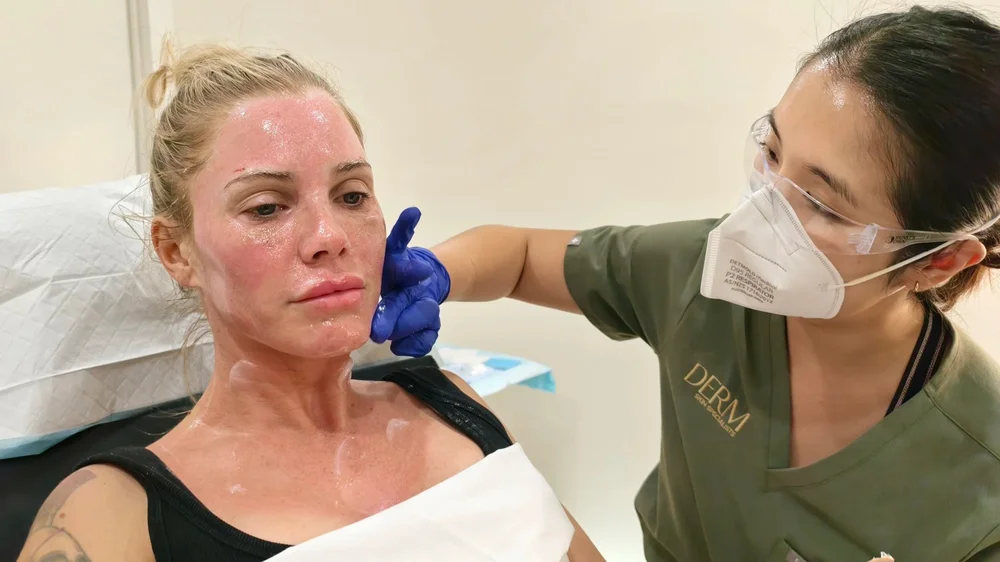
Plan around your diary
How Long Is the Downtime After Laser?
It depends on the laser and how deep it goes:
- LED: most people go straight back to their day
- XERF: redness for 1 to 2 days
- PicoSure Pro and DermaV: redness or mild swelling for up to 4 days
- LaseMD: redness and fine, sandpaper-like flaking for 2 to 4 days
- CO2 and erbium laser: redness, swelling and peeling for about 5 to 14 days, with pinkness that can last a few weeks
Choosing the time of year. Brisbane's UV is high all year, but many people book CO2, erbium and pigment lasers between about April and September, when it's cooler and easier to avoid the sun. Redness and veins can be treated any time.
Before an event. Allow at least a week after PicoSure Pro, DermaV, LaseMD or XERF. Allow at least 4 weeks after CO2 or erbium laser, and ideally 3 months.
When to Call Us After Laser Treatment
- Pain, heat or swelling that's getting worse after the first 2 days
- Blisters, yellow crusting, pus or a fever
- Clusters of small sores, which can be a cold sore flare
- Any eye pain or change in your vision
Call 07 3487 1414. Outside hours, see your GP or go to an emergency department.
What Are the Risks of Laser? And How We Reduce Them
All procedures carry risks. Here are the main ones and what we do about each.
Common, Short-Term Side Effects of Laser Treatment
- Redness, swelling and peeling. Expected after most lasers. We plan sessions around your work and events.
- Dark patches after laser. More likely in olive and darker skin. We choose settings for your skin type, test a patch when needed and insist on sun protection.
- Little change from one session. Most lasers work over a course. Your plan says how many sessions to expect.
- Melasma flaring. We use gentle settings and treat the triggers as well as the pigment.
Less Common Laser Treatment Risks
- Burns, blisters and scarring. Rare. We check your skin type, don't treat tanned skin and set the laser for your skin.
- Lighter patches of skin. Rare, mostly after deep resurfacing.
- Infection, including cold sore flare-ups. Tell us if you get cold sores; we'll plan for it.
- Eye injury. Everyone in the room wears eye protection made for that laser.
- A missed skin cancer. Spots are checked before they're treated.
If something doesn't heal as expected, you come back to us. Call the clinic and we'll see you here. Dr Mitch reviews any complication himself rather than leaving you to sort it out elsewhere.
How Much Does Laser Treatment Cost in Brisbane?
Laser prices depend on the laser, the area and how many sessions you need. As a guide:
- Specialist consultation with Dr Mitch: from $395
- PicoSure Pro, nurse-led: $650 full face, small areas from $400
- LaseMD, nurse-led: $695 full face, $990 face and neck, $1,495 face, neck and chest
- DermaV, nurse-led: from $350 per session
- RedTouch PRO, nurse-led: $495 full face, including a peel and LED
- Potenza RF microneedling, nurse-led: $795 full face
- LED: $95 per session
- XERF, nurse-led: $2,490 full face, $3,490 face and neck
- CO2 and erbium: quoted in writing after your consultation
Compare the course, not the session. Four sessions at a lower price can cost more than two at a higher one. Your written plan shows the total for the whole course before you start, and we'll tell you if we don't think treatment is worth it for you.
Medicare and private health. Cosmetic laser isn't covered by Medicare or private health insurance. Some laser treatment for medical conditions may attract a partial Medicare rebate, and we'll tell you at your consultation if any part of your plan qualifies. You don't need a referral to book, but a valid GP referral is needed for a Medicare rebate on the consultation. See our fees.
How to Choose a Laser Clinic in Brisbane
Wherever you go, these are fair questions to ask before any laser, drawn from consumer advice by ARPANSA and Queensland Health.
About the clinic
- Who will do my treatment, and what training do they have with this laser?
- Are they licensed to use this laser in Queensland?
- Will a doctor check my spots for skin cancer first?
- Who do I call if something goes wrong, and will they see me?
About your treatment
- Has my skin type been assessed, and will you test a patch first?
- How many sessions will I need, and what's the total cost?
- How much downtime should I plan for?
- Is there another treatment that would suit me better?
At DERM, your consultation covers each of these, and your plan and total cost are put in writing. Sources: ARPANSA and Queensland Government.
Who leads the laser suite
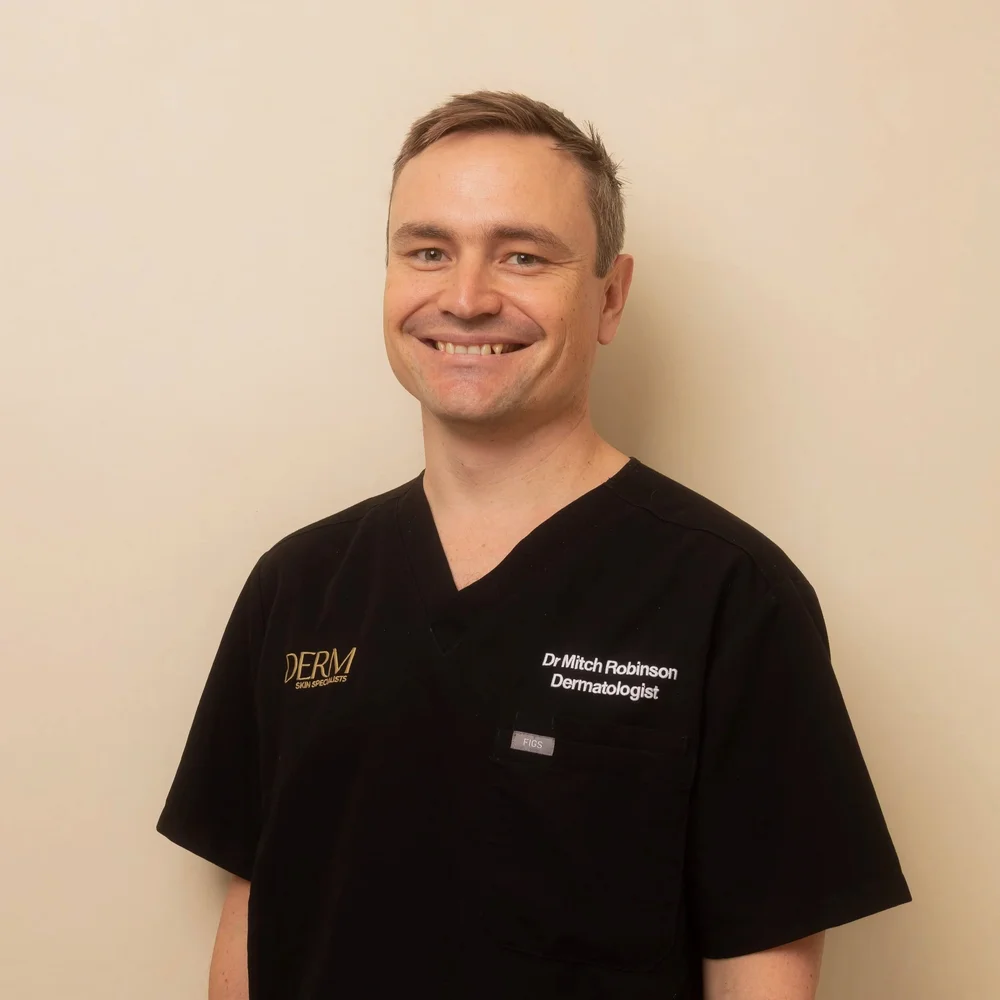
Your Laser Dermatologist: Dr Mitch Robinson, FACD
Specialist Dermatologist · Mount Gravatt, Brisbane
Dr Mitch founded DERM Skin Specialists and leads its laser suite. He diagnoses your skin and plans your treatment, performs the complex laser cases himself, including full-field resurfacing, rhinophyma and scar treatments, and supervises our cosmetic nurses' laser treatments. Dr Emily Shao and Dr Benny Yau also perform laser treatments.
- Teaches laser to dermatologistsAnd to dermatology registrars, and is taking up a teaching and laser role at the Royal Brisbane and Women's Hospital
- Master of Medicine (Skin Cancer), UQFirst author of Australia's clinical guidelines for lentigo maligna, an early melanoma that can look like a sunspot
- Seven years of postgraduate trainingIn dermatology, dermatologic surgery and laser surgery
Mount Gravatt, Brisbane
Our Laser Clinic in Mount Gravatt
DERM Skin Specialists is at 2/1437 Logan Road, Mount Gravatt, about 15 minutes' drive from the Brisbane CBD, with free onsite parking. Patients come from Mansfield, Wishart, Eight Mile Plains, Greenslopes and across Brisbane's southside.
Common Questions
Laser Treatment: Common Questions
Is laser better than IPL?
Neither is better for everything. IPL can help redness and sunspots in fair skin. Lasers are more precise and also treat scars, wrinkles and tattoos.
Will a doctor or a nurse do my laser treatment?
It depends on the treatment. Dr Mitch performs all CO2 laser himself. Our dermatologists perform erbium laser, and Dr Mitch takes the complex cases, such as deeper resurfacing, rhinophyma and scars. Our cosmetic nurses, who are Registered Nurses, often do PicoSure Pro, DermaV, LaseMD, XERF and LED under his supervision.
Do I need a referral for laser treatment?
No referral is needed to book. A valid referral, usually from your GP, is needed if you want a Medicare rebate on a specialist consultation.
Does Medicare cover laser treatment?
Not for cosmetic laser. Some laser treatment for medical conditions may attract a partial rebate, and we'll tell you at your consultation if yours does.
What laser is used for melasma?
Usually LaseMD or PicoSure Pro at gentle settings, with daily SPF 50+ and skincare. Melasma can be improved but often comes back.
Can I combine different lasers?
Often, yes. For example, DermaV for redness and LaseMD for tone can be combined, sometimes on the same day. Your plan sets the order.
When is a good time of year for laser in Brisbane?
Many people book CO2, erbium and pigment lasers between about April and September. Redness, veins and LED can be treated any time of year.
Can I have laser if I have dark or olive skin?
Yes, with the right laser and settings. We assess your skin type, may test a patch first and often use gentler settings over more sessions.
How many laser sessions will I need?
Most courses are 2 to 6 sessions, 3 to 6 weeks apart. CO2 laser and XERF are often 1 to 2 sessions; tattoos need more.
How painful is laser on the face?
Most people feel a snap or hot prickle. Numbing cream is used for many treatments, and local anaesthetic for deeper CO2 or erbium laser.
Can a dermatologist laser dark spots on my face?
Yes, once they've been checked. Most are sunspots or freckles and respond to PicoSure Pro or DermaV, but any new, changing or different spot is assessed first.
Which laser is used for rosacea and broken capillaries?
The DermaV vascular laser, usually over 2 to 6 sessions. Rosacea often also needs medical treatment, which our dermatologists provide.
Can laser get rid of acne scars?
Laser can improve acne scars but rarely erases them. Deeper scars usually need subcision or TCA CROSS as well. More on acne scars.
Do you do laser tattoo removal?
Yes, with PicoSure Pro. Tattoos fade over several sessions spaced weeks apart. Some colours fade less, and complete clearance can't be promised.
What's the difference between CO2 and erbium laser?
Both resurface the skin. Erbium spreads less heat into surrounding skin; CO2 heats more deeply, which can tighten more but usually means longer recovery.
What if laser doesn't work for me?
We review your photos and change the settings, laser or plan if your skin isn't responding. If more sessions won't help, we'll tell you.
Can I start with a nurse skin assessment?
Yes, if you know your concern, such as sunspots or redness. If you need a diagnosis, book with one of our dermatologists. For CO2 laser, book with Dr Mitch.
Not Sure Which Laser You Need?
Book a consultation with Dr Mitch. He'll diagnose your skin, check any spots, explain what laser can and can't do, and give you a written plan with the total cost before you decide. If you already know your concern, you can start with a nurse skin assessment.
Clinical content overseen by Dr Mitch Robinson, FACD (AHPRA MED0001946771). Updated October 2026. General information only, not medical advice. All procedures carry risks; suitability, recovery and results vary between individuals.