
Pigment that keeps coming back?
Melasma Treatment in Mount Gravatt, Brisbane
A step-by-step plan to fade melasma (the patchy brown "pigment" on cheeks, forehead and upper lip), led by our laser-licensed nurses and specialist dermatologist Dr Mitch Robinson.
Complimentary nurse-led assessment for cosmetic concerns. Specialist consultation with Dr Mitch $395 (Medicare rebate applies with a valid GP referral). Nurse-led PicoSure Pro $650 per full-face session. · See fees
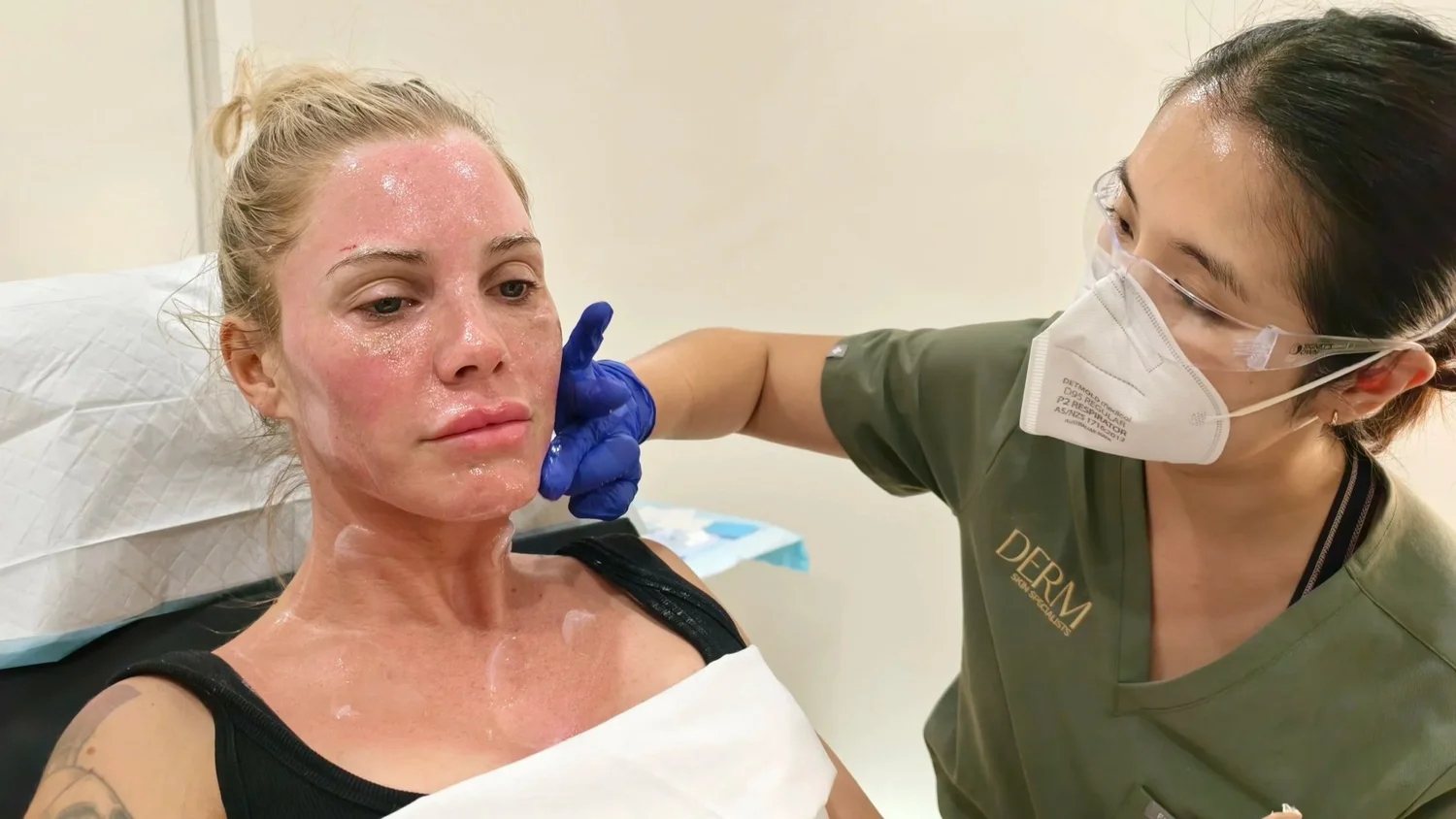
A dermatologist-led clinic and laser suite, founded by Dr Mitch Robinson, FACD, specialist dermatologist and Key Opinion Leader for Cynosure Lutronic.
Meet Dr MitchMelasma Treatment at a Glance
It has a name.
What Is Melasma, and Why Do People Just Call It "Pigment"?
The short answer: melasma is a common skin condition that causes patchy, light-to-dark brown areas on the face. It is driven by hormones, sunlight and heat, and it tends to come back. With a staged plan, it can fade a lot and stay controlled.
Most people who come to see us don't use the word melasma. They say "my pigment", "the brown patches on my cheeks" or "the shadow on my lip that won't go away". Some have tried makeup, serums and SPF for years without much change.
Melasma happens when the pigment cells in your skin become overactive. They make too much melanin in some areas, often in a symmetrical pattern. It isn't contagious or dangerous. But it can affect how you feel about your skin, and that's a fair reason to want it treated.
It's not your fault.
Who Gets Melasma, and Why Is It So Common in Queensland?
Melasma can affect anyone, but it is more common in:
- Women, especially between their 20s and 50s
- Asian, olive, Middle Eastern, South Asian, Latin and Mediterranean skin
- Pregnancy (often called the "mask of pregnancy")
- Hormone changes, including the contraceptive pill and hormone therapy
- People with a family history of melasma
Queensland makes it harder. Strong UV is only part of the story. Visible light (everyday daylight, including through windows and car glass) and heat can also darken melasma. Long drives, school pick-ups and a hot Brisbane kitchen can all play a part.
If you're on the pill or hormone therapy and think it's linked, talk to us or your GP. Please don't stop any medicine on your own.
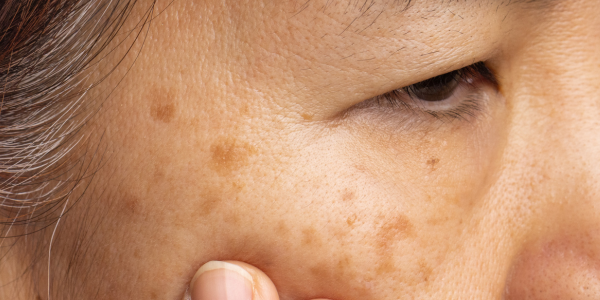
What Does Melasma Look Like on the Cheeks, Forehead and Upper Lip?
Melasma usually looks like flat, brown or grey-brown patches with soft, blotchy edges. It often appears on both sides of the face at once.
Common areas:
- Cheeks (the most common spot, often like a butterfly or a smudge)
- Forehead and temples
- Upper lip, which can look like a moustache shadow
- Bridge of the nose and chin
- Less often, the jawline, neck or forearms
Melasma upper lip is a common worry. Many people wax or thread here, and irritation from hair removal can make the pigment look worse. We'll talk through gentler options if that applies to you.
Melasma often looks darker after summer, a holiday or a hot workout, and lighter in winter.
Not all brown is the same.
Melasma vs Sun Spots: How Do You Tell Them Apart?
This matters, because sun spots, melasma and other pigment are treated differently. Treating melasma like a sun spot with strong settings can make it darker.
A quick guide:
- Melasma: larger, patchy, blurry edges, often both cheeks or the upper lip. Linked to hormones and light. Comes and goes.
- Sun spots (solar lentigines): smaller, rounder, darker brown spots with clearer edges. Linked to years of sun. Common on the face, hands and arms. See our sun spot removal page.
- Post-inflammatory pigment: brown marks after acne, a rash, a burn or a beauty treatment. See brown acne marks.
- Spots that need checking: a new, changing or unusual spot should be checked for skin cancer first. Lentigo maligna, an early melanoma, can look like a flat brown patch on the face.
Many people have more than one type at once. That's common, and the plan is then tailored to each.
How We Assess Melasma Before Treatment
At your first visit we:
- Look closely at your skin in good light, often with a dermatoscope (a skin microscope)
- Use a Wood's lamp (a special light) if needed, to see how deep the pigment sits
- Ask about pregnancy, hormones, medicines, skincare, sun habits and past treatments
- Take clinical photos so we can track change over time
- Refer any spot that looks unusual to a dermatologist before any laser
If anything doesn't look like melasma, Dr Mitch or one of our dermatologists will see you first. For other types of pigment, see our pigmentation removal page.
What Triggers Melasma or Makes It Flare?
Common triggers:
- UV and visible light, including through windows
- Heat (saunas, hot yoga, cooking, Brisbane summers)
- Pregnancy and hormone changes
- Irritating skincare, harsh scrubs or strong DIY peels
- Waxing or threading near patches
- Some fragranced products and certain medicines
- Laser or IPL settings that are too strong for melasma-prone skin
You can't control all of these. But knowing your triggers helps your treatment last longer.
Step by step.
How Do You Get Rid of Melasma? Our Four-Phase Treatment Plan
Honestly, melasma can't be switched off for good. What we can do is fade it, often a lot, and keep it controlled. The plan works in phases, and skipping the early steps is the most common reason treatment disappoints.
Melasma Phase 1: Protect From UV and Visible Light
This is the foundation, and it starts on day one.
- Tinted mineral sunscreen with iron oxides, every morning, all year
- Reapply every 2 hours outdoors, and before driving or school pick-up
- A broad-brimmed hat and shade where you can
- Keep cool where possible
Why tinted? Standard sunscreens mainly block UV. Iron oxides (the pigments that give tinted sunscreen its colour) also help block visible light, which can darken melasma.
Melasma Phase 2: Prescription Fading Creams and Skincare
- Prescription fading creams slow down the overactive pigment cells. Your dermatologist chooses the cream and the schedule for you.
- Supportive skincare with gentle, non-prescription brightening ingredients, a mild cleanser and a moisturiser.
- Stopping irritants like scrubs and harsh actives that can inflame melasma.
We usually start creams a few weeks before laser. This settles the pigment cells and lowers the risk of darkening after treatment.
Melasma Phase 3: In-Clinic Laser and Peels
Once your skin is prepared, in-clinic treatments help fade stubborn pigment faster:
- PicoSure Pro picosecond laser
- RedTouch PRO 675 nm laser
- Gentle chemical peels
- LaseMD ULTRA for selected cases
Melasma Phase 4: Maintenance
When you're happy with the result, we shift to keeping it there. That means daily tinted sunscreen, a maintenance cream routine, and top-up sessions, often before and after summer.
Which Laser Is Used for Melasma: PicoSure Pro or RedTouch PRO?
We use both, and some people benefit from both in one plan.
PicoSure Pro (755 nm picosecond laser). PicoSure delivers energy in ultra-short pulses (trillionths of a second). This breaks up pigment with a shattering, "photomechanical" effect rather than heavy heat, which suits melasma-prone skin. It's one of the main tools we use for melasma.
RedTouch PRO (675 nm laser). This newer red-light laser targets melanin while sparing blood vessels, and it treats the skin in a fine grid pattern. It is a key part of our melasma plans, including for patches that have been slow to respond.
Gentle chemical peels. Light, superficial peels help lift surface pigment and boost your creams. Peels start from $150.
LaseMD ULTRA (1927 nm thulium). A gentle fractional laser used for selected people, often with brightening serums. We choose it carefully in melasma.
Your nurse or dermatologist chooses the laser and settings based on your skin type, the depth of your pigment and how your skin has reacted before.
Real photos from our clinic.
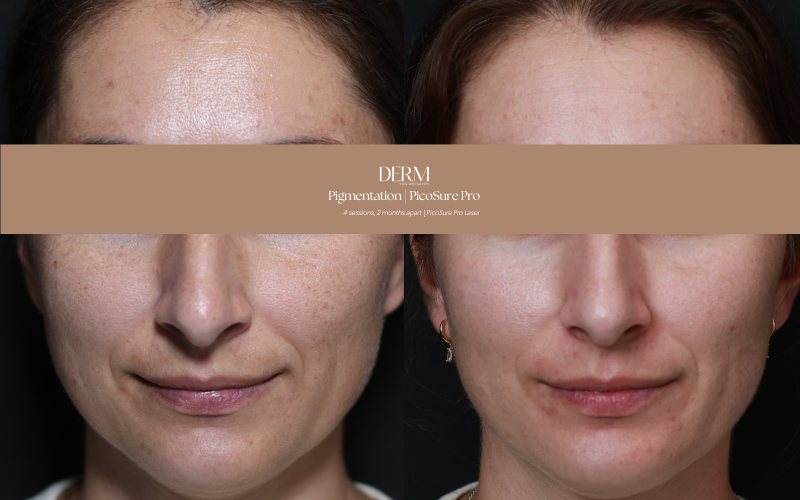
Melasma Treatment Before and After: What Can You Expect?
 BeforeAfter
Before photo on the left in each pair. Photos are of DERM Skin Specialists patients, published with their consent, taken in the same conditions and not retouched. Individual results vary.
Most people notice gradual fading over several sessions, not overnight change. Patches often soften at the edges first, and makeup coverage gets easier. Results vary between individuals, and melasma can return without ongoing sun protection and maintenance.
We take standardised photos at each visit, so you can see your own progress clearly.
How Many Melasma Treatment Sessions Will I Need?
It depends on your skin, how deep the pigment sits and how long you've had it. As a guide:
- Creams and sunscreen: start 2 to 4 weeks before laser and continue throughout
- PicoSure Pro or RedTouch PRO: often around 4 sessions, about 4 to 6 weeks apart
- Peels: a short series, spaced a few weeks apart, if they're part of your plan
- Maintenance: top-ups once or twice a year, often around summer
Some people need fewer sessions, some need more. We review your photos as we go and adjust.
No surprises.
How Much Does Melasma Treatment Cost in Brisbane?
Here's what a typical course can look like at our clinic:
- Complimentary nurse-led assessment for cosmetic concerns
- Specialist consultation with Dr Mitch: $395 (Medicare rebate applies with a valid GP referral)
- PicoSure Pro, nurse-led: $650 per full-face session, $400 for a small area. A course of 4 full-face sessions is $2,600.
- Chemical peels: from $150 per session
- LaseMD Ultra, nurse-led: $695 face, $990 face and neck, $1,495 face, neck and chest
- RedTouch PRO: $495 for the face, with a peel and LED
- Ongoing costs: tinted sunscreen, prescription creams and skincare, plus maintenance sessions
You'll get a written plan with costs before you start. See our treatment fees page for current pricing. Cosmetic laser treatment for melasma is not covered by Medicare.
Who Treats Melasma at Our Mount Gravatt Clinic?
- Registered Nurses with laser licences (Brooke and Hatsu) perform most nurse-led PicoSure Pro, RedTouch PRO and peel sessions
- TingTing, one of our cosmetic nurses, speaks Mandarin
- Dr Mitch Robinson, specialist dermatologist (FACD), leads our laser suite, teaches laser to dermatology registrars and oversees every melasma plan. You can also book your sessions directly with him.
- Dr Emily Shao and Dr Benny Yau, specialist dermatologists, see patients with more complex skin concerns
Patients come from across Brisbane's southside, including Holland Park, Carindale, Sunnybank, Mansfield and Upper Mount Gravatt.
Does Melasma Laser Treatment Hurt, and What's the Downtime?
Most people find it very manageable. PicoSure Pro feels like warm, quick snaps on the skin. RedTouch PRO feels like warm prickling, with cooling during treatment. We can apply numbing cream beforehand if you'd like. Peels feel tingly or warm for a few minutes.
What recovery usually looks like after PicoSure Pro or RedTouch PRO:
- Day 0: redness, warmth and mild swelling, often settling within hours
- Days 1 to 2: light pinkness. Most people return to work and wear makeup the next day.
- Days 2 to 7: after RedTouch PRO, fine dark specks or light crusting may appear and flake off. Don't pick.
- After 1 week: skin looks normal. Fading continues over the following weeks.
After a peel, expect light flaking for a few days. After LaseMD, skin can feel rough and look slightly bronzed for about a week.
Avoid heat, exercise that makes you very hot, and direct sun for a few days after each session.
Skin of colour, done carefully.
Treating Melasma in Asian, Olive and Darker Skin
Melasma is most common in medium to darker skin, and these skin types need a careful approach. Darker skin has more reactive pigment cells, so strong heat can cause darkening.
What we do differently:
- Prepare the skin with fading creams first
- Use lower-heat, pigment-friendly lasers like PicoSure Pro and RedTouch PRO
- Start with conservative settings and build up
- Do a test area if there's any doubt
- Space sessions well apart
Our team regularly treats Asian, olive and Middle Eastern skin, and TingTing can explain your plan in Mandarin.
Melasma in Pregnancy and Breastfeeding: What Can You Do Now?
Melasma often appears or darkens in pregnancy. The good news is that it may fade a little after your baby arrives. Sometimes it doesn't, and that's when treatment helps.
During pregnancy:
- Tinted mineral sunscreen with iron oxides daily
- Hats, shade and keeping cool
- Gentle skincare, avoiding irritating products
- We hold off on laser, RF treatments and chemical peels until after your baby is born
- Creams and other topical treatments are decided case by case
While breastfeeding: we don't do laser or RF treatments, but lighter chemical peels are fine. Some creams need to be avoided, so we'll go through what suits you at your assessment.
After pregnancy: once you're ready, we can start the full plan.
Keeping Melasma Faded Through a Brisbane Summer
Melasma is managed, not cured, and staying ahead of it is very achievable. To keep your results:
- Tinted mineral sunscreen every morning, even on cloudy days and indoors near windows
- Reapply before driving, lunch outdoors or school pick-up
- Keep up your maintenance cream routine
- Book a top-up before and after summer
- Come back early if you notice any darkening, rather than waiting
A little fading and darkening through the year is normal. Catching it early makes it easier to bring back.
Melasma Treatment Risks, and How We Reduce Them
All treatments carry some risk. Here's what can happen and how we lower the chance:
- Darkening after treatment (rebound or post-inflammatory pigment): we prepare your skin with fading creams first, use conservative settings, do test areas when needed and space sessions apart. If darkening happens, it usually settles with creams and sun protection, and we'll adjust the plan.
- Redness, swelling or warmth: usually settles in hours to a few days. We use cooling and give clear aftercare.
- Irritation from creams: we introduce them slowly and adjust strength or frequency.
- Cold sore flare: if you get cold sores, tell us. We may suggest a preventive tablet before laser or peels near the lips.
- Blistering or crusting: uncommon. Our nurses hold laser licences and work under dermatologist oversight.
- Melasma returning: we build maintenance into your plan from the start.
When to Call Us After Melasma Treatment
Call us on 07 3487 1414 if you notice:
- Blistering, oozing or open sores
- Redness or swelling that is getting worse after 48 hours
- Signs of infection, such as spreading redness, heat, pus or fever
- Pain that isn't settling
- Darkening of your patches in the weeks after treatment
- A cold sore after treatment near the lips
If it's after hours and urgent, see your GP or attend an emergency department.
Mount Gravatt, Brisbane
Melasma Treatment in Mount Gravatt
DERM Skin Specialists is a dermatologist-led clinic at 2/1437 Logan Road, Mount Gravatt, with free onsite parking and wheelchair access. We're about 15 minutes from the Brisbane CBD and close to Holland Park, Carindale, Upper Mount Gravatt, Mansfield and Sunnybank. Patients are typically seen within 2 weeks.
Your questions, answered
Melasma FAQs
Does melasma go away on its own?
Sometimes, particularly after pregnancy or stopping a hormone trigger. But for many people it lingers or keeps coming back without treatment and daily sun protection.
Can melasma be cured?
Melasma can't be cured, but it can be faded a lot and kept under control. Think of it like a long-term skin condition with good days and flare-ups.
What is the fastest way to fade melasma?
Combining tinted sunscreen, prescription fading creams and in-clinic laser usually works faster than any one step alone. Rushing with strong treatments can backfire, so we build up carefully.
Is laser good for melasma?
Yes, when it's the right laser at the right settings. PicoSure Pro and RedTouch PRO are both used for melasma in our clinic, after the skin has been prepared.
Can IPL make melasma worse?
IPL uses heat, and heat can trigger melasma in some people. That's one reason we use pigment-friendly lasers and assess your skin before any light treatment.
Why does my melasma look worse in summer?
More UV, more visible light and more heat. Many people find their melasma darkens from October to March in Queensland, so we plan top-ups around this.
Does normal sunscreen work for melasma?
It helps with UV, but many sunscreens don't block much visible light. A tinted mineral sunscreen with iron oxides gives better protection for melasma.
Can I get melasma in my 40s or 50s?
Yes. Melasma can start or change during perimenopause, with hormone therapy, or after years of sun.
Do men get melasma?
Yes, though less often. The plan is the same, and men are often surprised how much tinted sunscreen helps.
Can I get melasma on my upper lip from waxing?
Waxing doesn't cause melasma, but the irritation can darken it. We may suggest switching hair removal methods during treatment.
Can I combine melasma treatment with other cosmetic treatments?
Often, yes. We'll space treatments so your skin isn't irritated, which helps keep melasma calm.
How soon can I see results from melasma treatment?
Some people notice softening after the first few weeks of creams and sunscreen. Laser results build over a few sessions.
Do I need a referral for melasma treatment?
No. You can book a complimentary nurse-led assessment or a specialist consultation directly. A GP referral gives you a Medicare rebate on the specialist consultation fee.
Can I have melasma treatment before my wedding?
Yes, with enough lead time. Ideally start 4 to 6 months before. Finish your last laser session at least 2 to 4 weeks before the day, so any redness or specks have settled.
Can I treat melasma while trying to get pregnant?
Tell us if you're planning a pregnancy. Some creams should be avoided, so we'll tailor your plan and focus on sun protection and gentle options.
Is melasma treatment available by telehealth?
Follow-up advice and cream reviews can often be done by telehealth. Your first assessment and laser sessions need to be in person.
Ready to Start Fading Your Melasma?
Book a complimentary nurse-led assessment or a specialist consultation with Dr Mitch at our Mount Gravatt clinic. Most people are seen within 2 weeks.
Clinical content overseen by Dr Mitch Robinson, FACD (AHPRA MED0001946771). Updated October 2026. General information only, not medical advice. All procedures carry risks; suitability, recovery and results vary between individuals.