
Melanoma in situ · Sun-damaged skin
Lentigo Maligna Treatment in Mount Gravatt, Brisbane
Diagnosis, surgery and long-term follow-up for lentigo maligna, led by specialist dermatologist Dr Mitch Robinson, first author of Australia's evidence-based clinical practice guidelines for lentigo maligna.
Specialist consultations from $395, with a Medicare rebate when you have a GP referral · No referral needed to book · See fees
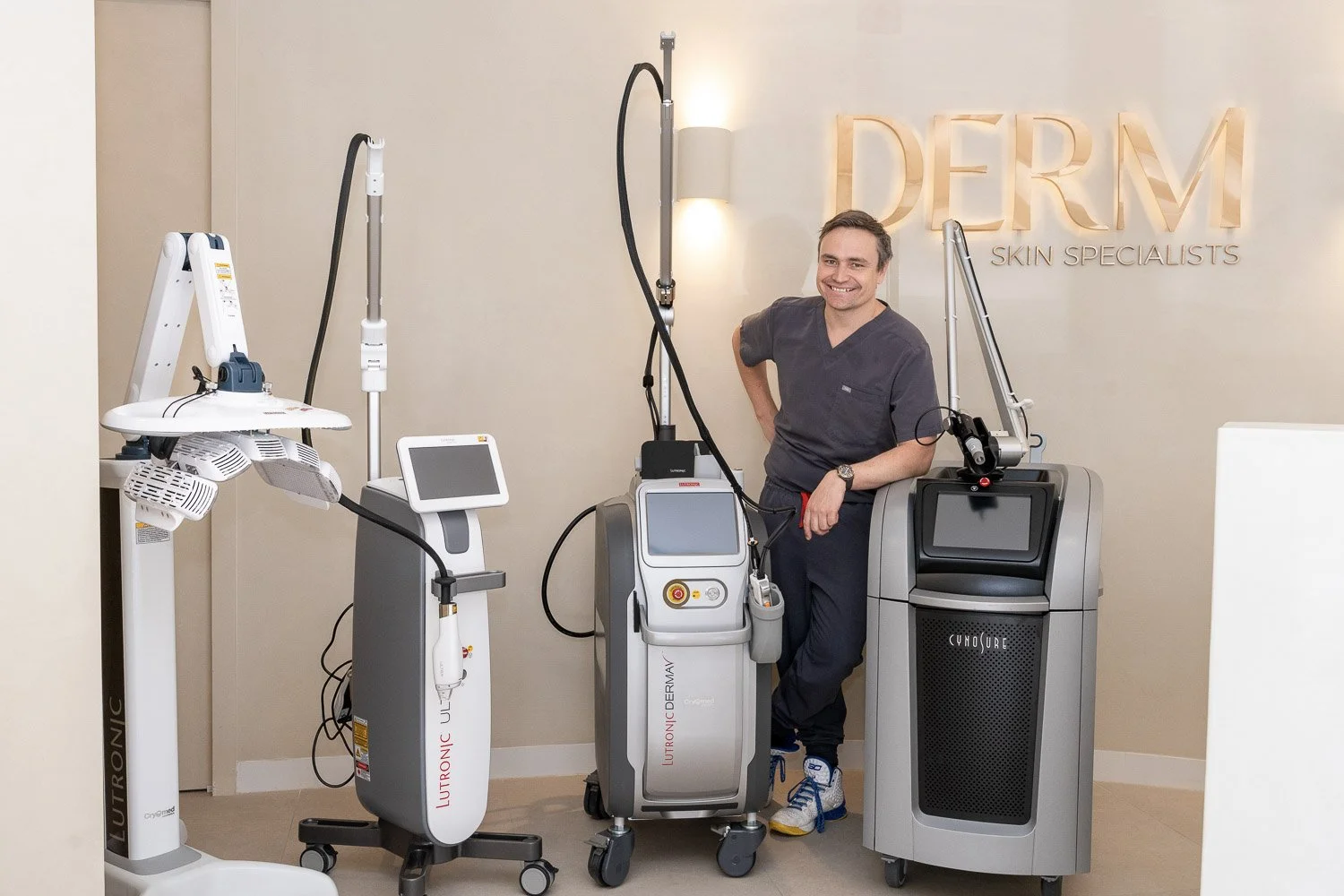
A dermatologist-led clinic, founded by Dr Mitchell Robinson, FACD, first author of Australia's evidence-based clinical practice guidelines for lentigo maligna.
Meet Dr MitchLentigo Maligna at a Glance
What Is Lentigo Maligna?
The short answer: lentigo maligna is a type of melanoma in situ. The abnormal pigment cells are still confined to the top layer of the skin, so it has not spread. It grows slowly, often over years, on skin with a lot of past sun damage. Left untreated it can become invasive, when it is called lentigo maligna melanoma. Once that happens it carries the same outlook as other invasive melanomas, so treating it at the in-situ stage matters.
Some people know it as Hutchinson's melanotic freckle. It is becoming more common in Australia, as invasive melanoma is.
We diagnose and treat lentigo maligna for patients from Mount Gravatt and across Brisbane's southside, often after it has been found at a skin check or by a GP.
What Does Lentigo Maligna Look Like?
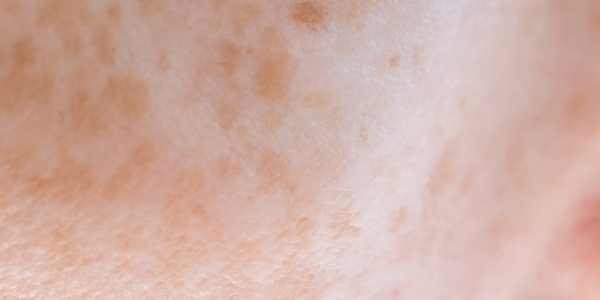
Usually a flat, brown or tan patch on the cheek, nose, temple or ear, sometimes the neck, arms or upper back. It often looks like a sunspot or age spot.
Many people assume it is "just another sunspot". If a spot on your face is changing, or looks different from your others, have a dermatologist look at it.
Because it grows slowly, the change can be hard to notice yourself. A photo of the spot taken now gives you, and us, something to compare against later.
Signs a Sunspot Could Be Lentigo Maligna
- It has grown slowly over months or years
- It has become uneven in colour, with darker brown, black, grey or pink areas
- It has an irregular, blurry edge that is hard to see where it ends
- It has changed when your other sunspots have not
Same sun damage, different spot
Lentigo Maligna vs a Sunspot (Solar Lentigo)
Both are flat and brown and both come from sun damage, which is why they are easy to confuse.
A sunspot (solar lentigo) is a harmless collection of pigment. Lentigo maligna is an early melanoma.
A dermatologist tells them apart with dermoscopy (a magnified, polarised view of the pigment pattern) and, where needed, a biopsy.
Treatments meant for sunspots, such as pigment lasers or freezing, are not a treatment for lentigo maligna. If you're thinking about treatment for sunspots on your face, have any spot that looks different checked first. More on sunspots and pigmentation.
Lentigo Maligna vs Lentigo Maligna Melanoma
Your pathology report tells you which one you have.
Lentigo Maligna (Melanoma In Situ)
- Confined to the top layer of the skin
- Has not spread
- Treated by removing it with a margin of normal-looking skin
Lentigo Maligna Melanoma (Invasive)
- The same lesion once it has grown into the deeper skin
- Staged and managed like other invasive melanomas
- May need wider surgery and further tests
Look closely, sample carefully
How Is Lentigo Maligna Diagnosed?
Getting the diagnosis right decides the treatment, so it happens in three steps.
Lentigo Maligna Examination and Dermoscopy
We examine the spot and the skin around it with dermoscopy, often with photographs so changes can be compared over time.
Lentigo Maligna Biopsy
Lentigo maligna can vary across a large patch, so the biopsy site is chosen carefully, sometimes with more than one sample.
Lentigo Maligna Pathology Results
Pathology confirms whether it is in situ or invasive, which decides the treatment. We go through the report with you.
Margin mapping may be used where it's helpful; we'll explain whether it applies to you.
What the evidence says
How Is Lentigo Maligna Treated? What the Australian Guidelines Recommend
Australia's evidence-based guidelines for lentigo maligna were developed through a multidisciplinary working party of Cancer Council Australia and published in the journal Dermatology. Dr Mitch Robinson is the first author. Their main recommendations:
- Surgery is the standard treatment, removing the lentigo maligna with a 5 to 10 mm margin of normal-looking skin where possible.
- Margin mapping with reflectance confocal microscopy should be considered where it is available, because lentigo maligna often extends further than it looks.
- Radiotherapy is recommended when surgery isn't possible or you decline it.
- A prescription cream is recommended when neither surgery nor radiotherapy is suitable.
- Freezing (cryotherapy) and laser are not recommended for treating lentigo maligna.
Source: Robinson M, Primiero C, Guitera P, et al. Evidence-Based Clinical Practice Guidelines for the Management of Patients with Lentigo Maligna. Dermatology 2020;236(2):111–116. doi:10.1159/000502470 (PubMed).
Clear margins, careful closure
Lentigo Maligna Surgery at DERM Skin Specialists
Most lentigo maligna is on the face, so surgery is planned to remove it completely while protecting how the area looks and works. Your dermatologist will explain:
- the margin needed and the size of the wound
- how it will be closed: stitched in a line, a local flap that moves nearby skin, or a skin graft
- whether your surgery can be done in one stage, or whether margin checks or a referral are needed first
- what the scar will look like, and how we help it settle
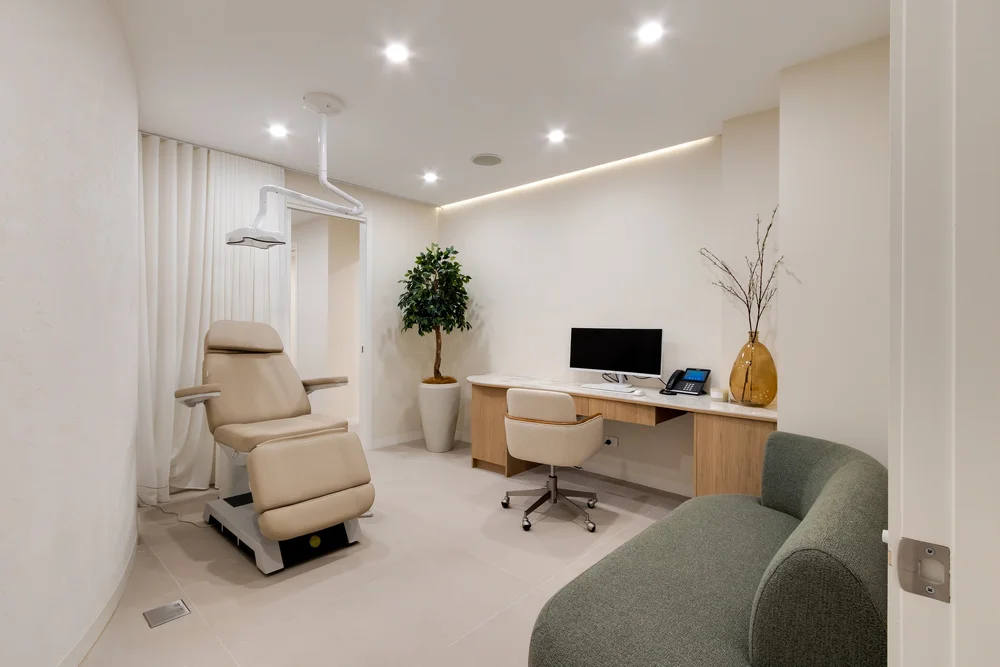
Surgery is done by our specialist dermatologists under local anaesthetic in our Mount Gravatt procedure room. You go home the same day. We refer to a plastic surgeon or Mohs surgeon when another surgeon is better placed, for example for some large or difficult areas. More on skin cancer surgery.
What If Lentigo Maligna Surgery Isn't Right for Me?
Some lentigo maligna is very large, on a difficult site, or in someone who can't have surgery. In line with the guidelines:
Radiotherapy is the recommended alternative. We refer you to a radiation oncologist and stay involved in your follow-up.
A prescription cream is used when neither surgery nor radiotherapy is suitable. It is applied for several weeks and causes a strong, planned inflammation of the skin. It needs close monitoring because it can leave some lentigo maligna behind.
When Lentigo Maligna Needs Another Plan
- A very large patch
- A difficult site, such as the eyelid edge or nose
- Health reasons that make surgery unsuitable
- You prefer not to have surgery
Lighter isn't gone
Why Don't We Use Laser for Lentigo Maligna?
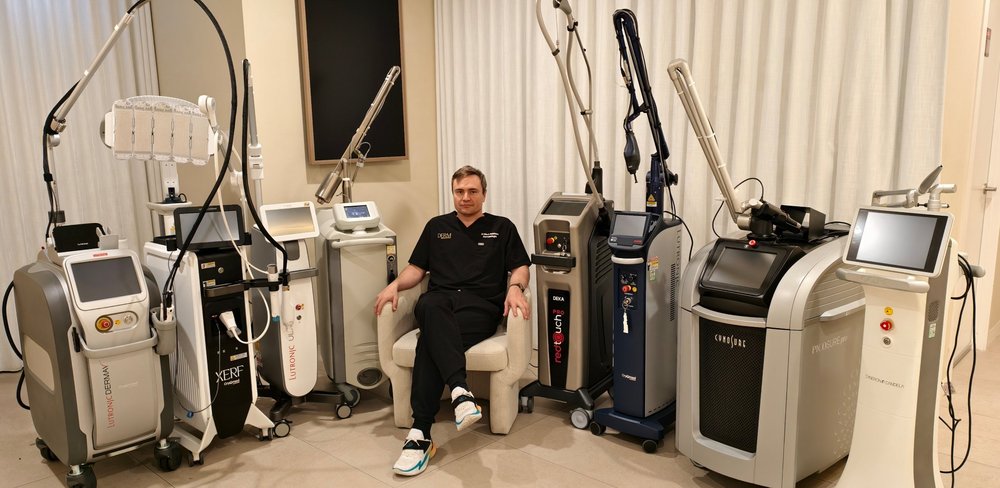
We have a full laser suite, and lasers work well for sunspots, sun damage and many other conditions. They are not recommended for treating lentigo maligna.
A laser can lighten the visible pigment while abnormal cells remain underneath, so the lesion can come back or progress without being seen.
If a brown spot on your face might be lentigo maligna, it should be diagnosed before any laser or freezing treatment. Once a spot has been checked, laser can still be a good option for the sunspots and sun damage around it. More on our laser suite.
How Much Does Lentigo Maligna Treatment Cost?
- Specialist consultation from $395, with a Medicare rebate when you have a GP referral.
- Biopsy and surgery fees depend on the size and site and how the wound is closed. Many skin cancer procedures attract a Medicare rebate.
- We give you the expected costs in writing before any procedure.
See our treatment fees page or call 07 3487 1414.
Do I Need a Referral for Lentigo Maligna Treatment?
You can book without one. A GP referral lets you claim the Medicare rebate on specialist consultations.
If your GP has already done a biopsy showing lentigo maligna, bring the pathology report or ask them to send it with the referral. If you've had a mole or spot removed elsewhere, those results help too. More on mole and spot removal.
What to Bring to Your Lentigo Maligna Appointment
- Your GP referral, if you have one
- Any pathology report for the spot
- A list of your medicines, especially blood thinners
What Happens After Lentigo Maligna Treatment?
- Wound care: most facial wounds are reviewed at about 1 to 2 weeks, when stitches come out.
- Pathology: we confirm the lentigo maligna has been completely removed, and discuss next steps if it hasn't.
- Follow-up: lentigo maligna can recur, sometimes years later, and having one means a higher chance of others. Plan on regular full skin checks with a dermatologist for life, plus photographs of the treated area.
- Sun protection: daily SPF 50+, a broad-brimmed hat and shade, because the same sun damage is still present in the surrounding skin.
When to Call Us After Lentigo Maligna Surgery
- Bleeding that doesn't stop with 20 minutes of firm pressure
- Increasing pain, redness, warmth or pus
- A fever
- The wound opening
Call 07 3487 1414. In an emergency call 000.
Can Lentigo Maligna Come Back?
Yes. It can recur at the edge of the treated area, because it often spreads further than it looks. Complete removal with clear margins lowers that risk. Regular follow-up means a recurrence is found early, when it can be treated again.
Lentigo Maligna Surgery Risks, and How We Reduce Them
All procedures carry risks. Here are the main ones and what we do about each.
Healing Risks After Lentigo Maligna Surgery
- Scarring. Closures are planned along natural skin lines. We review the scar and treat it if it's raised or red (see scar revision).
- Bleeding or bruising. Tell us about blood-thinning medicines. Pressure dressings and instructions are given.
- Infection. Sterile technique, wound-care instructions, and a review appointment.
Lentigo Maligna Removal and Site Risks
- Incomplete removal. We plan margins from dermoscopy and photographs, and check pathology before calling it done.
- Changes in sensation or shape near the eye, nose or lip. Larger or difficult sites are planned in detail, and referred on when another surgeon is better placed.
Who will I see?
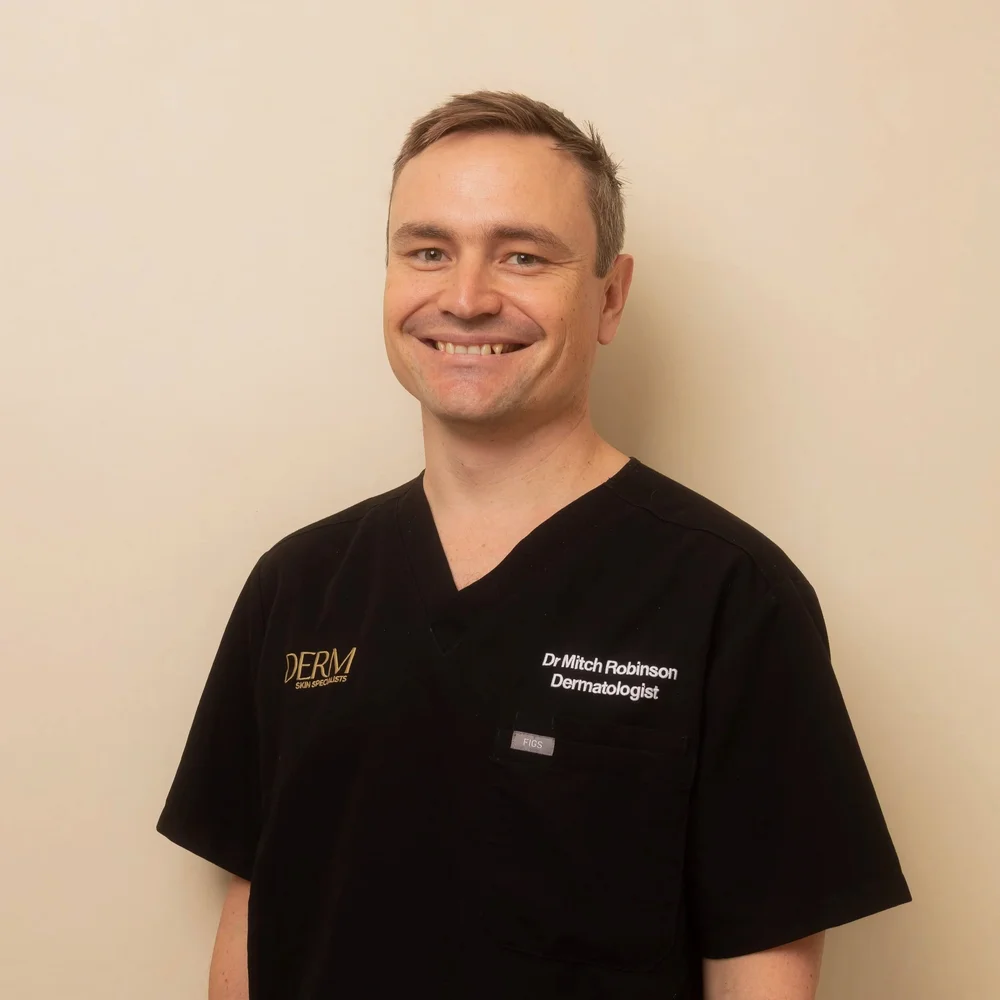
Your Lentigo Maligna Dermatologist: Dr Mitchell Robinson, FACD
Specialist Dermatologist · Master of Medicine (Skin Cancer) · Mount Gravatt, Brisbane
Dr Mitch Robinson, FACD, is a specialist dermatologist with a Master of Medicine (Skin Cancer). He is first author of Australia's evidence-based clinical practice guidelines for lentigo maligna and teaches dermatology registrars. Skin cancer patients can also see specialist dermatologists Dr Emily Shao and Dr Benny Yau.
- First author, national lentigo maligna guidelinesCancer Council Australia working party, published in Dermatology, 2020
- Master of Medicine (Skin Cancer)The University of Queensland
- Teaches dermatology registrarsIncluding a teaching role at the Royal Brisbane and Women's Hospital
Mount Gravatt, Brisbane
Lentigo Maligna Treatment in Mount Gravatt
DERM Skin Specialists is a dermatologist-led skin cancer clinic at 2/1437 Logan Road, Mount Gravatt, with free onsite parking. We're about 15 minutes from the Brisbane CBD and close to Holland Park, Carindale, Upper Mount Gravatt, Mansfield and Sunnybank.
Common Questions
Lentigo Maligna: Common Questions
Is lentigo maligna cancer?
Yes. It's melanoma in situ: an early melanoma still confined to the top layer of the skin.
Is lentigo maligna serious?
At the in-situ stage it hasn't spread, and treatment is very effective. It needs treating because it can become invasive melanoma.
Can lentigo maligna be cured?
Complete surgical removal treats it in most people. Follow-up matters because it can recur.
How fast does lentigo maligna grow?
Usually slowly, over years, which is why it's often mistaken for an ordinary sunspot.
What does lentigo maligna usually look like?
A flat, uneven brown patch with a blurry edge on sun-damaged skin, usually the face.
Can a GP treat lentigo maligna?
Many GPs diagnose it. Because it's often on the face and spreads further than it looks, it's commonly referred to a dermatologist for planning and surgery.
What margin is needed for lentigo maligna?
The Australian guidelines recommend 5 to 10 mm of normal-looking skin where possible.
Can lentigo maligna be removed with a laser?
No. Laser and freezing are not recommended for treating lentigo maligna.
Is there a cream for lentigo maligna?
A prescription cream is an option when surgery and radiotherapy aren't suitable. It needs close follow-up.
Is radiotherapy used for lentigo maligna?
Yes, it's the recommended alternative when surgery isn't possible or you choose not to have it.
Will I have a scar?
Surgery leaves a scar. We plan it to sit along natural lines and review how it heals.
How long does recovery take?
Most people return to normal activities within days. Stitches usually come out at 1 to 2 weeks.
Does Medicare cover lentigo maligna treatment?
Specialist consultations with a referral and many skin cancer procedures attract a Medicare rebate. We confirm costs in writing beforehand.
Do I need a referral?
No, but a GP referral lets you claim the Medicare rebate on the consultation.
How often will I need skin checks afterwards?
Regularly, for life. Your dermatologist sets the interval based on your risk.
What's the difference between lentigo maligna and a sunspot?
A sunspot is harmless pigment. Lentigo maligna is an early melanoma. Dermoscopy and biopsy tell them apart.
What's lentigo maligna melanoma?
Lentigo maligna that has grown into the deeper skin. It is managed as an invasive melanoma.
Who wrote the Australian lentigo maligna guidelines?
A Cancer Council Australia working party. They were published in Dermatology in 2020 with Dr Mitch Robinson as first author.
Worried About a Changing Brown Spot on Your Face?
Book a skin cancer consultation in Mount Gravatt, or call 07 3487 1414. We'll examine the spot, explain what it is, and talk you through your options and costs before anything is done.
Clinical content overseen by Dr Mitchell Robinson, FACD (AHPRA MED0001946771). Updated October 2026. General information only, not medical advice. All procedures carry risks; suitability, recovery and results vary between individuals.